The smell arrives before the evidence does. Crews working out of Mossel Bay read a slick on the water and a faint cod liver odour as a kill already completed, usually before anything washes ashore.
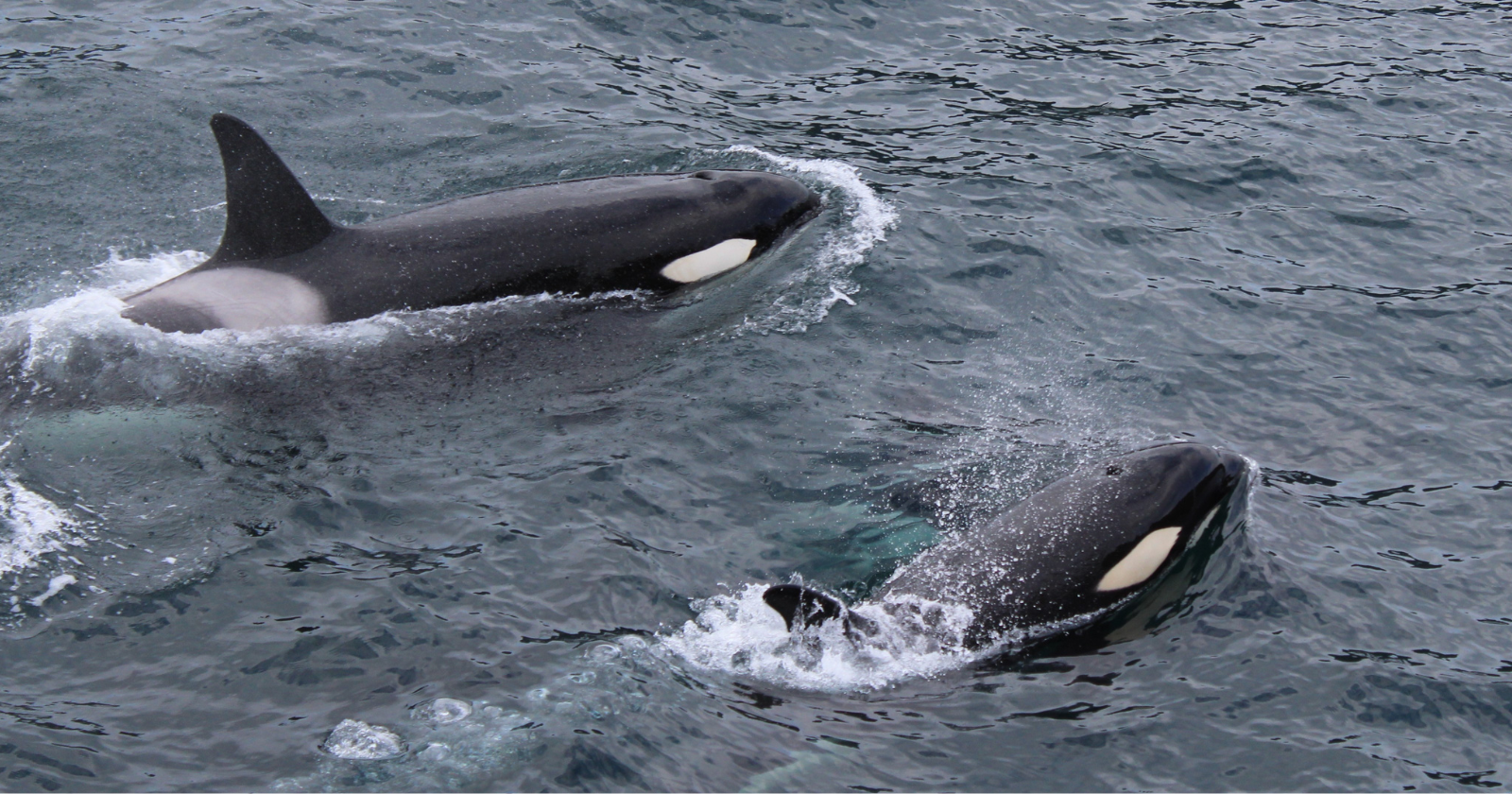
Two adult male orcas are responsible, first recorded off Cape Town in 2015 and identifiable by their collapsed dorsal fins, one folding left, one folding right. David Hurwitz, a whale watching operator from Simon’s Town, named them Port and Starboard. Between February and June 2017, five white shark carcasses washed up at Gansbaai, four of them opened and missing the liver, the start of a paper trail now substantial enough to argue over.
What the Gansbaai data showed
Alison Towner and colleagues published the first systematic account in the African Journal of Marine Science in mid 2022. Using sightings per sea day and telemetry from tagged sharks, change point analysis showed white sharks vacating Gansbaai immediately after the predation events, some moving east. Sightings stayed depressed for roughly two and a half years, and bronze whalers moved into the gap.
Towner’s team was careful about alternatives. Direct fishing and fishery driven declines in prey might contribute to a broader national decline, they wrote, but were unlikely to account for a sudden local collapse timed to carcasses on beaches.
Reading the Mossel Bay footage
On 16 May 2022 a hobbyist drone pilot filmed orcas hunting white sharks near the Hartenbos river mouth. Towner, Alison Kock, Christiaan Stopforth, Hurwitz and Simon Elwen published the material in Ecology. Five whales were watched for about forty minutes and followed by drone for thirty. Memory and battery limits meant only two segments were recorded, and neither kill the pilot witnessed was captured in full.
What the clips do show is specific: in two phone sequences filmed at 14:07 and 14:27, two orcas, Starboard among them, followed large white sharks at less than one whale body length while the pursued sharks circled back tightly. In the same footage, one or two other white sharks swam within 100 metres of the whales without noticeable reaction. In our reading that is the useful part: pursuit rather than presence appears to trigger flight.
A sharper account arrived the following year. On 18 June 2023, again off Mossel Bay, Starboard took a juvenile white shark of about 2.5 metres alone, gripping the left pectoral fin, thrusting forward several times, and eviscerating it in under two minutes. He was later seen carrying the liver past a boat.
Why the liver, and why the rest is abandoned
Shark livers are large, oily and energetically dense, the buoyancy organ in animals with no swim bladder. Towner has put the figure at up to a third of body mass in some species. The Ecology paper puts it more sharply: an adult male orca’s daily energy needs roughly equal the energetic value of the liver of one 428 kilogram white shark.
The selectivity is not absolute.
Of the eight carcasses recovered at Gansbaai up to 2022, seven had livers removed, and at least one had also lost its heart.
The behaviour is not confined to two animals
After an interaction off Pearly Beach in February 2023, 20 carcasses were recovered, 19 broadnose sevengill sharks and one spotted gully shark, though only 17 had washed ashore at the first count. Necropsies run by Towner and Ralph Watson found orca rake marks on every animal and livers taken in the same manner.
Evidence from elsewhere suggests none of this requires Port and Starboard. In Frontiers in Marine Science, Jesús Erick Higuera-Rivas and co-authors documented three predations on juvenile white sharks in the Gulf of California, filmed in August 2020 and August 2022. In two of the three events the whales inverted the shark, which the paper suggests may induce the temporary paralysis known as tonic immobility and reduce the risk of being bitten. The liver was passed between pod members, calves included. That matters more than the kills: shared feeding is how a specialised method outlives the animals that develop it.
Where the disagreement sits
None of the predation is in dispute.
What South African researchers do not agree on is the population picture behind it, and that argument has run in print. Bowlby et al. 2023 in Ecological Indicators, with Kock and Towner as co-authors, found no systematic national increase or decline in relative abundance since protection in 1991, and read the collapse at western sites as partial eastward redistribution rather than population loss. Enrico Gennari, Neil Hammerschlag and four co-authors replied that the analyses support neither conclusion, noting sightings declines at historical sites since 2013 and calling for precautionary management. Bowlby’s group answered in 2024 that their conclusions stood.
That dispute reached a wider audience through a 60 Minutes segment first broadcast on 12 April 2026. Kock told Anderson Cooper that the orcas have pushed the sharks along the coast and that the national population is stable. Gennari’s objection was narrower: orcas have hunted white sharks for a very long time, and off California the sharks return within six to nine months, so the question is why they have not returned here. Chris Fallows, who used to see 250 to 300 individual white sharks a year, said they had gone from Seal Island before he had ever seen Port and Starboard there. Both blame longline fishing and the bather protection nets, reported on air to kill more than twenty great whites a year.
Both sides are working from indices never designed for this question. The 2023 assessment combined six of them: three sightings series from cage diving and research vessels, angler reported captures in Algoa Bay, and KwaZulu-Natal Sharks Board net and drum line catches. Its critics note the model explained 5.4 per cent of the deviance. Towner, an author on both the predation work and that assessment, has said separately that unregulated overfishing is the larger threat.
The things worth watching are narrow. Whether liver extraction appears in South African pods unrelated to Port and Starboard. Whether juveniles remain the preferred target, which matters for a slow growing, late maturing species. And whether anyone funds the standardised monitoring programme that both sides of the exchange have now called for.