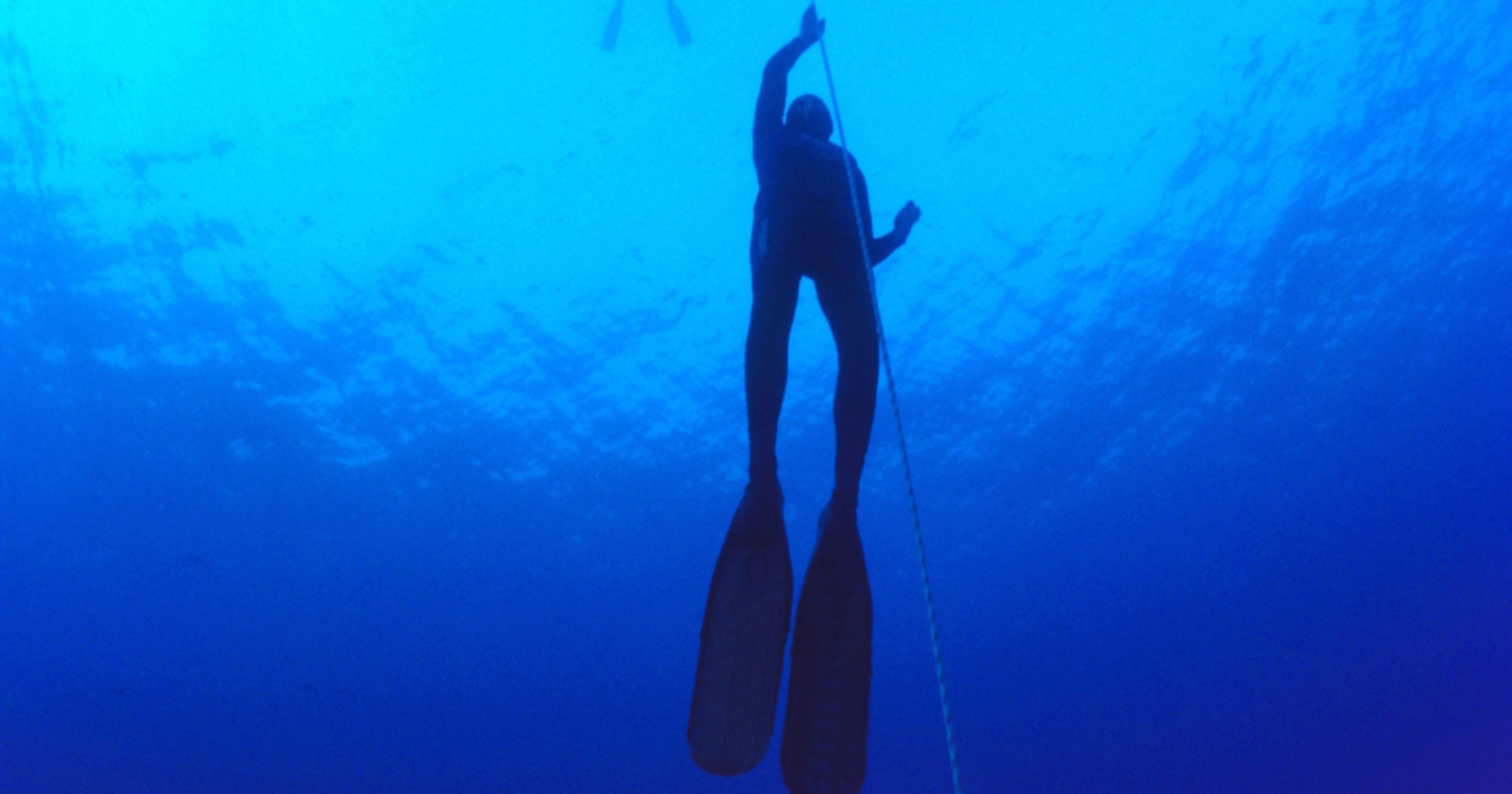
The Bajau kids used to dive for coins off the piers. You would flick a peso into water the colour of bottle glass, and some skinny nine-year-old would go down after it at a leisurely pace and come back with it pinched between two fingers, looking faintly insulted that you had made him work for so little. Everyone I grew up around had a theory about why they could do that. Salt in the blood, mostly. Nobody had ever actually checked.
Somebody eventually did, with a portable ultrasound machine and a boat.
What the scans found in Sulawesi
Melissa Ilardo was a doctoral student at the University of Copenhagen when she went looking for two villages about 25 kilometres apart on the Central Sulawesi peninsula. Jaya Bakti is largely Bajau, a people who have made a living from breath-hold diving for something like a thousand years across the waters of Indonesia, Malaysia and the Philippines. Koyoan is largely Saluan, farmers who barely get their feet wet. She scanned 59 Bajau and 34 Saluan, and swabbed all of them for DNA.
In a paper published in Cell in 2018, Ilardo and her co-authors reported that Bajau spleens ran roughly 50 per cent larger than Saluan ones. On its own that proves very little, because bodies change with use. What made it interesting was that Bajau who did not dive had the oversized spleens as well, which is difficult to explain as a callus formed by work.
So they went to the genomes. Twenty-five sites came back looking meaningfully different from the comparison populations, and one of them, sitting on a gene called PDE10A, tracked with spleen size even once age, sex and height were controlled for. Reduced expression of that gene appears to lift thyroid hormone levels, and thyroid hormone has a known relationship with spleen size in mice. A second variant, on BDKRB2, sits in the machinery of the diving reflex, the involuntary shunting of blood away from your fingers and toes and towards the organs that will complain first.
Association is not proof of mechanism, and the team said so. A follow-up in 2022 went at the question sideways by giving mice a drug that blocks PDE10A. The treated animals grew bigger spleens, crowded with immature red cells, and the effect ran independently of erythropoietin, the hormone that drives the altitude response. That’s a distinct biological pathway from the one populations at high elevation rely on to cope with thin air.
Why the spleen and not the lungs
Your spleen is a blood bank with poor customer service. It holds a reserve of oxygenated red blood cells and, when you put your face in cold water and stop breathing, it squeezes and dumps them into circulation. Weddell seals, which spend their lives hunting under Antarctic ice, have enormous ones. Competitive freedivers tend to run large as well. So, it turns out, do the Bajau.
Rasmus Nielsen, the Berkeley geneticist who worked on the study, framed the result as one more entry in a long catalogue of human tinkering at the edge of what a body can survive. Ilardo’s own comparison, given to Berkeley News, was blunter. In terms of hours logged underwater, the nearest thing to a Bajau diver is a sea otter.
About that thirteen minutes
You have probably seen the number. Thirteen minutes, one breath, seventy metres. It appears in every listicle about the Bajau, and its provenance is not a stopwatch. Writing in Science News, Aimee Cunningham noted that Ilardo had simply heard reports of dives lasting that long before she arrived. Community testimony and measurement are different animals.
What was measured is impressive enough. Speaking to CBC’s As It Happens, Ilardo described an eight-hour working day spent roughly 60 per cent submerged, with recovery breaks short enough to embarrass a competitive freediver. Nobody is holding one breath for a quarter of an hour. It’s dozens of dives back to back, with barely a pause to recover in between.
The eyes were a false start
Before spleens, the celebrated sea nomad superpower was eyesight. Anna Gislén at Lund University tested Moken children in Thailand and found underwater visual acuity more than twice that of European children, achieved by clamping the pupil down and accommodating the lens to the absolute limit of what a human eye can manage.
Then Gislén trained a group of European children for a month and they caught up. Her 2006 paper in Vision Research found the trained kids had reached Moken-level acuity, and still had it eight months later.
A superpower that dissolves after eleven pool sessions is a skill. That collapse is precisely why the spleen result carried weight. The previous headline adaptation had already turned out to be training, so a heritable one was a real claim and not a romantic one.
A second population, different genes
One paper on one population is one paper. Ilardo’s group has since gone to Jeju Island to study the Haenyeo, the all-female Korean divers who work frigid water into their eighties. Their 2025 paper in Cell Reports reported two variants under apparent selection on Jeju, one linked to cold tolerance and one associated with lower diastolic blood pressure. The divers’ pronounced heart-rate slowing during dives looked like a training effect, a distinction that makes the genetic claims easier to trust.
Ilardo’s suggestion, in the announcement carried by EurekAlert, is that the blood pressure variant may have been favoured because Haenyeo have historically kept diving while pregnant. Two populations on opposite sides of the planet arrived at entirely different genetic solutions to the same problem. Both studies rest on small samples and statistical association, and both sets of authors flag it.
What it costs
Here is the part that will not fit inside the superhero framing. Some Bajau children have their eardrums deliberately perforated so that pressure will not hurt them later, a practice documented by Al Jazeera in Sulawesi. Older Bajau are frequently deaf. Compressor diving, in which a diver breathes surface air through a length of garden hose, has added paralysis and drowning to the bill.
Then there is the paperwork, or the absence of it. Reporting from Semporna, in the Malaysian state of Sabah, Malaysiakini described families living stateless between three countries, without birth certificates, without school enrolment, without a bank account, at permanent risk of deportation to somewhere they have never lived. Their ancestors moved freely through waters that later had national borders drawn across them, and the borders won.
There is a real pleasure in reading about a people whose bodies have been reshaped by the sea, and it costs the reader nothing at all. The Bajau pay for it in hearing, in reefs that no longer feed them, and in a legal status somewhere below tourist. Evolution handed them the spleen. Everything else has been taken back by hand.