
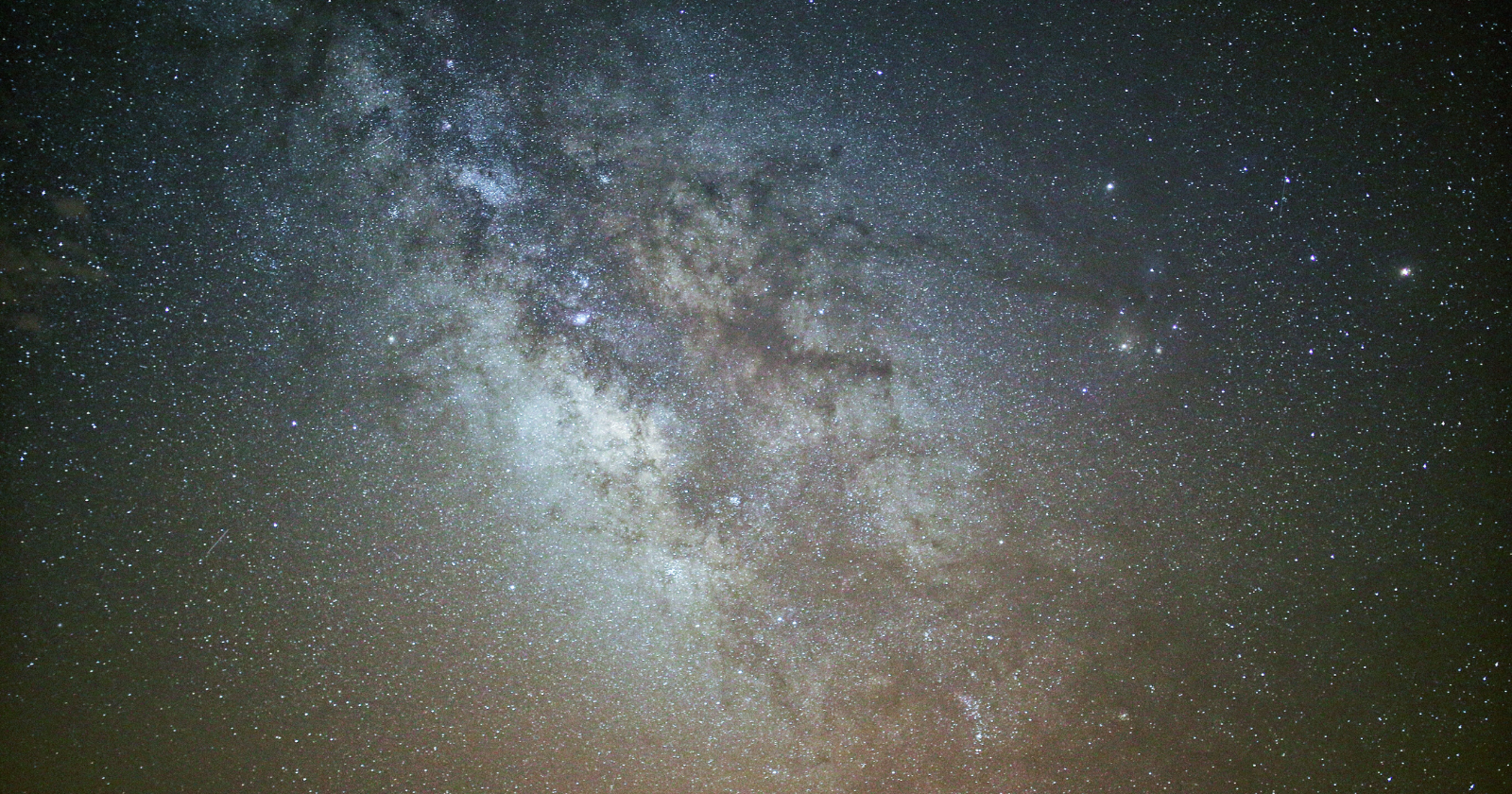
The camera is about the size of a small car and holds 3,200 megapixels across 189 sensors. On 23 June 2025, the Vera C. Rubin Observatory used it to unveil its first images of the sky, taken from the summit of Cerro Pachón in Chile at an altitude of roughly 2,650 metres. The observatory released the images through its funders, the U.S. National Science Foundation and the Department of Energy’s Office of Science, at a First Look event held at the National Academy of Sciences in Washington.
Those images were the public face of a project that has run for about two decades and cost in the order of 810 million U.S. dollars, according to the observatory. The camera had already begun taking pictures on the telescope in mid-April 2025. Commissioning continued through the rest of the year, and the ten-year programme the facility was built to run, the Legacy Survey of Space and Time, started its science campaign in 2026.
The observatory carries the name of Vera Rubin, the astronomer whose work on the rotation of galaxies provided the first convincing observational evidence that most of the mass in the universe is unseen. That naming is fitting, because dark matter is one of the survey’s central targets. But among its many goals, one has a particular pull for anyone who grew up with nine planets and then, in 2006, watched Pluto reclassified down to eight. Rubin is one of the best instruments yet built for testing whether there is a ninth.
What the camera actually does
The instrument sits on the 8.4-metre Simonyi Survey Telescope. Each exposure covers an area of sky about 45 times the size of the full moon, and the plan is to scan the visible southern sky repeatedly, returning to the same patches every few nights for a decade. The result is less a photograph than a time-lapse. Anything that moves or changes brightness between visits can be flagged automatically.
That cadence is the point. Over its run, the survey is expected to catalogue roughly 20 billion galaxies and 17 billion stars, and to generate somewhere around ten to twenty terabytes of raw data each night, with the exact figure depending on the source and the stage of the survey. For the outer solar system, the relevant number is smaller and more specific: Rubin is projected to find something like 37,000 new trans-Neptunian objects, close to a tenfold increase on the current tally.
The case for a ninth planet
The modern version of the ninth-planet idea comes from a single, much-cited paper. In 2016, Konstantin Batygin and Michael Brown of Caltech published “Evidence for a Distant Giant Planet in the Solar System” in The Astronomical Journal. They did not see a planet. What they saw was a pattern.
A handful of the most distant known objects beyond Neptune have orbits that appear to cluster together, pointing in a similar direction rather than scattering at random. Batygin and Brown argued that the tidiest explanation is the gravity of an unseen body, somewhere between about five and ten times the mass of Earth, on a long, elongated orbit well outside Neptune’s. That hypothetical body is what people mean by Planet Nine.
The status of the claim is easy to overstate. Planet Nine is a hypothesis drawn from the orbits of a small number of objects, not a confirmed discovery. Other explanations remain on the table, including the possibility that the apparent clustering is partly an artefact of where earlier surveys happened to look. Batygin and Brown’s model is the one that has drawn the most follow-up, but observation has not confirmed it.
What Rubin can and cannot settle
This is where the survey’s depth and coverage matter. Rubin can detect very faint, slow-moving objects across a wide field, which is the combination the search has lacked. Whether it can see the planet directly depends on things no one yet knows: how large the object is, how reflective its surface, and where along its orbit it currently sits. A more distant or darker body is harder to catch.
Astronomers working on the problem have set expectations accordingly. Speaking to National Geographic around the First Look release, Megan Schwamb of Queen’s University Belfast suggested Rubin might find the planet within the first year or two of operations if it is there to be found, describing it as a bright pinprick reflecting sunlight in the outer dark. In the same coverage, Samantha Lawler of Campion College noted that a non-detection would not close the case, since the object could simply be farther out, smaller, or dimmer than the searches assume.
There is a second, quieter contribution. Even if the planet itself never appears, the thousands of new outer objects Rubin catalogues will sharpen the statistics behind the clustering argument. Brown has said, in reporting by Sky and Telescope, that a larger population of warped orbits would strengthen the case for a hidden perturber, while a clean set showing no such alignment would count against the idea.
What to watch
The near-term marker is not a planet announcement. It is the steady release of outer solar system detections as the survey accumulates them, and whether the orbital clustering that motivated the search holds up or dissolves as more distant objects turn up.
One practical complication is already visible in the images: the growing number of satellites in low Earth orbit, which leave bright streaks across wide-field exposures and have to be identified and removed. It is manageable for now, and something the observatory planned around, but worth keeping in view as the constellations expand.
A decade is a long window, and most of what Rubin finds will have nothing to do with the ninth planet. What accumulates first is the catalogue of distant objects, and that is what the next few years of the search will be built on, planet or no planet.