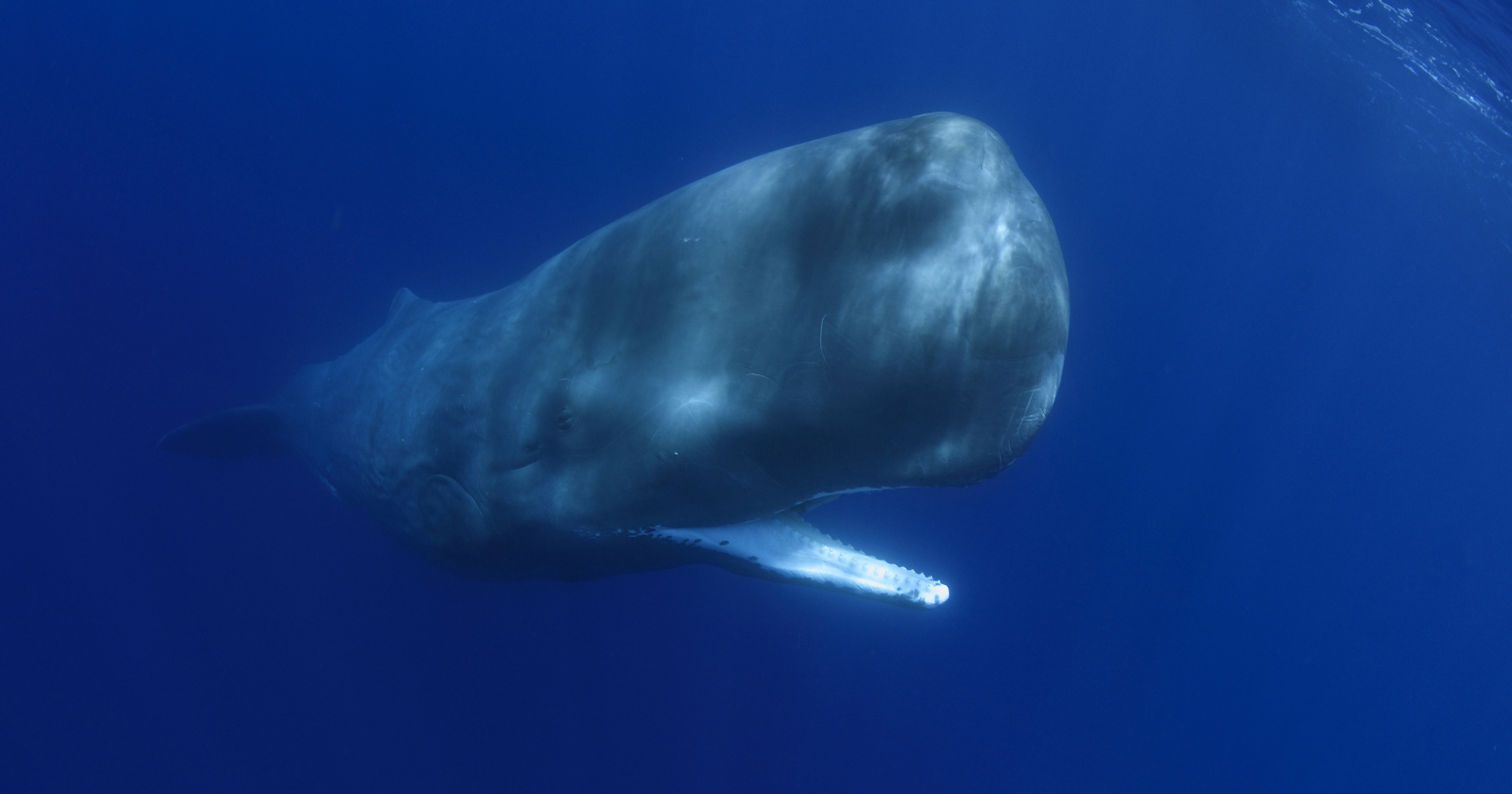
Sperm whales come up from the deep wearing evidence. Rings of pale scar tissue across the head and flanks, some as wide as a coaster, pressed there by something with suckers and no interest in being seen. For most of the twentieth century those marks were as close as anyone had come to a living giant squid.
In early 1997 a team decided to stop reading the scars and go ask the whale.
Follow the hunter, find the prey
Sperm whales eat giant squid. Sperm whales know where giant squid live. Therefore, put a camera on a sperm whale. It is the kind of logic that fits on a napkin and costs several million dollars to test.
Clyde Roper of the Smithsonian’s National Museum of Natural History led the expedition to Kaikoura Canyon, a deep trench sitting barely a kilometre off the east coast of New Zealand’s South Island. Per the Smithsonian expedition fact sheet, three approaches ran at once: Odyssey II, a robotic underwater vehicle from MIT’s Sea Grant lab, and Ropecam, tethered rigs that released bait and light on a timer. Then there was the Crittercam, a high-sensitivity video unit built and operated by National Geographic Television, designed to ride on the whale’s back and dive wherever it dived.
PBS later put the bill at roughly five million US dollars.
What came back
Not the squid.
The Crittercam attempt unravelled almost immediately when its suction cup mounting let go and the camera came off the whale, as reported by the Baltimore Sun. Ropecam went down spraying liquefied tuna into the dark. Odyssey II logged hours of a canyon thick with life and profiled the water column from surface to seafloor. It was real science, but the squid never showed.
Roper, three decades into the chase by then, stayed calm about it. He compared the search to birdwatching in a very large wood: spend enough time there and eventually the bird turns up.
A fishing line and some shrimp
Seven years later, off the Ogasawara Islands about 1,000 kilometres south of Tokyo, two researchers tried something considerably cheaper. Tsunemi Kubodera of Japan’s National Science Museum and Kyoichi Mori of the Ogasawara Whale Watching Association dropped a baited line into the black, with a camera rigged to fire every 30 seconds.
An eight-metre Architeuthis took the bait at 900 metres and spent more than four hours fighting the line before tearing itself loose, leaving 5.5 metres of tentacle behind. Writing in Proceedings of the Royal Society B, Kubodera and Mori published the first images of a live giant squid in its own habitat. They also noted, plainly, that the American and New Zealand efforts of 1996 to 1999 had come back with nothing. Their own method borrowed that expedition’s premise wholesale, tracking sperm whales to choose where to drop the line.
The pictures also rewrote the animal’s reputation. Coverage in Nature reported that the squid’s tentacles acted as hunting tools, coiling around the bait the way a python takes prey, rather than trailing passively beneath the body as had been assumed.
Turning the lights off
Suspicion had been building that the equipment was the obstacle. Deep-sea robots carry bright white floodlights and noisy thrusters, a sensible way to see in total darkness and a hopeless way to approach an animal with eyes the size of dinner plates.
Edith Widder built the alternative. Her camera platform, the Medusa, drifts without thrusters, lights the scene in a dim red most deep-sea animals cannot detect, and carries an LED lure imitating a jellyfish distress flash. Kubodera, Steve O’Shea and Widder used quiet, near-infrared gear to film a giant squid at depth from a submersible in 2012, after roughly 100 dives.
In June 2019, on its fifth deployment in the Gulf of Mexico, the Medusa recorded a juvenile giant squid three to four metres long, the first filmed in United States waters. Thousands of conventional submersible and remotely operated vehicle dives in that same basin had produced nothing.
Still using the whales
The pattern held for the giant squid’s heavier cousin. In March 2025 a remotely operated vehicle working near the South Sandwich Islands captured the first confirmed footage of a live colossal squid, a transparent 30-centimetre juvenile at 600 metres. It turned up on the ship’s own livestream, flagged by a viewer watching remotely while the vehicle worked a survey dive for new species.
That species was named in 1925 on the strength of two arm crowns pulled from the stomach of a sperm whale. A century later, whale bellies and the beaks inside them still supply much of what is known about how big these animals get and where they live. The cameras keep improving, but the whales are still doing most of the survey work, and they have never sent an invoice.