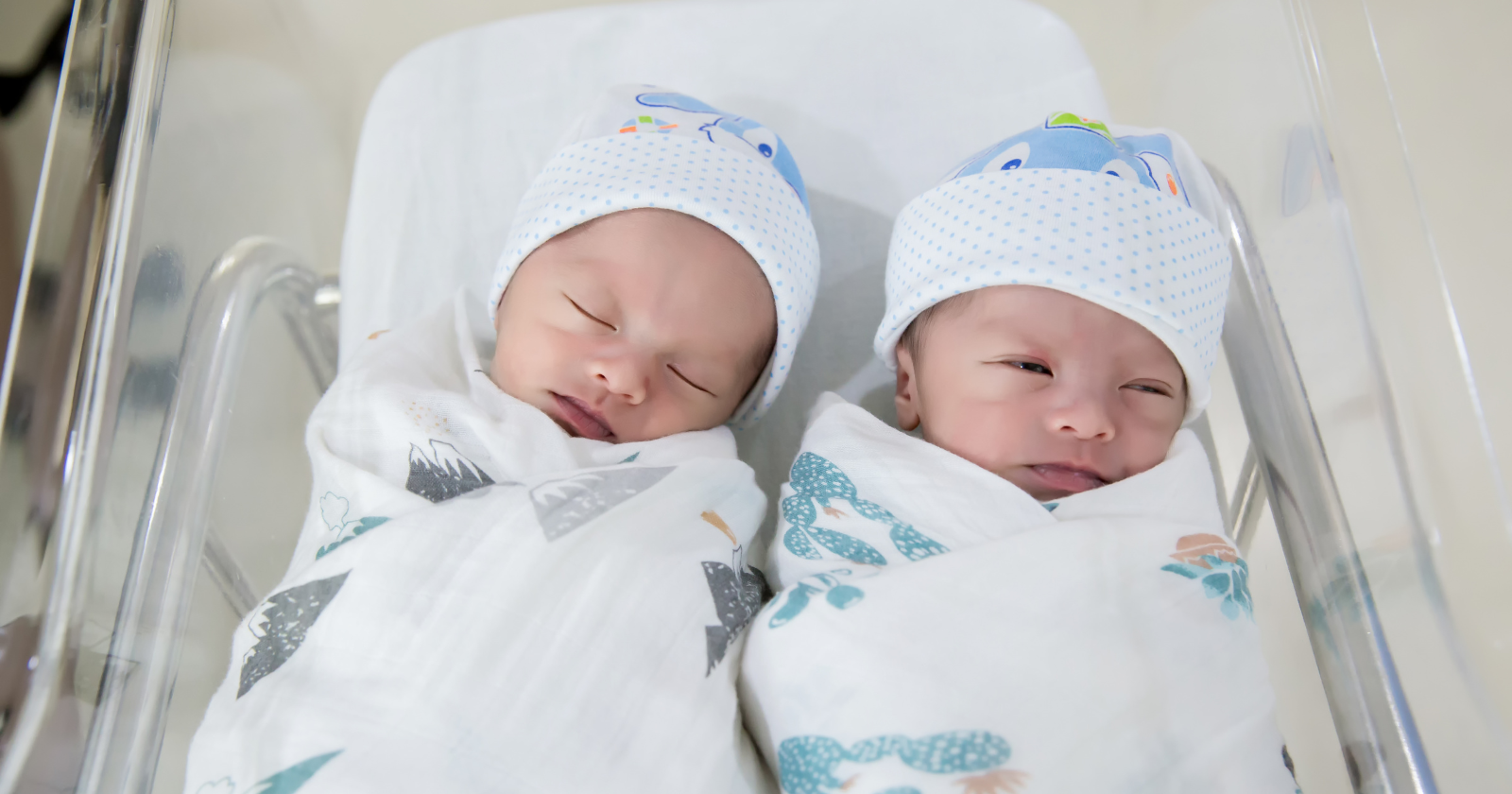
Two men named Jim shook hands in Ohio in February 1979 and worked out that they had spent thirty-nine years doing an unwitting impression of each other.
Jim Lewis and Jim Springer were born in Piqua in 1940, separated at a few weeks old and adopted by two couples who, through pure administrative fluke, both decided to call the baby James. That was supposed to be where the coincidence ran out.
It did not.
Both men turned out to be six feet tall and 180 pounds. As documented by National Geographic, each had owned a childhood dog called Toy, married a Linda, divorced her, and married a Betty, then named a son James Alan, give or take a spare “l”. Both worked part-time in law enforcement, drove Chevrolets, smoked Salems and drank Miller Lite. Fingernails got bitten, heads ached with tension, and the family holidays landed on the same stretch of Florida beach.
The dog is usually the detail that stops people.
How a newspaper story became a twenty-year project
A clipping did it. Thomas Bouchard Jr., a psychologist at the University of Minnesota, read about the Jims and had them in Minneapolis within weeks, submitting the pair to an assessment thorough enough to border on rude: intelligence batteries, personality inventories, medical workups, questions about their politics, their fears, their taste in furniture.
Then he went hunting for more pairs, and kept hunting for two decades. By the time the Minnesota Study of Twins Reared Apart wound up in 1999, 137 separated pairs had come through the lab, 81 of them identical. Recruitment ran largely on publicity, which is part of why the strangest cases became the famous ones. Adoption records were sealed, reunions happened by accident, and a chat show appearance could shake loose another pair.
What the testing produced
So what came out the other end? In a paper published in Science in 1990, Bouchard, David Lykken, Matthew McGue, Nancy Segal and Auke Tellegen reported on more than 100 reared-apart pairs. Roughly 70 per cent of the variance in IQ scores across their sample tracked with genetic variation. On personality, temperament, occupational interests, hobbies and social attitudes, identical twins brought up in separate houses came out about as similar as those who grew up together.
That second finding is the one that rattled people. Shared upbringing, on these particular measures, was doing far less work than almost everybody had assumed.
Timing sharpened the blow. Psychology through the 1960s and 1970s leaned hard toward nurture, treating the family home as the main engine of who a child turned into, and a lab full of strangers who happened to share a genome landed in that climate like a brick through glass.
Even religion went under the microscope, which is bold given it is the one trait most people assume a household simply installs. Niels Waller and colleagues ran 53 identical and 31 fraternal separated pairs through five measures of religious interests, attitudes and values, with several hundred reared-together pairs alongside them for comparison.
The beer was never the evidence
Bouchard did not build a career on Miller Lite. Uncanny coincidences got the twins in the door and got the study onto television, and as data they are close to useless, because compare any two strangers across enough categories and a few spooky matches will fall out. Nobody kept score of the thousands of ways the Jims differed.
Real evidence looked far duller: aggregate correlations across dozens of measures, benchmarked against fraternal pairs and against siblings raised under one roof.
That design has soft spots of its own. Separated twins still shared a womb. Plenty were not split at birth so much as split eventually, having spent months or years in the same cot-side chaos, and adoption agencies of the era liked to place babies with families resembling the ones they came from, which quietly narrowed the spread of environments on offer. Samples were modest by modern standards as well, and people who volunteer for a week of laboratory poking are a self-selecting bunch.
Then there is the headline number itself. Writing in Human Development, psychologist Jay Joseph argued that the Minnesota IQ result rested on assumptions the team never justified and left the fraternal control group out of the figure everybody went on to quote. One paper is one paper, however famous.
What survived the argument
Quite a lot, as it happens. A 2015 meta-analysis led by Tinca Polderman and Danielle Posthuma, published in Nature Genetics, swept up virtually every twin study of the previous fifty years: 17,804 traits, more than 14 million twin pairs. Averaged across the lot, heritability landed at 49 per cent. Genes and environment, near enough to a coin toss, with the balance swinging hard depending on which trait you pick.
Separated pairs keep surfacing, too. Segal, who joined the Minnesota team in 1982 and now runs a twin studies centre in California, has since worked with reared-apart twins from China, South Korea and Colombia, as she and her colleagues set out in Twin Research and Human Genetics. The countries and the adoption systems differ. The resemblance keeps turning up anyway.
The part nobody can explain
Heritability describes variation across a population. It can tell you something about why people in a group differ from one another, and it has nothing whatsoever to say about why one particular man in Ohio looked at a puppy and thought: Toy.
That gap is permanent.
Which is why two blokes with matching beer preferences will always be better known than the 136 pairs who followed them into the lab, most of whom differed from their twin in ways nobody thought worth writing down.