America’s first professionally managed forest finished its first year in the red, and the man running it called that a good result.
The shortfall was $392.40. It sits in a table near the back of Gifford Pinchot’s account of the first year’s work at Biltmore Forest, a slim pamphlet printed in Chicago in 1893 as an exhibit for the World’s Columbian Exposition. Pinchot opened by pointing out that the attempt was the first practical application of forest management in the United States.
What Vanderbilt bought
George Vanderbilt had been assembling land south of Asheville since the late 1880s for a house the size of a small village. The ground came cheap because it was wrecked. As the Special Collections Research Center at NC State University documents, landscape architect Frederick Law Olmsted advised that the soils and terrain would never support a grand park, and suggested growing timber instead.
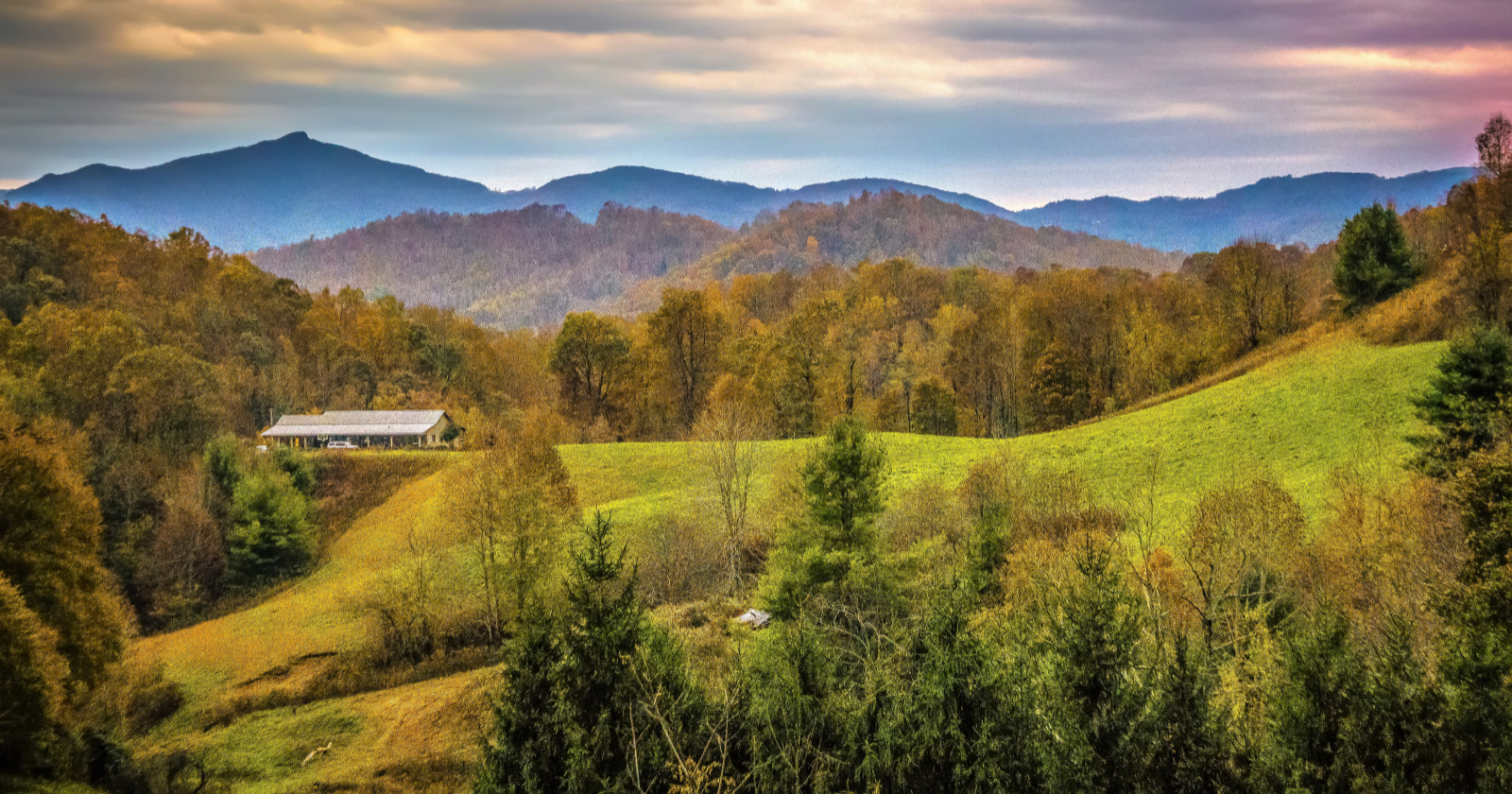
Pinchot’s survey put the estate at 7,282 acres, a little over half of it woodland. The families who had farmed the land before Vanderbilt bought it cut anything sellable as fuel, fencing or saw-logs, grazed cattle through the young growth, and burned the woods off for pasture. Asheville had been heating itself on those hillsides for years.
Pinchot summed up the condition of much of it in three words: “deplorable in the extreme.”
A card catalogue for a forest
Pinchot arrived on 2 February 1892, aged 26, trained in Europe because there was nowhere in America to train. NCpedia records that Olmsted put his name forward, and that he and Vanderbilt agreed on three objectives: sell timber at a profit, produce a steady yield every year, and leave the forest healthier than it was.
Then he counted. Crews broke the woods into more than 600 sections of about 5.7 acres each, describing every one in shorthand on a postcard-sized card and filing the cards as a catalogue of the whole property. He grouped the forest into 92 numbered compartments bounded by ridges, streams and old wood roads, then set a rotation of 150 years, meaning the second crop would be ready for the axe a century and a half after the first came out. Nobody involved expected to see it.
What the first year’s books showed
Labourers earned between 90 cents and a dollar a day, mules 75 cents.
The forest sold cordwood to the estate brickworks, ties to the railroad and lumber to anyone who wanted it, at open market prices. Expenses ran to $9,911.76. Receipts and stock on hand came to $9,519.36. Pinchot kept his own salary out of the accounts and conceded that supervision costs for fewer than 4,000 acres were far too high, arguing the same effort would have covered ten times the area.
Two findings mattered more than the balance. Large old trees could be dropped out of dense young growth with very little damage to the crop underneath, and the additional cost of careful work over ordinary destructive logging was small enough to be beside the point. Both were arguments about money, the case Pinchot had to make in a country that still treated trained forestry as a European specialty.
The German who built a school
Pinchot left in 1895 and went on to become the first chief of the US Forest Service. His replacement came from Germany. Biltmore’s own history of the estate credits Carl Alwin Schenck with running and expanding the plan over the next 14 years, and founding the Biltmore Forest School in 1898, the country’s first forestry school, which trained more than 300 of America’s earliest professional foresters before closing in 1913.
How a private estate became public land
In 1894 Pinchot came across the Pink Beds, a valley of rhododendron and mountain laurel in Transylvania County, and told Vanderbilt to buy it. That purchase and others became Pisgah Forest, and the holdings eventually stretched to roughly 125,000 acres.
Vanderbilt died in March 1914. Per NCpedia’s history of Pisgah National Forest, his widow Edith offered the federal government 86,700 acres at $5 an acre, around $200,000 below the price the family had asked a year earlier, and completed the sale in 1915. Combined with other purchases made under the Weeks Act, that land became Pisgah National Forest on 17 October 1916, the first national forest created under the act, as the Forest History Society documents.
Congress went further in 1968, setting aside 6,540 acres around the Pink Beds as the Cradle of Forestry in America, a site built around the remains of Schenck’s school.
The slow part of the work was never the trees. Pinchot enlarged his crews carefully, because the men he hired had only ever cut wood one season at a time, and the idea of protecting a crop nobody present would live to harvest had to be taught one foreman at a time. It took. More than half a million acres of North Carolina now run on a principle that began as a line item somebody had to justify to a very rich man.