A possum in Key Largo is walking around wearing a tracking collar that costs about as much as a decent pair of boots, and everyone involved has a fair idea how her story ends. She was lured into a wire trap with cat food, weighed, collared and released back into the forest she came from. If she stops moving for more than four hours, an alert fires. When that alert then starts travelling across the map again, the biologists know exactly what happened to her, and they go looking for a snake.
Nobody sat down and designed this.
An accident inside a mammal study
Back in 2022, Michael Cove, curator of mammals at the North Carolina Museum of Natural Sciences, was running a fairly ordinary piece of research on how raccoons and opossums move through Crocodile Lake National Wildlife Refuge. Five months in, one possum collar sent a mortality signal. Hit by a car, maybe, or taken by a dog. Then a few hours later the collar started moving again, and kept repeating the pattern over the following days.
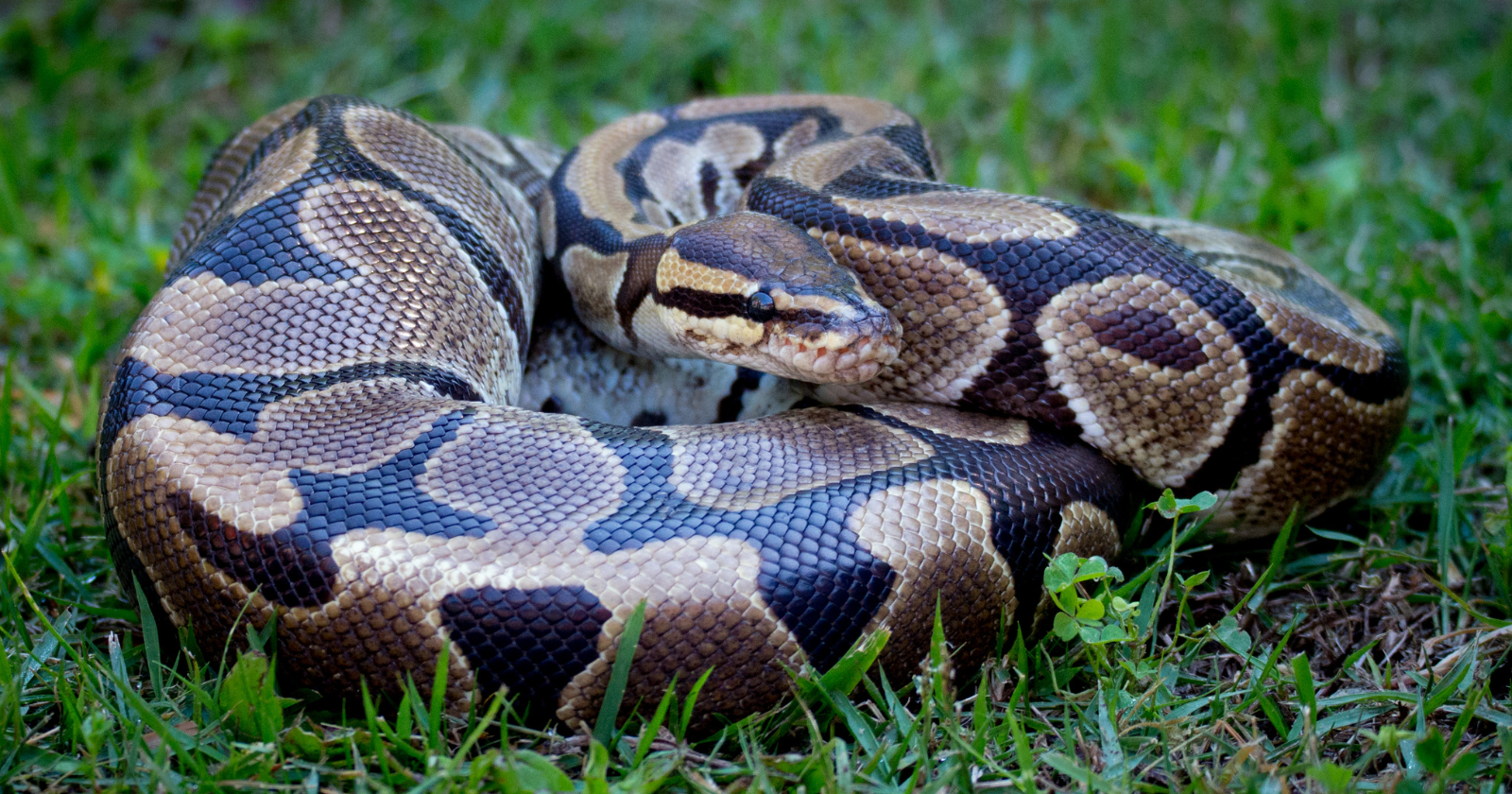
As Live Science reported, the only explanation that fit was a Burmese python lying still while it digested, then shifting position and going quiet again. Tracking it took roughly a month, partly because Key Largo is a fossilised coral reef riddled with underground pockets. The snake they finally hauled out of the ground was a 12-foot female, 66 pounds, full of egg follicles. A necropsy found the collar intact and still transmitting, long after the possum around it had gone.
Why the hardware survives
How does a tracker survive being swallowed by an apex predator? Pythons digest slowly, which is the whole trick. A collar swallowed whole sits in the gut for days, still pinging, effectively turning the snake into the thing wearing the tracker. Cove and refuge manager Jeremy Dixon worked out that a mortality alert followed by movement is a signature, not a glitch, and built a program around it with grant funding from the South Florida Water Management District.
Collar prices did the rest. Dropping from around $1,500 apiece to roughly $190 turned a curiosity into something that could be scaled, and the team brought in Southern Illinois University graduate researcher A.J. Sanjar to work out how to run it properly.
Eighteen snakes, none of them small
One twelve-foot python, Dixon later recalled, turned out to have swallowed two collared possums at once, sending two separate mortality alerts to the same patch of ground. Possums won out over raccoons anyway, being easier to handle and more common on the refuge, where they wander deep into backwater swamps. Some collared animals have been eaten within a fortnight of release. By April 2026, Outdoor Life put the tally at 18 pythons removed, every one of them over eight feet, with the largest around 13. At that point the team had 32 possums collared, working toward a target of at least 40 by peak summer.
That size floor is the quiet advantage. A three-pound possum is a meal only a big snake can manage, so the method self-selects for exactly the animals hunters most want gone. Big females can carry close to 100 eggs, which makes each one worth a small colony of future snakes.
Florida has also thrown drones, detector dogs, thermal cameras, robotic rabbits and radio-tagged male scout snakes at the problem.
The bit people write in about
“We’re not putting these animals out there and in harm’s way,” Dixon told the South Florida Sun Sentinel. “Harm’s way is there. We’re just documenting what’s happening.” That does not stop the questions. Collaring a native animal and waiting for a predator to eat it makes people uneasy, and the researchers hear about it constantly. Possums go back to the same stretch of habitat where they were trapped, never relocated.
That argument holds up only as far as you’re willing to treat a death that would happen anyway as equivalent to one a research program helps arrange, by placing an animal where a predator is likely to find it. It’s a distinction that’s easier to state than to police once a possum is loose in the woods.
What the numbers actually say
The scale of the underlying problem gets quoted loosely. A 2012 road-survey study published in PNAS recorded a 99.3 per cent drop in raccoon sightings in Everglades National Park, 98.9 per cent for opossums and 87.5 per cent for bobcats. That figure comes from a single long-running road survey inside one park, not a statewide census. Even so, that pythons have driven severe mammal declines within the park is now the assessment of the US Geological Survey.
The ones that get away
One collar sent its mortality signal right on schedule, then picked up movement again not long after, the same pattern as always. When the team caught up with it, all they found was a pile of fresh snake droppings, collar included. The python that had swallowed it was long gone, evidently large enough to pass the hardware without trouble, as NBC Miami reported. Of 43 collars deployed at that stage, three were confirmed eaten and six had simply vanished.
The collars themselves have changed too. By 2026 the team had dropped GPS movement-tracking altogether, since it only ever needed a location, not a movement record. The simpler VHF units now run close to two years between battery swaps.
Which is one way to describe four years spent turning a fluke into infrastructure.