The standard cultural framing of where life on Earth originated has, for most of the last several decades, focused on a particular set of candidate environments. The candidates have included the hot mineral-rich vents on the ocean floor, the warm tide pools of the early continents, and the various sheltered microenvironments where the necessary chemical conditions for the assembly of the first replicating molecules might plausibly have occurred. The candidates are real. The candidates have produced, across the previous decades of research, considerable progress in understanding the chemistry of how life could have begun.
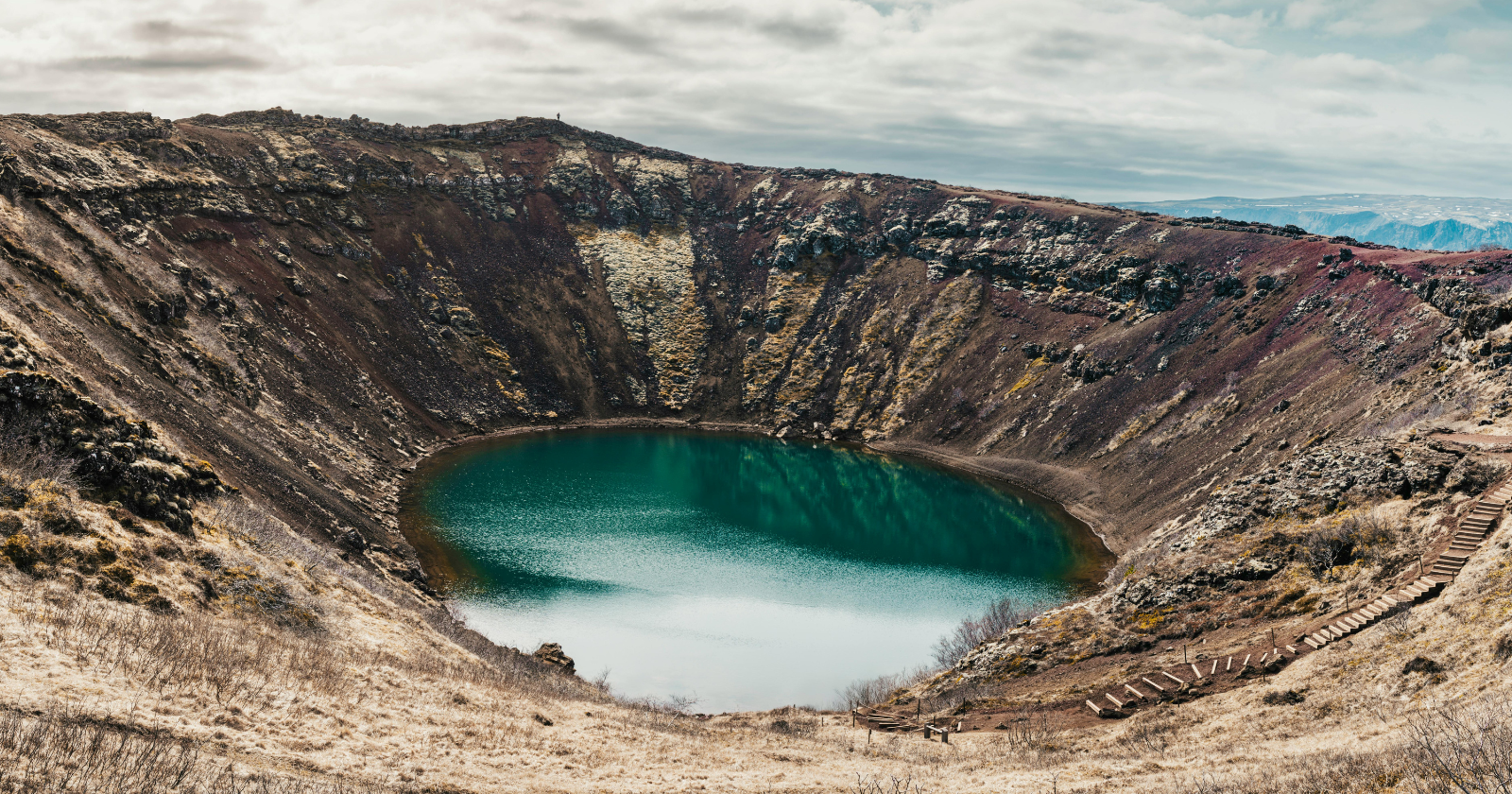
What the candidates have not, on the available evidence, included with anything like sufficient seriousness is the possibility that the cradles of early life on Earth were, in some real way, the warm hydrothermal lakes that formed inside the craters left behind by major asteroid impacts. A new study, published in April 2026 in the Nature Portfolio journal Communications Earth & Environment, has provided what its authors describe as the first comprehensive evidence that such environments did, in fact, produce the kinds of microbial communities that the wider scientific community associates with the earliest forms of life on Earth.
The implications, on close examination, are considerably more substantial than the wider register has, on the available evidence, fully absorbed.
What the study actually found
It is worth being precise about what the study actually found, because the wider register has tended to absorb it in slightly more dramatic terms than the underlying evidence warrants. The study did not, on close examination, find direct evidence of life from billions of years ago. The study found, more specifically, evidence that the mechanism by which impact craters can produce environments hospitable to early life operates exactly as the wider hypothesis would predict, by demonstrating the mechanism in a recent crater on the Korean Peninsula.
The crater in question is the Hapcheon impact crater, located in the Jeokjung-Chogye Basin of South Korea. The crater is, on the available geological record, the only confirmed asteroid impact crater on the Korean Peninsula. The research team, led by Dr. Jaesoo Lim of the Korea Institute of Geoscience and Mineral Resources, identified more than twenty stromatolites along the inner northwestern margin of the crater, buried in muddy gravel deposits marking what would have been ancient lake shorelines. The stromatolites were between two and eight inches in diameter, and showed the characteristic banded microstructure that distinguishes them from non-biological sedimentary formations.
Stromatolites, on the available evidence of how they form, are the product of microbial mats, in which communities of microorganisms such as cyanobacteria precipitate minerals from surrounding water in alternating layers across long periods. According to the Phys.org coverage of the study, stromatolites are among the oldest known records of life on Earth, with the earliest fossil examples dating back at least 3.5 billion years.
The feature worth attending to, on close examination, is that the stromatolites at Hapcheon are considerably more recent than that. Radiocarbon dating of the samples placed their formation between approximately 14,600 and 23,400 years ago. The recent dating is not, however, a limitation of the study’s claim. The recent dating is, more accurately, what makes the demonstration possible. The mechanism is being shown to operate in a context recent enough that the geological evidence has not been destroyed by subsequent processes, which means that the same mechanism would have operated in the far more numerous impact craters of the early Earth, where it could have produced the conditions for the earliest microbial life to develop.
What the mechanism actually is
The mechanism is, on close examination, considerably more elegant than the wider register has tended to appreciate. The mechanism operates as follows.
An asteroid impact produces, on the available physical analysis, a substantial crater in the Earth’s crust. The impact also produces, by the same mechanism, considerable heat, which melts the surrounding rock and generates a hydrothermal system of slowly dissipating residual heat. The crater fills with water. The water is, by virtue of contact with the surrounding heated rock, kept warm for considerable periods of time. The water is also, by virtue of leaching minerals from the impact-shattered rock, considerably richer in dissolved minerals than ordinary surface water.
The combination of warm temperature, mineral richness, and protection from the wider environment produces, on the available evidence, the kind of small enclosed habitat that is well-suited to the development of microbial communities. The communities can include, among other things, cyanobacteria, which are the photosynthetic organisms that, on the standard scientific account, produced the oxygen that eventually transformed Earth’s atmosphere.
The duration of these hydrothermal lake environments is, on the available evidence, considerable. According to the Earth.com analysis, the famous Ries crater in Germany shows evidence of hydrothermal activity persisting for around 250,000 years after its formation. At Hapcheon, the evidence suggests the system stayed active for at least 27,000 years. The durations are long enough that the microbial communities could, on the available evidence of how stromatolites actually form, develop substantial layered structures across the periods of activity.
What this implies for the early Earth
The implication of the finding, on close examination, is that the early Earth, which was bombarded by considerably more frequent and considerably larger asteroid impacts than the contemporary Earth experiences, would have hosted many such hydrothermal lake environments simultaneously. The bombardment is a matter of historical record. The bombardment was, by every available measure of how the early solar system actually operated, extensive for the first billion years or so of Earth’s existence.
The implication, accordingly, is that the early Earth was, in some real way, dotted with the kind of warm mineral-rich hydrothermal lakes that the Hapcheon study has demonstrated can host the kinds of microbial communities associated with the earliest fossil evidence of life. The lakes were, by necessity, distributed across the continents. The lakes were, by the geological record, persistent for tens of thousands or hundreds of thousands of years each. The lakes were, more specifically, the kind of widely distributed, stable, environmentally favorable habitats that the wider hypothesis about the origin of life has been searching for without quite finding in the more traditional candidate environments.
This is, on close examination, what the study’s authors are arguing. Dr. Lim’s published comments describe the finding as the first comprehensive evidence that stromatolites could form in hydrothermal lakes created by asteroid impacts. The first comprehensive evidence is, by design, the kind of evidence that opens the door to taking the broader hypothesis seriously rather than the kind of evidence that closes the question. The closing of the question would require considerably more work. The opening of the door is what the Hapcheon study has, in some real way, just produced.
What this implies for Mars
The implications extend, on close examination, beyond the early Earth to the wider question of where else in the solar system the same mechanism might have operated. The candidate that has received the most attention is Mars.
Mars is, by every available measure of its early geological history, a planet that experienced considerable asteroid bombardment during the same general period in which Earth was being bombarded. Mars is also, on the available evidence, a planet that hosted considerable surface water during its early history. The combination of impact craters and surface water means that Mars would have, by necessity, hosted the same kind of hydrothermal lake environments that the Hapcheon study has now demonstrated can support microbial life on Earth.
The implication, accordingly, is that if early Mars produced any life at all, the evidence for that life would, by design, be most likely to be preserved in the same kinds of impact crater environments that the Hapcheon study has been examining on Earth. According to the Microbiologist’s coverage, the researchers have been explicit about this implication. Because Mars is believed to have hosted water-filled impact craters in its early history, crater environments could be promising targets in the search for evidence of past Martian life.
The wider implication for the ongoing Mars exploration program is, on close examination, considerable. The current Mars rover missions have been calibrated to various candidate environments, including the ancient lake bed that the Perseverance rover is currently exploring at Jezero crater. The framing of the Hapcheon study suggests that the focus on crater environments is not, on the available evidence, an arbitrary choice but rather a well-calibrated one, and that the search for evidence of past Martian life is being conducted in exactly the kind of environment that the Earth-based evidence now suggests is the most likely place to find it.
Final words
The Hapcheon impact crater in South Korea has, on the available evidence published in April 2026 in Communications Earth & Environment, provided the first comprehensive demonstration that asteroid impacts can produce the kinds of warm mineral-rich hydrothermal lake environments that support the development of stromatolites, the layered microbial structures that constitute some of the oldest known evidence of life on Earth.
The demonstration is important. The demonstration suggests that the early Earth, which was bombarded by considerably more frequent and considerably larger asteroid impacts than the contemporary Earth, would have hosted many such hydrothermal lake environments simultaneously, and that these environments could have been among the original cradles of life on Earth. The implication is not yet fully established. The implication is, on the available evidence, considerably more substantial than the standard cultural framing of the origin-of-life question has been allowing for.
The wider implications, on close examination, extend to the ongoing search for evidence of past life on Mars, where the same mechanism would have operated during the planet’s early history. The search is currently being conducted, by every available measure, in exactly the kind of environment that the Earth-based evidence now suggests is the most likely place to find what the search is calibrated to find. The wider register would benefit, on close examination, from absorbing the implications of the finding with considerably more seriousness than it has so far. The absorbing, modestly, is what articles like this one are calibrated to begin.