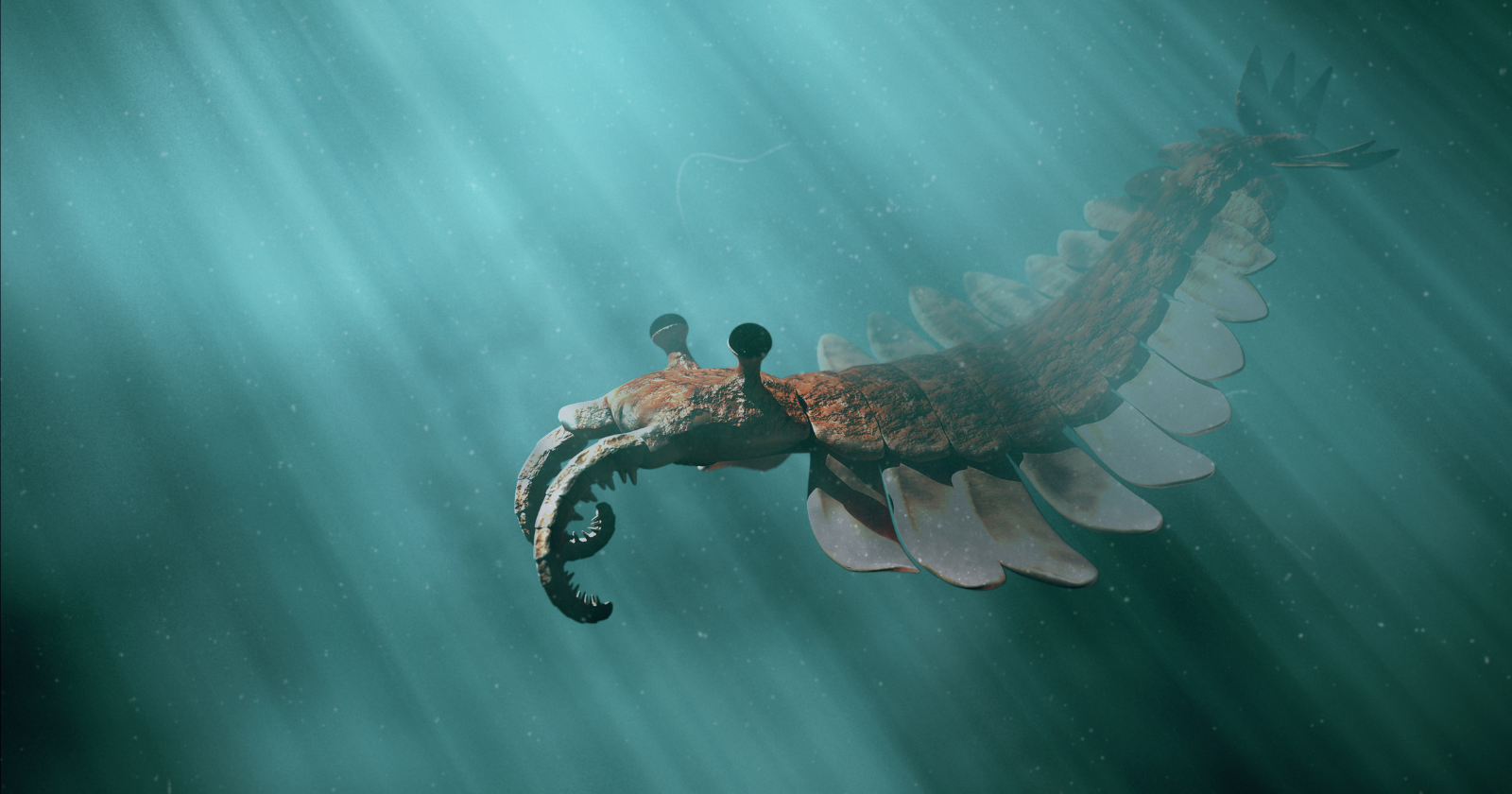
The standard cultural framing of where animal life originated has, for most of the last century, placed the origin in shallow water. The framing makes intuitive sense. The shallow seas are warm, sunlit, full of nutrients, and accessible to the kinds of biological experimentation that complex multicellular life would have required. The deep ocean has tended to be treated, by contrast, as inhospitable, dark, cold, and peripheral to the main evolutionary action. The framing has shaped, across decades of textbook narrative, how the public understands the transition from microbial life to recognizable animal life.
A new fossil discovery, published on May 20, 2026, in the journal Science Advances, has, on close examination, given the wider research community reason to revise this framing. The discovery, from a remote site in the Mackenzie Mountains of Canada’s Northwest Territories, has produced direct fossil evidence that the earliest known complex animal life was, in some real way, living in deeper water than the standard framing had assumed. The implications are still being worked out by the wider research community. The implications, on the available evidence, are considerable.
What the fossil site actually contains
The site, located in a remote part of the Northwest Territories that requires considerable logistical effort to reach, contains more than 100 fossil specimens representing the Ediacaran biota, the soft-bodied organisms that lived on the seafloor between roughly 575 and 539 million years ago. The research team, led by Scott Evans of the American Museum of Natural History along with collaborators at Dartmouth, has identified at least six taxa that have not previously been found in North America, with some of the fossils dating back approximately 567 million years.
The fossils belong to what paleontologists call the White Sea assemblage, named after the original White Sea site in Russia where similar fossils were first identified. The White Sea assemblage represents a particular phase in the development of complex animal life, characterized by the appearance of the earliest known animal movement and the earliest known evidence of sexual reproduction. The Canadian site, on the available dating analysis, contains evidence of these capacities that is between five and ten million years older than previous evidence had established.
The significance of the find, on close examination, is what the fossils represent in terms of the broader timeline of animal evolution. The Phys.org documentation notes that for three billion years, life on Earth was dominated by microbes. The Ediacaran period represents the transition from that microbial domination to the appearance of recognizable animal life. The Canadian fossils push the dating of key features of that transition back by five to ten million years, which is, by the standards of evolutionary biology, a substantial revision.
Why the deep-water framing matters
The feature of the discovery that has produced the most significant revision to the existing framework is, on close examination, not the age of the fossils. The age is striking, but age revisions of a few million years are, by the standards of the field, not unusual. The feature that is unusual is the depth of water at which the fossilized organisms appear to have lived.
The standard framing of the White Sea assemblage had placed the relevant organisms in relatively shallow water. The Live Science documentation of the discovery describes the analysis the research team performed on the sediment patterns surrounding the Canadian fossils. The analysis indicated that the organisms had lived in considerably deeper water than the White Sea assemblage had previously been assumed to inhabit. The depth was not the shallow continental shelf environment that the standard framing had centered the relevant evolutionary action on. The depth was, more accurately, the deeper marine environment that the standard framing had treated as peripheral.
The implication, as Scott Evans articulated in the published statement, is that the relevant animals may have first evolved in deep water and then gradually expanded their range into shallower water, which would reverse the standard assumption about the direction of the evolutionary expansion. The wider register has tended to assume that complex life began in shallow seas and migrated outward, including into the deep ocean. The new evidence suggests, on close examination, that the opposite trajectory may have been the actual one.
Why deep water might have been more hospitable than the standard framing assumes
The reason that deep water might have been a better environment for the earliest complex animal life is, on close examination, worth attending to. The wider register has tended to treat the deep ocean as inhospitable, but the actual structural features of the deep environment include several that would have been favorable to the development of complex life under the specific conditions of the late Ediacaran period.
The first feature is stability. The deep ocean, by virtue of being far from the wider atmospheric and surface dynamics, has historically been considerably more stable in temperature, oxygen content, and chemical composition than the shallower water environments. The stability would have been particularly important for the earliest experiments in complex multicellular life, which would have required sustained periods of relatively constant conditions to allow the relevant evolutionary developments to occur without being repeatedly disrupted by environmental volatility.
The second feature is the absence of certain kinds of stress that the shallower environments would have been subject to. Solar radiation. Tidal variation. Temperature swings. Storm-induced disturbance of the seafloor. The deep environment, by virtue of being insulated from all of these, would have provided the kind of calm that the slow developmental processes of complex multicellularity would have benefited from.
The third feature, which the wider research literature has been documenting across the last several decades, is the unexpected biological resilience of deep-sea ecosystems. Earlier research on Early Cretaceous deep-sea fossils, conducted independently of the recent Canadian discovery, has documented that significant portions of the modern deep-sea fauna are considerably older than the standard framing had assumed, and that the deep-sea environment has provided a particular kind of evolutionary stability across long geological timescales. The deep ocean, on the available evidence, is not the marginal environment the wider framing has been treating it as. The deep ocean is, more accurately, one of the more stable environments the planet contains.
What this fits with, in the wider picture
The Canadian discovery is, on close examination, part of a broader wave of recent fossil findings that have been pushing the origins of complex animal life back in time and rearranging the wider picture of where and how that life emerged. A separate fossil discovery published in April 2026 from Yunnan Province in southwest China identified more than 700 fossil specimens of Ediacaran organisms, including what the research team characterized as the oldest known relatives of deuterostomes, the broader group that includes vertebrates and humans. The Chinese fossils push the deuterostome lineage back into the Ediacaran period for the first time.
The two discoveries, taken together, are part of an emerging picture in which the wider field’s previous timeline for the origins of complex animal life is being revised more substantially than any single discovery would have produced on its own. The revision involves both the dating, with the origins being pushed back by five to ten million years in multiple lineages, and the geographical context, with the deep-water hypothesis from the Canadian site challenging the assumption that the relevant action was concentrated in shallow water.
The wider revision is still in progress. The available evidence is, on close examination, sufficient to challenge the previous framework but not yet sufficient to fully establish what the replacement framework should look like. The research community will, in time, work out what the new picture should be. The new picture will, on the available evidence, look meaningfully different from the picture that the standard textbooks currently contain.