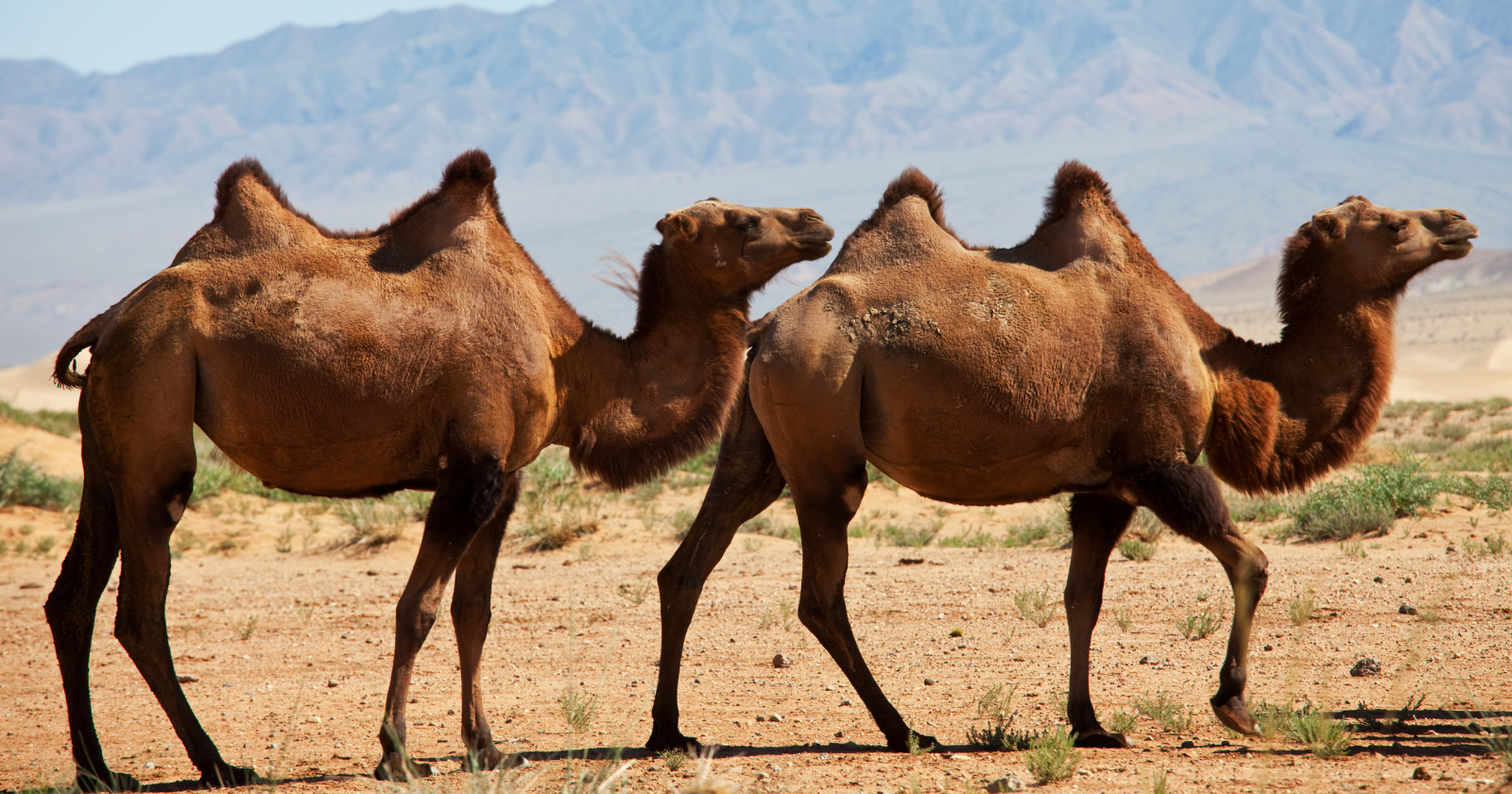
Somewhere past Alice Springs there is a camel that has never met a virus worth worrying about, and that fact alone makes it more valuable than a camel standing in a pen outside Riyadh.
Australia has the largest population of wild dromedaries anywhere on earth, a herd nobody planned, nobody owns and nobody can properly count. Scientists estimated the peak at up to a million animals by 2010, and a national cull cut that back to somewhere near 300,000, as documented by the Pew Charitable Trusts. Reporting this month still quotes a range of 300,000 to a million, which tells you plenty about the difficulty of counting big animals spread across 3.3 million square kilometres of desert.
Either way, it is a lot of camel.
How a million camels happened
Colonists brought dromedaries out in the nineteenth century as freight vehicles, along with the cameleers from what is now Pakistan and Afghanistan who knew how to handle them. Camels carried supplies, telegraph poles and railway sleepers into country that broke horses. Then the truck arrived, the work dried up, and handlers turned their animals loose into the desert rather than feed them.
The desert turned out to suit them beautifully. No predators, no competition, plenty of scrub, and a population that can double in eight to ten years. Modern land managers are far less charmed, since feral camels flatten fences, foul waterholes and munch through more than 80 per cent of the available plant species, a bigger bite than any other species, native or introduced, manages to take.
The disease Australian camels have never caught
Middle East respiratory syndrome, or MERS, is a coronavirus that jumped from camels to humans and kills roughly a third of the people it infects. It is thoroughly established in herds across the Arabian Peninsula and East Africa, and the Food and Agriculture Organization notes that every primary human case has been traced back to that same region. A survey of local and imported camels at Jeddah, published in PLOS One, found antibodies in 92.7 per cent of the 1,399 animals tested. Living virus turned up in the noses of roughly one in six.
Australia’s camels appear to have missed all of it. A focused Australian surveillance study published in the journal One Health in 2015 found no serological evidence of MERS anywhere in the feral population, which the authors read as a clue about when and where the virus first spread. That is one paper on one virus, not a certificate of universal good health. It does square with a simpler bit of logic, though. Australian camels descend from animals shipped out before 1907 and have spent the century since in near-total isolation, with no incoming stock to bring anything nasty along.
What a clean camel is worth
Gulf buyers noticed. Australian animals have long been sold in small numbers into Middle Eastern racing and breeding stables, where fresh bloodlines and a clean bill of health are both hard to source locally.
Small is the operative word. An economic analysis for Meat and Livestock Australia put global trade in live camels at 200,000 to 300,000 head a year at average prices near US$400, while Australia’s cost of getting one animal into a shipment ran US$1,000 to US$1,500. Mustering wild camels out of the Simpson Desert and trucking them to a port is expensive work. Air freight is worse. Those numbers only stack up in high-value niches, and the report pegged Middle Eastern breeding stock at roughly 150 animals annually.
Premium pricing, in other words, is less a bonanza than the bare minimum required to make the trade viable at all.
Still a boutique business
For all the talk of premium markets, the trade remains tiny. Australian farmers had sent 68 whole camels abroad by August this year, bound for Malaysia and Indonesia, as reported by AFP, while camel meat exports came in above US$3.9 million for 2024. One South Australian dairy sells camel milk at A$20 a litre and still leans on tourism and a homestay to pay the bills.
Meanwhile the animals keep breeding, and the main population control tool remains a marksman in a helicopter.
Which leaves Australia sitting on what may be the last large disease-free dromedary herd on the planet, treating it as a pest budget line rather than a genetic asset. A University of Queensland researcher, writing in a camel research journal, has described years of workshops and conference outreach aimed at interesting Middle Eastern and North African breeders in that gene pool, generating plenty of enquiries but no actual deals. So far the practical answer has mostly been the sound of rotor blades.