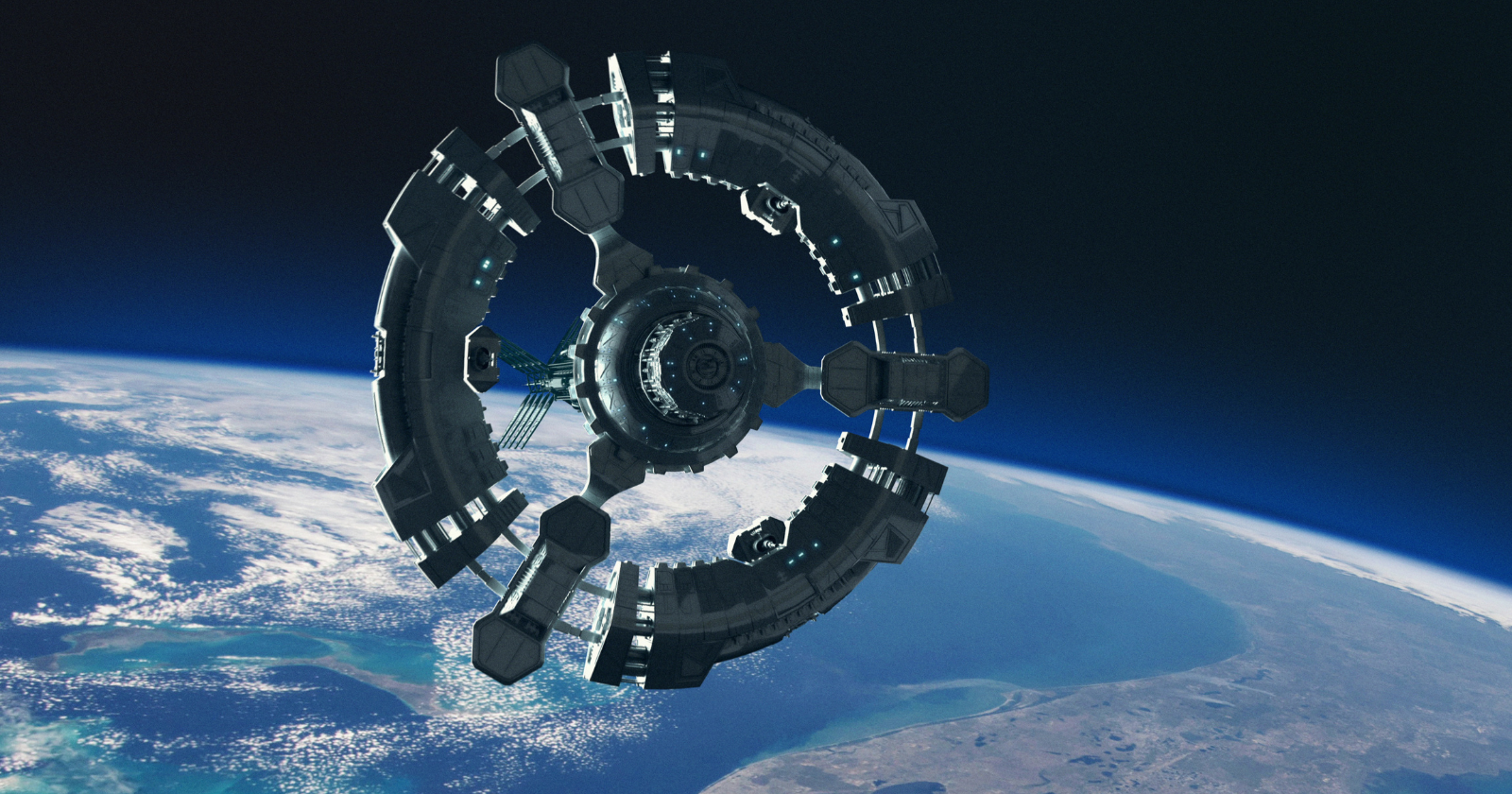
The wider cultural register has, on the available evidence, a particular list of films that it tends to associate with realistic depictions of space. The list, when pressed, will produce Gravity, Interstellar, The Martian, and perhaps Apollo 13. The films share, in the popular imagination, a particular kind of visual seriousness and a particular kind of technical sheen that produce, in the standard viewer, the impression of having watched something that approximates the actual texture of being in space.
The astrophysicists and astronauts who have spent their professional lives engaged with the actual texture of being in space have, on close examination, a somewhat different ranking. The ranking overlaps with the popular list at several points. The ranking also diverges from it at several others, and the divergences are informative about which features of cinematic space the wider audience has been calibrated to register as realistic, and which features the wider audience has been calibrated to overlook.
What follows is what the experts themselves have actually said, drawn from their published commentary across the last several decades.
The film at the top, that the popular register sometimes underweights
The film that the experts most consistently place at or near the top of their rankings is one the popular register sometimes treats as a curiosity rather than a benchmark. The film is Stanley Kubrick’s 2001: A Space Odyssey, released in 1968. The film has, in the intervening fifty-eight years, retained an almost unique position in the assessments of the scientists and astronauts who have actually been to space or who have spent careers studying it.
The reasons are, on close examination, specific. Neil deGrasse Tyson, in a New York Times op-ed published on January 1, 2001, conducted a detailed comparison between the future the Kubrick film had predicted and the actual state of space exploration that had arrived in the real year 2001. The op-ed remains one of the more thoughtful expert engagements with the film’s predictive accuracy, with Tyson noting both the elements the film had gotten right and the elements where reality had diverged from Kubrick’s vision.
The features that the wider community of physicists and astronauts cite when praising 2001 include the silence of space, which the film renders accurately by including no audio for events occurring in vacuum. The features include the rotational habitat that produces artificial gravity through centrifugal force, which remains physically accurate to how such systems would actually work. The features include the accurate communication delays between Earth and spacecraft, calibrated to the actual distances involved.
The wider audience tends to register 2001 as slow rather than as accurate. The slowness is, on close examination, what the accuracy actually consists of. Space, by every available measurement, is slow. The journeys take months or years. The actions occur in conditions where the standard cinematic acceleration would simply be wrong. Kubrick refused the acceleration. The refusing is what the experts respond to. The wider audience has tended to respond to the refusing as a feature of Kubrick’s directorial style rather than as a feature of what space actually is.
Where Interstellar lands, on close examination
The film the wider register most consistently associates with scientific accuracy is Christopher Nolan’s Interstellar, released in 2014. The film features what the wider community generally accepts as the most accurate cinematic visualization of a black hole ever produced. The Nobel Prize-winning physicist Kip Thorne, who served as the film’s scientific consultant and executive producer, worked on the equations that enabled the rendering of light rays as they traveled through a wormhole or around a black hole.
The visualization has received particularly direct expert assessment. Astrophysicist Paul M. Sutter, speaking with Business Insider’s “How Real Is It?” series, gave the Interstellar black hole sequences a 9 out of 10 for accuracy, noting that there was “so much good science in the black hole image,” with the only deduction being for the depiction of the interior of the black hole as entirely dark when in theory it should contain the light the black hole has been consuming. Sutter himself acknowledged that, since nobody has ever been inside a black hole to verify, the depiction is “fair game.”
Neil deGrasse Tyson appeared on CBS This Morning to discuss the film’s scientific credentials shortly after its release, joining the wider community of physicists who praised its visual handling of black holes and time dilation.
What is less widely registered is what the experts also note about the film’s other elements. The visualization of the planet near the black hole, where one hour equals seven years on Earth due to gravitational time dilation, is accurate to the general relativistic predictions Thorne calibrated it to. The other elements of the film, including the climactic sequence inside the black hole, are considerably more speculative. Thorne himself characterized portions of the film as “Speculative-Albeit-Imaginable Science,” which is the technical category for scenarios that do not violate established physical laws but that go beyond what current evidence supports.
Where Gravity actually lands
The film the wider register most consistently associates with the immediate physical experience of being in space is Alfonso Cuarón’s Gravity, released in 2013. The film is, on the available expert commentary, considerably less accurate than its visual texture suggests, while remaining considerably more accurate than the standard cinematic register would have produced.
The features the experts praise include the silence of the satellite destruction sequences, which correctly omit the audio that the standard cinematic register would have included. According to the Fandango assessment of the film’s accuracy, the overall visual rendering of the orbital environment has been praised by various astronauts and physicists as among the more accurate they have seen. The astronaut Michael J. Massimino, who actually worked outside the International Space Station, noted that a particular wire-cutter tool shown in the film was the same model he had used during one of his own spacewalks. Buzz Aldrin praised the visual effects as “remarkable.”
The features the experts criticize are also worth attending to. The most cited single error involves the spatial relationships between the various structures shown in the film. The Hubble Space Telescope, the International Space Station, and the Chinese space station Tiangong are treated, in the film’s plot, as if they were in close proximity to each other. In actual orbit, the three structures are separated by hundreds of kilometers and operate in significantly different orbital planes, which means that traveling between them in the way the film depicts would, in physical reality, require considerably more delta-v and considerably more time than the film’s narrative allows for. Director Alfonso Cuarón has explicitly acknowledged that the film was not intended as a documentary, and that various features of the plot involve deliberate departures from physical accuracy for the purpose of dramatic narrative.
The film about Mars that the experts give particularly high marks
The film about Mars that the experts most consistently rank as scientifically accurate is Ridley Scott’s The Martian, released in 2015. The film has, on the available expert commentary, received notably less criticism from the relevant scientific community than most of its peers.
Paul M. Sutter, in the same Business Insider “How Real Is It?” interview in which he gave Interstellar a 9 out of 10, awarded The Martian a perfect 10 out of 10. Sutter specifically praised the film’s depiction of “mannerisms of physicists and engineers explaining stuff to other people” as “dead on,” and characterized the mathematics of the rescue scenario as “mathematically sound.” The score of 10 out of 10 makes The Martian the highest-rated film in Sutter’s published assessments of cinematic space accuracy.
The features the experts praise include the accurate depiction of the Martian environment, the chemically plausible methods the protagonist uses to produce water and grow potatoes, the realistic depiction of the communications delays between Mars and Earth, and the generally accurate orbital mechanics of the various spacecraft involved. The film’s adherence to the Andy Weir novel it was based on, which itself was constructed around extensive consultation with NASA and other technical advisors, produced a final product that the relevant expert community has, on the available record, found unusually faithful to the underlying science.
What the film does take liberties with is the opening Martian dust storm, which is the inciting incident that strands the protagonist on Mars. The atmospheric pressure on Mars is approximately 0.6 percent of Earth’s atmospheric pressure at sea level. The thin atmosphere means that even high-velocity winds on Mars carry considerably less force than equivalent winds on Earth, and the storm depicted in the film could not, in physical reality, produce the damage the plot requires. Both Weir and the filmmakers have acknowledged that the storm was a deliberate departure from accuracy in service of the narrative.
What Apollo 13 actually gets right
The film about a real space mission that the experts most consistently praise is Ron Howard’s Apollo 13, released in 1995. The film depicts the actual events of the 1970 Apollo 13 mission, which was forced to abort its planned lunar landing after an oxygen tank exploded on the spacecraft. According to space scientist Jonathan Elphic, speaking with Time, the film may be one of the most scientifically accurate space films ever made, particularly in its depiction of the technical details of zero gravity and the actual explosion sequence that took out the service module.
The film’s accuracy has, on close examination, a specific source. The film was based directly on the historical record of an actual NASA mission, with substantial cooperation from NASA itself and from several of the actual astronauts involved. The dramatic features of the actual mission were sufficient that the filmmakers did not need to introduce the standard cinematic accelerations or distortions to produce the narrative tension the film required. The accuracy is, accordingly, what the film was actually built on rather than something added or compromised away.
The film about the sun that experts have been increasingly recognizing
A film that has been receiving increased expert attention in recent years is Danny Boyle’s Sunshine, released in 2007. The film depicts a fictional mission to reignite a dying sun. The premise is, on the available physical analysis, not particularly accurate, since the sun is not, on current understanding, dying in any way that a small human mission could meaningfully address. The execution, however, has received considerable praise from the scientific community for its handling of the various technical features of close-solar operations.
Paul M. Sutter, again in the Business Insider “How Real Is It?” interview, gave Sunshine a 6 out of 10. Sutter specifically praised the film’s solar imagery as “gorgeous, accurate, spot on,” noting that “people don’t get to realize just how gorgeous and dynamic the Sun is.” The particle physicist Brian Cox served as the film’s scientific consultant, working with the cast and crew to ensure they understood the underlying solar physics. Cillian Murphy, who played the physicist protagonist, toured the CERN facility as part of his preparation for the role.
Final words
The films that consistently rank at or near the top of the expert assessments include 2001: A Space Odyssey, Apollo 13, The Martian, Interstellar, and Gravity, with various smaller films also receiving expert praise for specific elements they handle well. The films that consistently rank at the bottom include Armageddon, Star Wars, and various other space-themed entertainment that has been calibrated to dramatic narrative rather than physical accuracy.
What is worth attending to, on close examination, is that the expert ranking is not, in itself, a ranking of cinematic quality. The films that the experts criticize for their physics are, in many cases, films the experts also enjoy as cinema. The ranking is, more specifically, a ranking of accuracy along a particular axis that the popular register has not, on the available evidence, been particularly calibrated to register. The wider audience would benefit, on close examination, from understanding the distinction, both for the purpose of better appreciating the films that have earned the expert respect and for the purpose of understanding why some of the films the popular register has been most certain of have, in the expert community, been received with more skepticism than the popular framing has registered.