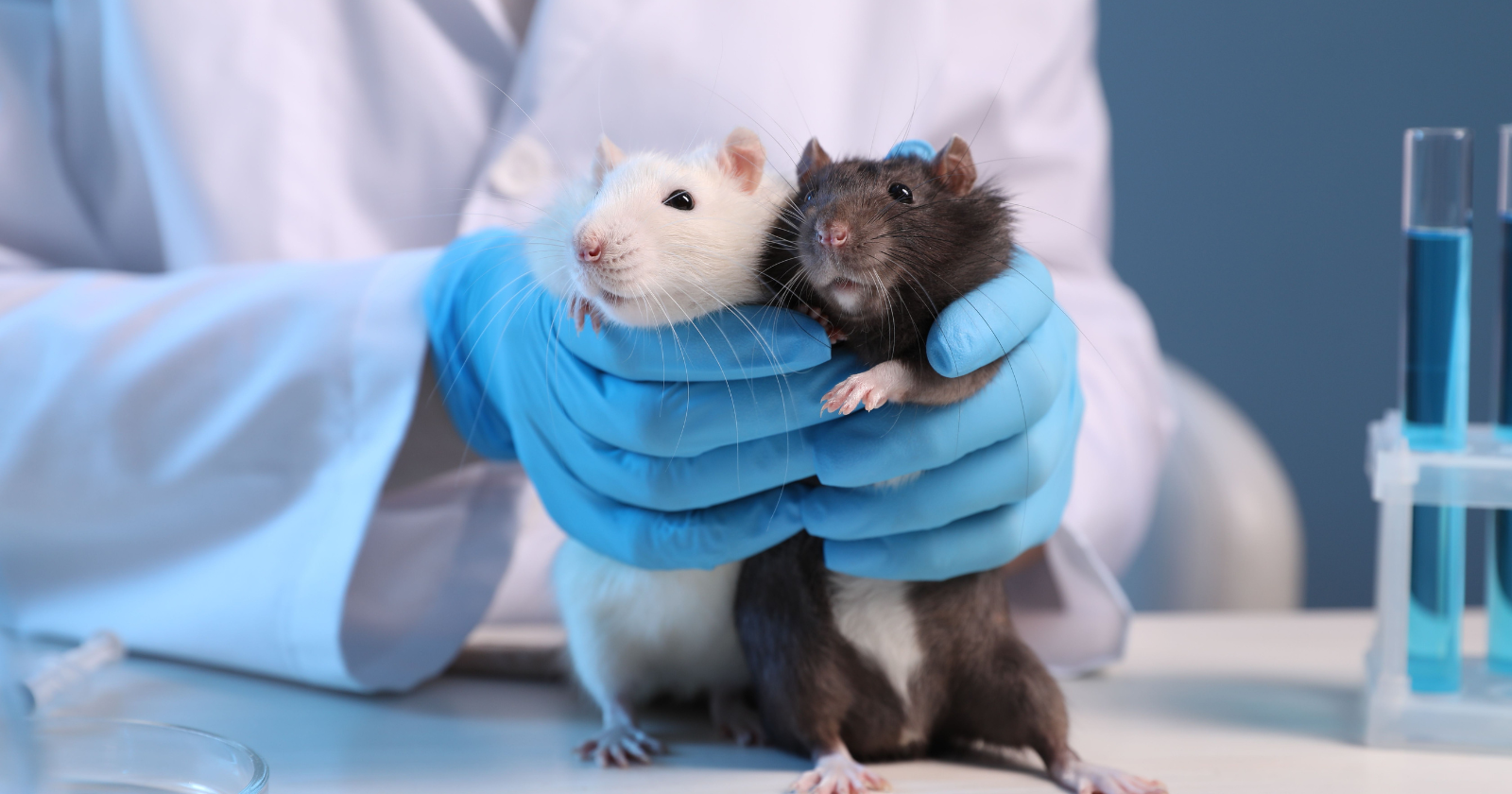
Somewhere in Virginia there is a rat who refuses to take the short way to breakfast.
Her ride is a clear plastic food container mounted on an aluminium plate, wheels underneath, three copper bars at the front. Touch a bar and the circuit closes and the car moves. Left bar for left, right bar for right, middle bar for straight ahead. Let go and it coasts to a stop.
How you build a car for a rat
Behavioural neuroscientist Kelly Lambert assembled the first one at the University of Richmond, and the parts list is almost insultingly cheap. A cereal container. A length of wire acting as a throttle. The university’s own announcement of the work lays out the aluminium floor and the copper steering bars, and that is essentially the entire engineering story.
Why bother? Rats have been pressing levers and running mazes in laboratories for a century. Driving is a harder, more interesting kind of task. It asks an animal to travel through space without moving its own legs, hold a destination in mind, and correct the course when the vehicle drifts off line.
What the first experiment actually measured
Training ran for months, with undergraduates breaking it into pieces: get in, grab the bar, hang on, aim the car, cross the finish line. Every correct move bought a Froot Loop.
The finding that made it into print was about upbringing. In a paper published in Behavioural Brain Research, Beth Crawford, Lambert and nine colleagues reported that rats raised with toys, space and company learned to drive better than those kept in standard cages, and kept working the controls even after the treats stopped arriving. Faecal samples showed the ratio of DHEA to corticosterone climbing across training in both housing groups, a hormonal shift the authors read as a marker of stress resilience.
That is one study with a small sample, and it deserves to be read that way.
The rats that ran to the cage door
The strangest thing in the project never made the paper.
Lambert has described walking into the lab in the summer of 2020 and finding the three driving-trained rats crowded at the side of the cage, jumping up and down like a dog that has heard the word walk. In an essay for The Conversation, she described them climbing aboard and revving the “lever engine” before the car had gone anywhere.
Which raises an obvious problem. A rat bouncing about when someone walks in could be excited about the drive, the cereal, or simply the company. Enthusiasm by itself tells you nothing about its object.
The scenic route
So the lab built a fork in the road. Rats could walk directly to the Froot Loop, the efficient option, or they could turn away from the food, go to the car, and drive there instead.
Two of the three chose the car.
Turning your back on visible food to go and operate machinery is a peculiar move for a purely hungry animal. An annotated version of Lambert’s essay in Richmond’s alumni magazine records a second oddity from the same stretch of work. A student spotted one rat holding its tail straight up with a hook at the tip, like the handle of an old umbrella. Reviewing the footage, the team found the posture was more common in animals trained to anticipate good things. Other neuroscientists identified it as a gentler version of Straub tail, a curl normally seen after a dose of morphine and known to disappear when dopamine is blocked.
What a handful of rats can and cannot show
Three rats is three rats. The joy results live in essays, podcasts and preliminary data rather than in a peer-reviewed table, and Lambert is upfront about it. Talking to NPR’s Short Wave, she called the whole business humbling: “It’s amazing what their little brains can do.”
The broader idea she is chasing, that rodents have positive emotions worth measuring, rests on firmer ground elsewhere. Shimpei Ishiyama and Michael Brecht reported in Science that rats squeak in ultrasound when tickled, chase after the hand responsible, and throw in unsolicited leaps the authors labelled Freudensprünge, joy jumps, with matching bursts of activity in the trunk region of the somatosensory cortex. Make the animals anxious and the cells go quiet and the ticklishness vanishes.
What the driving adds is the waiting. Lambert’s current programme trains rats to sit through an unpredictable delay before a reward turns up, and early signs point to animals that solve problems more boldly and score as less pessimistic on tests of rodent outlook.
A rat that could have the Froot Loop immediately, and drives to it instead, has worked out something most commuters gave up on years ago.