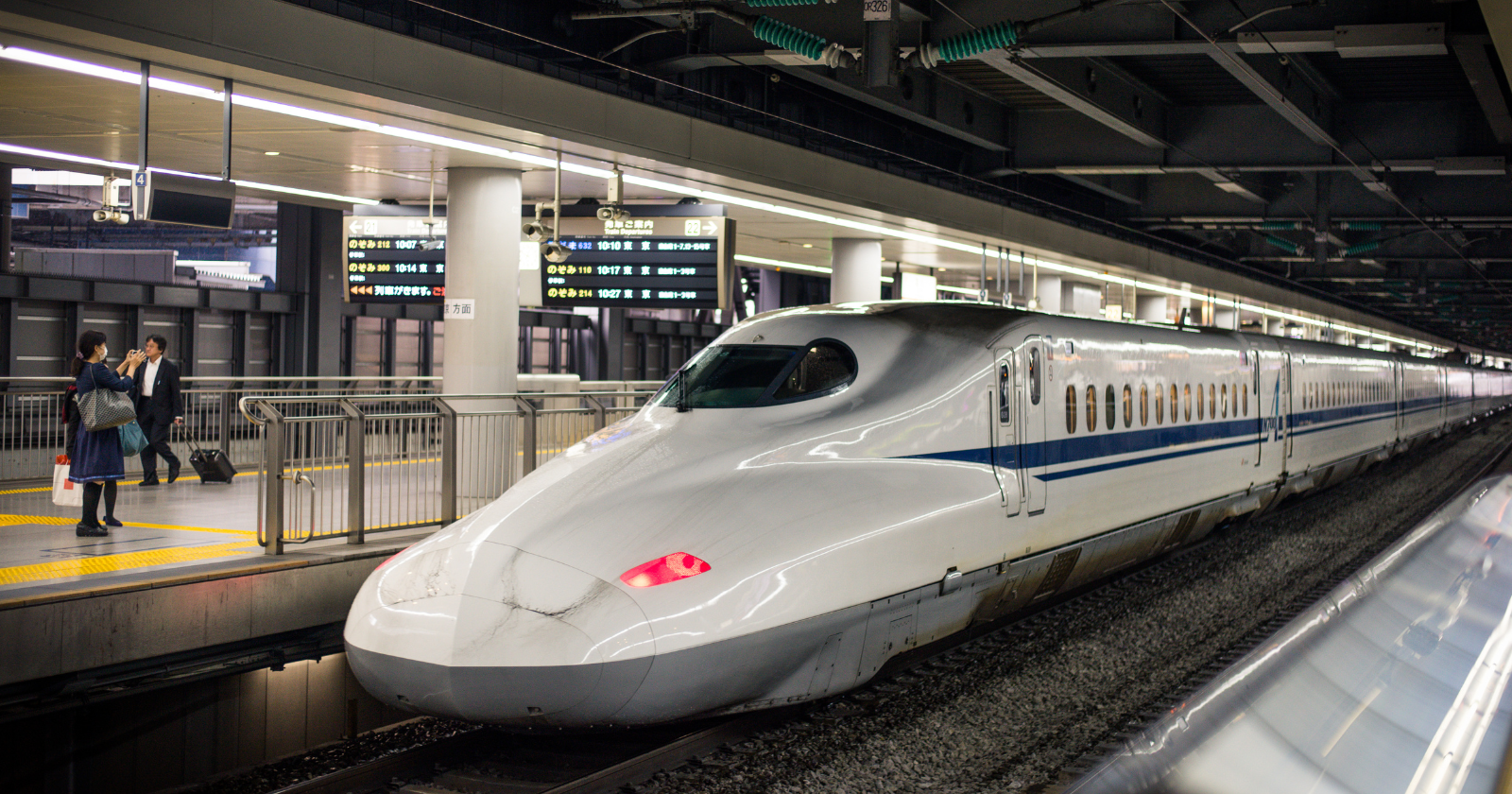
For a couple of winters in the 2000s, the floor at Tokyo Station had a second job.
East Japan Railway Company, the operator most people know as JR East, sank piezoelectric elements beneath the tiles at its ticket gates and wired them up to find out how much electricity a rush-hour crowd could produce just by turning up for work. The plan appears in a January 2008 press release from JR East, which developed the technology jointly with the New Energy and Industrial Technology Development Organization and JR East Consultants Company.
What a power-generating floor does
Squeeze certain ceramics and they spit out a pulse of voltage. That is the piezoelectric effect, the same trick behind the spark igniter on a gas barbecue, and it runs both ways: feed voltage in and the ceramic flexes.
JR East used 35mm discs, the same components found inside loudspeakers, packed at roughly 600 per square metre, as documented by Japan for Sustainability. A loudspeaker converts an electrical signal into vibration. The floor ran that backwards, converting footfall from thousands of daily commuters into current fed to a storage device. The stated goal was to eventually cover part of the load for ticket gates and electronic displays, not to run them outright during the trial itself.
Numbers from the ticket gates
How much power? The first trial, at the Marunouchi North Exit between 16 October and 8 December 2006, covered six square metres of gateway and peaked at 10,000 watt-seconds in a day. Put in household terms, that is a 100-watt bulb burning for 100 seconds.
The 2008 version was fifteen times larger, spreading 90 square metres across gates, concourse and stairs at the Yaesu North Exit, aiming for 500 kilowatt-seconds a day, or the same bulb running for 80 minutes. Every passenger crossing it was meant to contribute more than a single watt-second.
A third trial followed from 10 December 2008 to early February 2009, this time at the Yaesu Kita exit, as reported by the trade outlet Floor Daily. Seven ticket gates and seven staircase steps were fitted with piezoelectric elements across roughly 25 square metres, and the rubber surface from the previous trial was swapped for the stone tiling used elsewhere in the station, a change JR East said was meant to improve “walkability” underfoot. The target climbed again, to 1,400 kilowatt-seconds a day, or close to four hours on that same bulb.
Durability was the awkward part
Buried in the 2008 document is the least flattering detail from the first run. By week three of the 2006 trial, after about 800,000 people had crossed it, output began falling because the floor was wearing out. Peak-hour Tokyo is a savage materials test, and brittle ceramic under a stampede was never going to be a comfortable match.
JR East answered with engineering: supports for the elements, protective rubber matting, denser packing and a redesigned storage circuit.
Where footstep power went instead
Piezoelectricity wasn’t the mechanism that went on to see wider commercial use. Pavegen, the British firm whose tiles turn up in shopping centres and airports, relies on electromagnetic induction instead. A step presses the tile down by 10mm, spinning a generator, and the company’s own how it works page puts the yield at three to five watt-seconds per adult step.
Laboratory work keeps pushing piezo upward. A tile tested in a paper published in Sensors and Actuators A produced roughly 80 volts open circuit from a single step, with 35 milliwatts delivered across its best-matched load, an output the authors reckoned was enough to run a wireless sensor in a busy corridor. That is one tile in one study, not a settled number for what floors can deliver.
What the whole crowd adds up to
Tokyo Station handled 434,564 boarding passengers a day in fiscal 2024, per JR East figures reported by Nippon.com, and that tally excludes everybody getting off. None of the actual trials ran anywhere near that scale or for that long, but as a rough illustration: even at the 2008 target of a watt-second per passenger, that many people would generate about a tenth of a kilowatt-hour in a day, assuming, unrealistically, that every one of them crossed the tiled section. That will not move an escalator, though it is plenty for a sign telling people what they just made.
Which is roughly where the idea has settled. Footstep tiles now sell attention as much as electricity: a live readout, a lit pathway, a school corridor where kids sprint back and forth to watch a number climb. The commuters at Yaesu North were powering a demonstration, and demonstrations turned out to have a market of their own.