In the late 1960s and early 1970s, oil companies conducting exploratory drilling off the East Coast of the United States occasionally produced an unexpected and somewhat inconvenient result. The drills would, on multiple occasions, return not the petroleum the companies were searching for, but freshwater. The water was being found deep beneath the Atlantic seafloor, in locations that were, on the standard hydrological framework, supposed to contain saltwater all the way down. The companies registered the anomalies, filed the reports with the United States Geological Survey, and moved on to drill sites where the geology was more accommodating to the petroleum thesis they had been investigating.
The reports sat in the USGS archives for roughly sixty years. The hydrological community was aware of them. It had, on multiple occasions, suggested that the reports indicated the existence of a substantial freshwater reservoir buried beneath the Atlantic seafloor along the northeastern coast of the United States. The suggestion was a hypothesis. It had never been directly tested. The conditions under which such a reservoir could exist, if it existed, were sufficiently counterintuitive that the scientific community had been considerably slower to commit to a dedicated investigation than the underlying hypothesis would have warranted.
A drilling expedition conducted between May and August 2025, and confirmed in early 2026, has now established that the hypothesis was correct. The reservoir exists. It is, on the early estimates, considerably larger than the original 1960s observations had suggested. It is large enough to supply a city the size of New York City with freshwater for roughly 800 years.
What the expedition actually did
It is worth being precise about what the expedition did, because the standard coverage has tended to absorb the discovery in vaguer terms than the underlying technical work warrants.
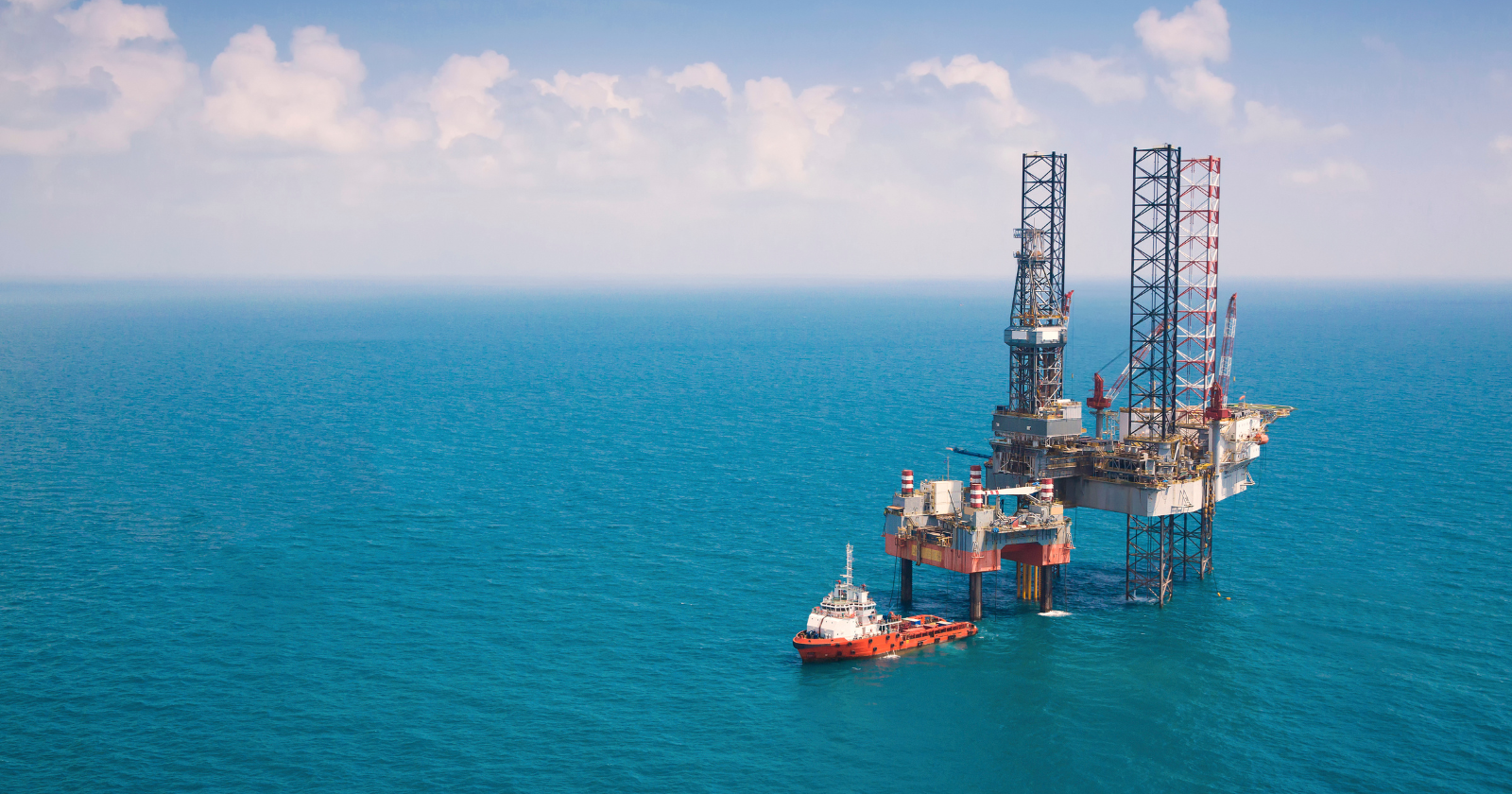
The expedition was designated IODP³-NSF Expedition 501. It was conducted aboard the liftboat L/B Robert, which departed from Bridgeport, Connecticut, on May 19, 2025. The International Ocean Drilling Programme’s official announcement of the mission identifies the co-chief scientists as Brandon Dugan, a geophysics professor at the Colorado School of Mines, and Karen Johannesson, an environmental geochemist at the University of Massachusetts Boston. The team included 41 scientists from 13 nations. They drilled three test holes at locations off the coasts of Martha’s Vineyard and Nantucket, extending as deep as 1,289 feet, or nearly 400 meters, beneath the seafloor.
The drilling recovered approximately 13,200 gallons, or 50,000 liters, of low-salinity water from the three sites. The salinity varied with distance from the shore, in a pattern that is informative about the underlying hydrology. At the site closest to Nantucket the reading was approximately one part per thousand, which is well within the range of safe drinking water. At the middle site it was approximately four to five parts per thousand, still well below the range of seawater. At the farthest site it was approximately seventeen to eighteen parts per thousand, which is roughly half the salinity of ordinary seawater.
The gradient is what suggested that the reservoir extends considerably beyond the immediate vicinity of the drill sites, with the salinity gradually rising as one moves away from the freshest source toward the saltier margins of the body.
What the seal actually is
The feature that allows the reservoir to exist at all is worth attending to. The standard coverage has tended to absorb the existence of freshwater beneath saltwater as a kind of geological curiosity, without engaging with the specific mechanism that maintains the separation.
The mechanism involves an impermeable cap of clay and silt that sits between the saltwater of the ocean above and the freshwater of the reservoir below. The Colorado School of Mines’s coverage of the mission, drawn from the Associated Press wire report filed from aboard the liftboat, quotes Dugan describing the moment the configuration became clear. A salinity reading of four parts per thousand, recorded shortly after Robert arrived at the first drilling site, was, in his words, a eureka moment, because it indicated the water must have been connected to a terrestrial system in the past, or still was.
The seal is robust enough to maintain the separation between the two layers indefinitely under ordinary conditions, even though the layers are in direct physical proximity. Without it, the freshwater would have gradually equilibrated with the surrounding seawater across the intervening millennia, and the reservoir would no longer exist as a distinct hydrological feature. The seal has been doing the slow ongoing work of preserving the distinction between the two water bodies for roughly 20,000 years.
How the reservoir formed
The question of how the reservoir formed in the first place is where the most interesting science of the expedition is currently being conducted.
The evidence suggests that it was emplaced during the last glacial period, roughly 20,000 years ago, when the northeastern part of North America was covered by thick ice sheets. The Vineyard Gazette’s reporting on the expedition’s results notes that the team found two distinct layers of freshwater within the pocket, which Dugan took as supporting the theory that the water comes from a former glacier that was pushed beneath the seafloor and later melted, possibly across two separate glacial events.
This finding has tended to disqualify the alternative hypothesis that had previously been on the table, which held that the aquifer could have been charged by ancient rainwater during periods of low sea levels. The two-layer structure does not fit that hypothesis as cleanly as it fits the glacial-meltwater one. The team has been explicit that further analytical work on the recovered samples will be required to settle the question definitively.
What is clear, regardless of the specific mechanism, is that the conditions that produced the reservoir are no longer operating. The ice sheets that covered the region have been gone for thousands of years. The sea levels have risen to their current configuration. The features that allowed the freshwater to be emplaced in the first place are not currently being replicated. The reservoir is, accordingly, a finite resource that was produced during a specific geological period and that is not being replenished by any currently operating natural process.
What the wider implications actually are
The implications of the finding are considerable. The reservoir extends from offshore New Jersey as far north as Maine, a stretch of roughly 600 kilometers of coastline. The total volume, on the preliminary estimates, is sufficient to supply a population the size of New York City with freshwater for roughly 800 years. Newsweek’s coverage of the confirmed findings includes Dugan’s own assessment that early analyses suggest the reservoir may extend even farther underground than first assumed, raising the possibility that its full volume has been significantly underestimated.
The implications for water security in the northeastern United States are significant. The region has been, on most water-resource projections, facing increasing pressure on its existing freshwater supplies across the coming decades. The reservoir represents a previously undocumented backup supply that could, in principle, be tapped if the existing supplies became inadequate.
The implications also extend to other coastal regions of the world. The conditions that produced the Atlantic reservoir, including the combination of glacial meltwater forcing and impermeable sediment cap formation, were not unique to the northeastern United States. They occurred in other regions of the world during the same general geological period. The evidence suggests that similar reservoirs may exist beneath the seafloor in other coastal regions, and that dedicated investigation could, in principle, identify additional reservoirs of comparable scale.
Why the reservoir is not, in itself, an immediate solution
The honest acknowledgment is that the reservoir does not, by itself, provide a near-term solution to any actual water-supply problem the northeastern United States is currently facing. The reasons are worth examining.
The first is that it is located beneath the seafloor, at depths of up to 400 meters, in offshore locations that are far from the existing water infrastructure of the affected coastal cities. Extraction at scale would require the construction of considerable new infrastructure, including offshore drilling platforms, transport pipelines, and onshore treatment facilities. The construction would, by the standards of how such infrastructure projects actually unfold, take many years to complete.
The second is that the environmental implications of large-scale extraction are not yet understood. Dugan has been explicit, in his comments to Newsweek, that determining whether the reservoir can be safely accessed without harming marine ecosystems is a question that will require additional research across multiple years. The reservoir is embedded in a complex marine environment whose response to large-scale freshwater extraction is not currently predictable.
The third is that the reservoir, while large, is finite. The 800-year figure is the estimate for supplying a city the size of New York City with freshwater. It does not address the question of what happens after 800 years, or whether the region’s growing population would consume the reservoir faster than the estimate suggests. The reservoir is a resource. It is not a permanent solution.
Final words
The implications extend beyond the immediate question of water security in the northeastern United States. The conditions that produced the Atlantic reservoir occurred in other coastal regions of the world during the same general geological period, and the evidence suggests that similar reservoirs may exist beneath the seafloor in those regions. The scientific community will, on the current trajectory, be conducting additional investigations across the coming decade. They will be following the same pattern as the current finding, which was the patient pursuit of a hypothesis that had been sitting in the archives for considerably longer than anyone had been treating as remarkable. The patience is what produced the confirmation. It is worth absorbing what this implies about how much remains to be confirmed in the other hypotheses that the available archives have been quietly preserving across the decades.