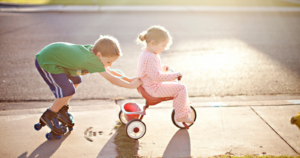
Psychology People who came of age in the 1960s and 70s may carry a fluency in human connection that is harder for the current world to teach By Daniel Moran · May 12, 2026
Psychology Adults who are genuinely kind but have no close family to lean on are not always unlucky — some grew up in households where generosity was mistaken for needing nothing back By Daniel Moran · May 12, 2026
Psychology My dad just turned 70 and he's one of the most contented men I've ever met — and watching him into my own middle age, I've started to understand that what makes him peaceful isn't the life he built, it's the quiet inventory of people he stopped trying to impress, opinions he stopped trying to win, and certainties he stopped needing to defend By Daniel Moran · May 12, 2026
Psychology One reason some adults have no close friends isn't indifference — it's that they've never found someone who could hold the kind of conversation and connection they actually needed By Daniel Moran · May 12, 2026
Psychology Psychology suggests people who constantly apologize for things that aren't their fault may not just be polite — for some, it reflects learning to manage other people's moods By Lachlan Brown · May 12, 2026
Psychology Psychology suggests people who grew up without much praise may struggle with compliments as adults — and some become self-reliant in ways that make reassurance hard to receive By Space Daily Editorial Team · May 12, 2026
Psychology A new study compared AI chatbot responses to those of licensed psychologists and peer counselors — and the gap in ethical standards was significant enough to prompt a call for regulation By Nato Lagidze · May 12, 2026
Psychology Research suggests walking may trigger a brain-cleaning effect scientists are still trying to understand By Nato Lagidze · May 11, 2026
Psychology Psychology suggests people who browse social media but never post aren't necessarily passive — some may have quietly opted out of the pressure to perform By Lachlan Brown · May 11, 2026
Psychology Psychology suggests people who reach their 60s without close friends aren't necessarily socially broken — some spent years being needed but rarely known By Space Daily Editorial Team · May 11, 2026
Psychology Psychology suggests people who stay genuinely fit as they age aren’t always the most disciplined — often, they’re the ones who made movement part of a life they still wanted By Space Daily Editorial Team · May 11, 2026
Psychology Psychology suggests some lonely people can look socially skilled because they learned to perform connection instead of feel it By Space Daily Editorial Team · May 11, 2026
Psychology People who browse social media but never comment, engage, or post are not necessarily isolated — some maintain rich offline lives that platforms cannot measure By Space Daily Editorial Team · May 8, 2026
Psychology Retirees with no close friends often aren't lonely in the way the world assumes — many of them are recovering from forty years of being surrounded by relationships that required them to be useful rather than known, and the quiet of late life is the first time they've heard themselves think without performing By Space Daily Editorial Team · May 8, 2026
Psychology The most painful kind of loneliness isn't being alone — it's being with people who have known you for years and still don't quite see you By Space Daily Editorial Team · May 8, 2026
Psychology People who grew up in the 60s or 70s are often praised by their adult children as having been "tough" — and the painful late-life recognition is that toughness was the family's word for a child who had figured out how to survive the absence of a curious adult, and the praise that arrives now is the same praise that was used at six to keep the child from asking for what they actually needed By Space Daily Editorial Team · May 8, 2026