Human
The universal psychology lane. Stories about how people relate to one another, themselves, and the world — written for readers who are curious about why we behave the way we do. Sister section to Space Psychology.

Human Behaviour

Human Behaviour
In 2003, an Oxford philosopher named Nick Bostrom published an argument that we are statistically more likely to be inside a computer simulation than in original reality — provided any sufficiently advanced civilization runs simulations of its own ancestors, a conditional that has reshaped serious debate about the nature of existence

Human Behaviour
Smell has a direct neural pathway to the brain's memory centres — and researchers used that to produce a 226% performance gap on a memory test, without drugs or training

Human Behaviour
Sixty years before ChatGPT, a chatbot called ELIZA was already making people pour their secrets into a computer — and its creator considered that a catastrophe, not a success

Psychology
There is a documented psychological shift, first described by astronauts who saw the Earth from space, called the overview effect — in which seeing the planet as a single fragile sphere with no visible borders causes a profound and often permanent change in worldview, leaving many astronauts unable to think about human conflict the same way again.

Human Behaviour
The 1983 made-for-TV film 'The Day After' was watched by an estimated 100 million Americans on a single Sunday night, and Ronald Reagan wrote in his diary that it left him 'greatly depressed', a reaction his biographers later linked directly to his push for the Reykjavik disarmament summit three years later.

Human Behaviour
Scientists have discovered that air filters can capture DNA floating in the atmosphere and it can identify wildlife, viruses, and even plants linked to drugs nearby

Human Behaviour
The kiwifruit was once called the Chinese gooseberry, until New Zealand growers renamed it in 1959 to escape Cold War suspicion, berry tariffs, and a name shoppers did not want

Human Behaviour
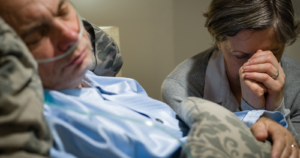
Hearing is widely believed to be the last sense to fade, and a 2020 University of British Columbia EEG study on dying hospice patients found their brains still responded to sound in the final hours of unresponsiveness, suggesting the voices of loved ones in the room are genuinely reaching them

Human Behaviour
A 2013 University of Michigan study on rats found that in the 30 seconds after cardiac arrest, the brain produced a surge of high-frequency gamma waves more coherent than during waking life, a neural fireworks display some researchers think could underlie the vivid imagery reported in near-death experiences

Human Behaviour
New Zealand soldiers in the First World War were nicknamed Kiwis by their British counterparts long before the fruit took the name, and by 1919 a giant kiwi bird had been carved into the chalk hillside above Bulford Camp in Wiltshire, where it remains visible today.

Human Behaviour
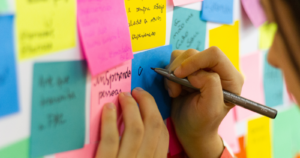
David Allen's Getting Things Done system became famous for one simple idea: your brain is for having ideas, not holding them, and every uncaptured task quietly taxes the mental space you need to think

Psychology
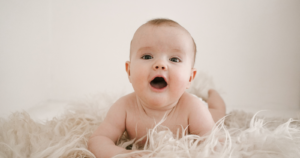
In 1972, New Zealand researchers began following more than a thousand babies born in a single coastal city, intending to study how childhood shapes adult life — and more than five decades later, the single childhood trait that most consistently predicts adult health, wealth, and happiness is not intelligence or family income, but something much harder to teach

Human Behaviour
On December 3, 1992, a 22-year-old British software engineer named Neil Papworth sat at a desktop computer in his office and sent the first text message ever transmitted — two words long, reading simply "Merry Christmas" — to a Vodafone executive at an office party across town, who couldn't reply because mobile phones at the time had no way to send texts back

Human Behaviour
The world produces approximately 460 million tonnes of plastic every year — roughly 230 times the amount produced in 1950 — and only about 9 percent of all plastic ever made has been recycled, with the remainder either burned, sent to landfills, or quietly accumulating in the environment, where researchers are now finding microplastic particles in human blood, brain tissue, and the placentas of newborns.

Psychology