

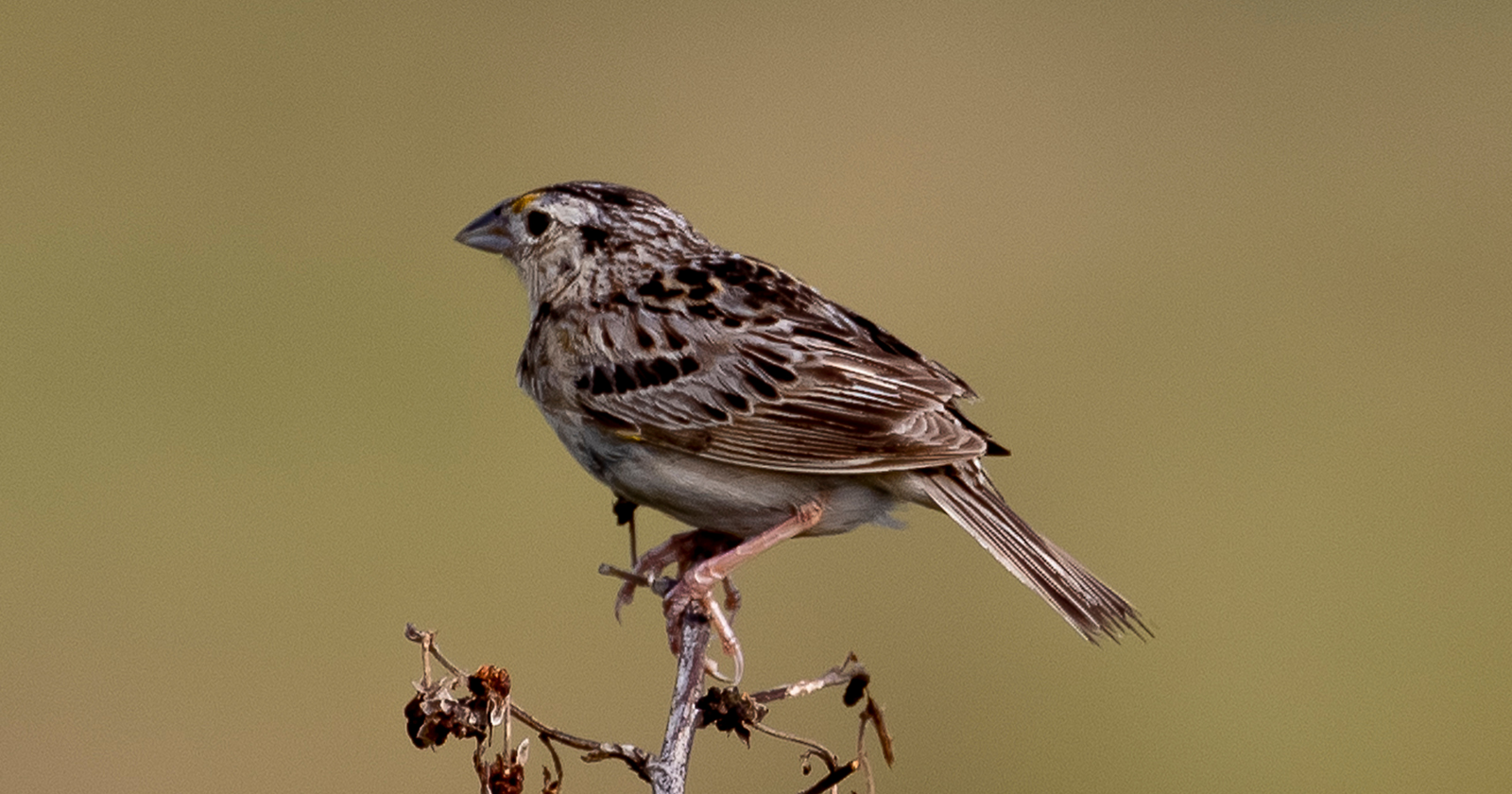
The grasshopper sparrow is a bird built for not being noticed. Four inches of buff and brown, flat-headed, short-tailed, it runs along the ground like a mouse and sings a song most people mistake for an insect, one or two chips and a thin, buzzing trill from somewhere down in the grass. To find one in New York State in this century, you would go to the last surviving hayfields and meadows upstate, and you would probably fail; between the state’s breeding bird surveys of the 1980s and 2000s, the species’ New York population collapsed by 97 percent.
Or you could take the ferry to Staten Island and stand on top of half a century of New York City’s garbage, where the bird is doing better than almost anywhere else in the state.
The mountain range made of Mondays
Fresh Kills was, for the second half of the twentieth century, the destination of New York’s trash, growing into the largest landfill on Earth, four mounds of compacted refuse rising up to 200 feet over the wetlands of western Staten Island. It closed in 2001, reopened briefly for the terrible work of receiving World Trade Center debris, and then began the longest transformation in the city’s parks history: the 2,200-acre site is becoming Freshkills Park, three times the size of Central Park, opening in stages through 2036.
The engineering under the picnic meadows is the part that matters for the birds. Each mound is sealed under a landfill cap, a sandwich of soil layers, geotextiles and an impermeable plastic geomembrane, plumbed with wells that collect the methane still brewing below. On top of the cap goes planting soil, and on the soil, native grasses, seeded across the mounds by the Department of Sanitation until half the park’s 2,200 acres had become meadow. New York City, which spent the twentieth century burying its grasslands under development, spent the start of the twenty-first accidentally building the largest new grassland in the region, on top of everything it had thrown away.
The sparrows audit the real estate
Grassland birds found it with the ruthless efficiency of animals that have run out of options. Researchers from the College of Staten Island, led by ornithologist Richard Veit, had been counting birds on the Fresh Kills mounds since the 1990s, and they logged the succession as the caps greened: wintering flocks of savannah sparrows, horned larks and snow buntings first, then, in 2015, the discovery Veit himself found surprising, grasshopper sparrows nesting on the capped landfill, a state species of special concern breeding inside New York City limits.
The colony compounded like an investment. From that first detection to 21 nesting pairs in 2017, and by 2020 the NYC Bird Alliance was reporting the species going gangbusters, with over 50 pairs nesting at the park in a single season, one of the healthiest concentrations in a state that has nearly lost the bird. They have been joined by the rest of the grassland guild’s refugees: bobolinks, long absent as city breeders, sedge wrens, savannah sparrows, meadowlarks, with kestrels and harriers hunting over the top. The birds are choosy in ways the researchers can measure; the sparrows nest almost exclusively on the park’s East Mound, whose grass structure suits them, and avoid the North Mound next door, a preference now steering how the park manages its meadows.
Why the garbage grassland lasts
Here is the mechanism that turns a feel-good anecdote into a durable conservation asset. Ordinary abandoned grassland in the Northeast is a countdown: leave a meadow alone and shrubs arrive within years, trees within decades, and the grassland birds move out long before the forest moves in. That succession is precisely why the region’s grasshopper sparrows crashed as farms were abandoned or developed; less than one percent of the Northeast’s original grasslands remain, and what remains keeps trying to become woods.
A capped landfill is the rare exception, and by design rather than intention. The engineered cap cannot be allowed to grow deep roots; trees would pierce the plastic membrane and the drainage layers that keep rain out of the buried garbage, so regulations require the mounds be kept in shallow-rooted herbaceous cover, mowed and managed, essentially forever. The same rule that protects the seal protects the sparrows. Succession, the force that erases every other Northeastern meadow, is legally and structurally forbidden on a landfill cap. The trash below, in other words, is the grassland’s endowment: as long as the garbage must stay sealed, the grass must stay grass.
Conservationists have taken the hint, and capped landfills across the region are now managed deliberately as grassland bird habitat, an archipelago of permanent meadows on the one kind of land guaranteed never to sprout condos or oaks. It is not the return of the world the grasshopper sparrow lost; it is a strange, engineered substitute, a bird that once followed wildfires and floodplains now following the geomembrane. But the sparrows are not sentimental. They audit grass height, insect supply and safety from foxes, and by those measures a sealed mountain of Staten Island’s discarded decades, buzzing with methane wells below and trilling above, is the best real estate New York has offered them in forty years.
