
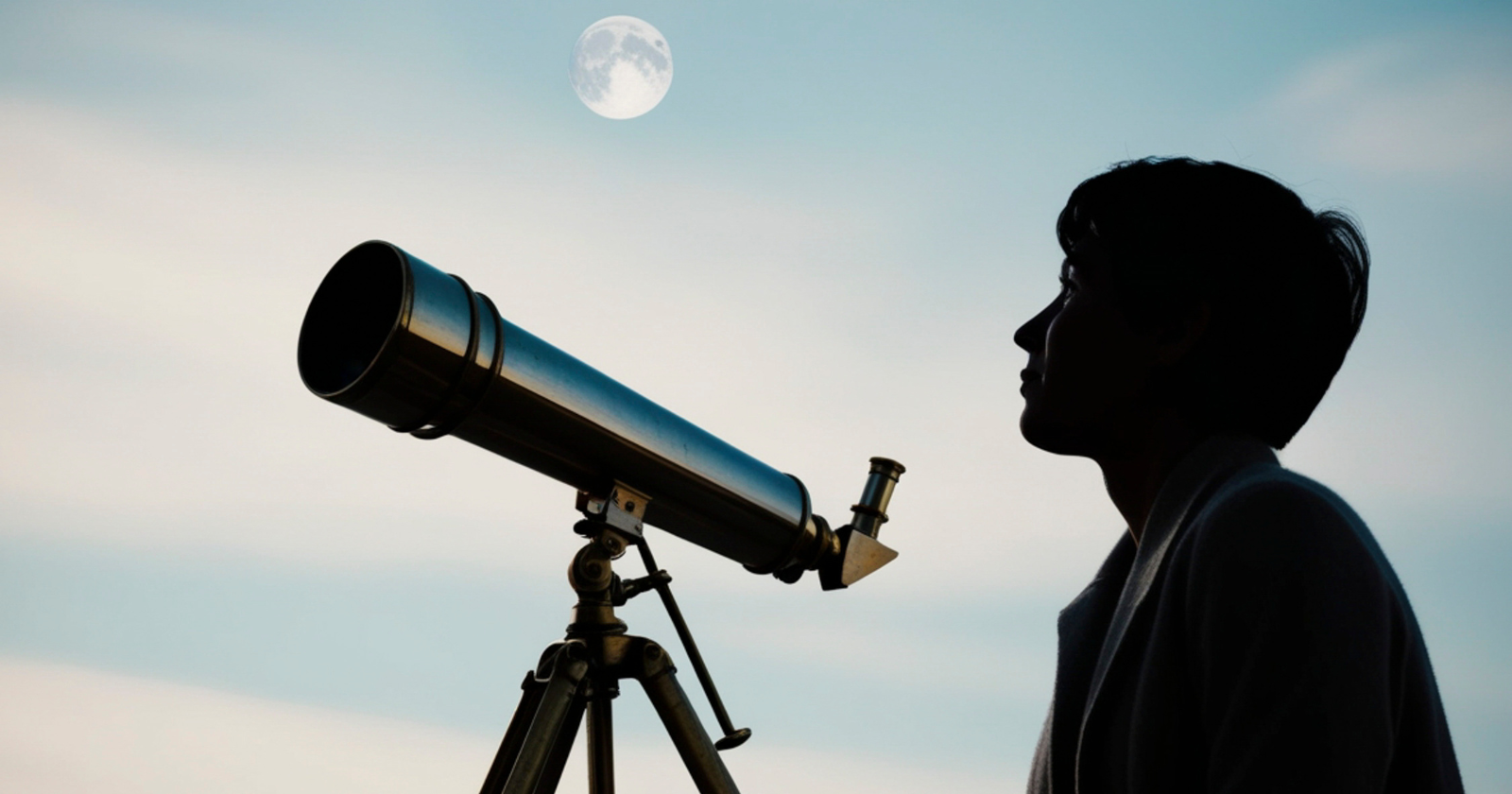
On the evening of September 9, 1999, a Harvard graduate student named David Charbonneau drove to a parking lot in Boulder, Colorado, and let himself into a small wooden shed.
Inside was a telescope. Not a large one. The kind of instrument that, by professional astronomical standards, was almost embarrassingly small — a four-inch aperture, the size of something a serious amateur stargazer might keep in their backyard.
Charbonneau was twenty-five years old. He was working with the astronomer Tim Brown at the High Altitude Observatory, on what most of the established astronomical community considered, at best, a long shot. He was trying to detect a planet around another star — not by the wobble it caused in its star’s motion, the standard method of the time, but by the tiny shadow it would cast as it passed between Earth and the star’s face.
The expected dip was around 1%. Smaller than a passing insect crossing a porch light. From a wooden shed. Through Earth’s hazy atmosphere. With a telescope you could buy at a hobby shop.
What happened over the next few hours would help change the entire science of finding planets.
The star and the long shot
The target was HD 209458, a sun-like star about 150 light-years away in the constellation Pegasus.
Earlier that same year, two teams of astronomers using the Doppler radial-velocity method had detected a planet orbiting HD 209458. The radial-velocity method works by measuring the tiny gravitational wobble a planet causes in its host star — but it can’t directly prove the orbiting body is a planet. It only proves something is tugging on the star. To confirm the body was definitely a planet, and to measure its actual size and density, you needed a different kind of observation.
The geometry of HD 209458’s orbit happened to be favourable. If the planet’s orbital plane was aligned correctly with our line of sight, it would pass directly in front of its star — and from Earth, that would look like a brief, faint dimming of the starlight. A transit. The technique had been theorised for decades but never used to detect a planet.
Tim Brown’s small Colorado setup, called STARE — Stellar Astrophysics and Research on Exoplanets — was built precisely for this kind of measurement. The four-inch telescope, mounted in a small wooden shed in the parking lot of the High Altitude Observatory, would stare at fields of stars and watch for the tiny dimming events that might reveal a planet crossing.
Charbonneau later recalled the moment Brown introduced him to the equipment. “Tim pointed me to a small wooden shed in a parking lot,” he said. The setup was modest enough that the obvious question was whether such a small instrument could possibly detect something that subtle.
What he saw
The answer arrived on September 9, 1999.
As Charbonneau and Brown watched, HD 209458’s brightness dipped — by close to 2% — for about three hours, then returned to normal. A week later, on September 16, it dipped again. Both events matched the predicted orbital period of the planet that the radial-velocity teams had already proposed. It was the unmistakable signature of a planet — eventually named HD 209458b — passing in front of its star.
It was the first time any human being had directly watched the shadow of a planet outside our solar system cross its star.
Charbonneau and Brown were not alone in the moment. A separate team led by Gregory Henry, working independently, detected a partial transit of the same star in November of that year. Their two papers were submitted to The Astrophysical Journal within a day of each other, and published simultaneously in the same issue. The detection of HD 209458b became one of the cleanest examples of competitive science producing duplicate, mutually confirming results.
Why the small telescope worked
It is easy to assume that finding something as faint as a planetary shadow requires the largest, most sophisticated instruments. The HD 209458 detection demonstrated that this is not true.
What made the transit detectable wasn’t the size of the telescope. It was the precision and stability of the measurement. STARE was designed to do one specific thing exceptionally well: measure the brightness of stars with high consistency over time. A tiny dip — even a 1% dip — becomes detectable if your noise floor is low enough.
This was the deeper lesson buried in Charbonneau’s observation. The transit method didn’t require enormous apertures. It required steady measurements of brightness, repeated over long periods. That insight changed how the entire field thought about exoplanet detection — and shaped what came next.
Thousands of worlds
The transit method, validated by that September observation, became the most successful exoplanet detection technique in history.
A decade after Charbonneau’s observation, NASA launched the Kepler space telescope — a mission built on exactly the principle the Colorado shed had demonstrated. Kepler stared continuously at about 150,000 stars in the constellation Cygnus, watching for the tiny dips in light that a transiting planet would cause. By the end of its mission in 2018, Kepler had confirmed more than 2,600 exoplanets, with thousands of additional candidates still being analysed.
The total number of confirmed exoplanets now stands at over 6,000, with the NASA Exoplanet Archive recording 6,298 confirmed worlds as of June 2026. The transit method has contributed the majority of those detections.
Two newer space telescopes — TESS and the upcoming Nancy Grace Roman Space Telescope — are extending the same basic technique. Roman, scheduled to launch in late 2026, is expected to identify and characterise as many as 100,000 additional exoplanets over its five-year primary mission.
All of it, traceable back to a small wooden shed in a Boulder parking lot, on a September night when a 25-year-old graduate student looked at a tiny dip in a star’s light and recognised what he was seeing.
That dip is now one of the most photographed light curves in modern astronomy. The shed is still there.
