

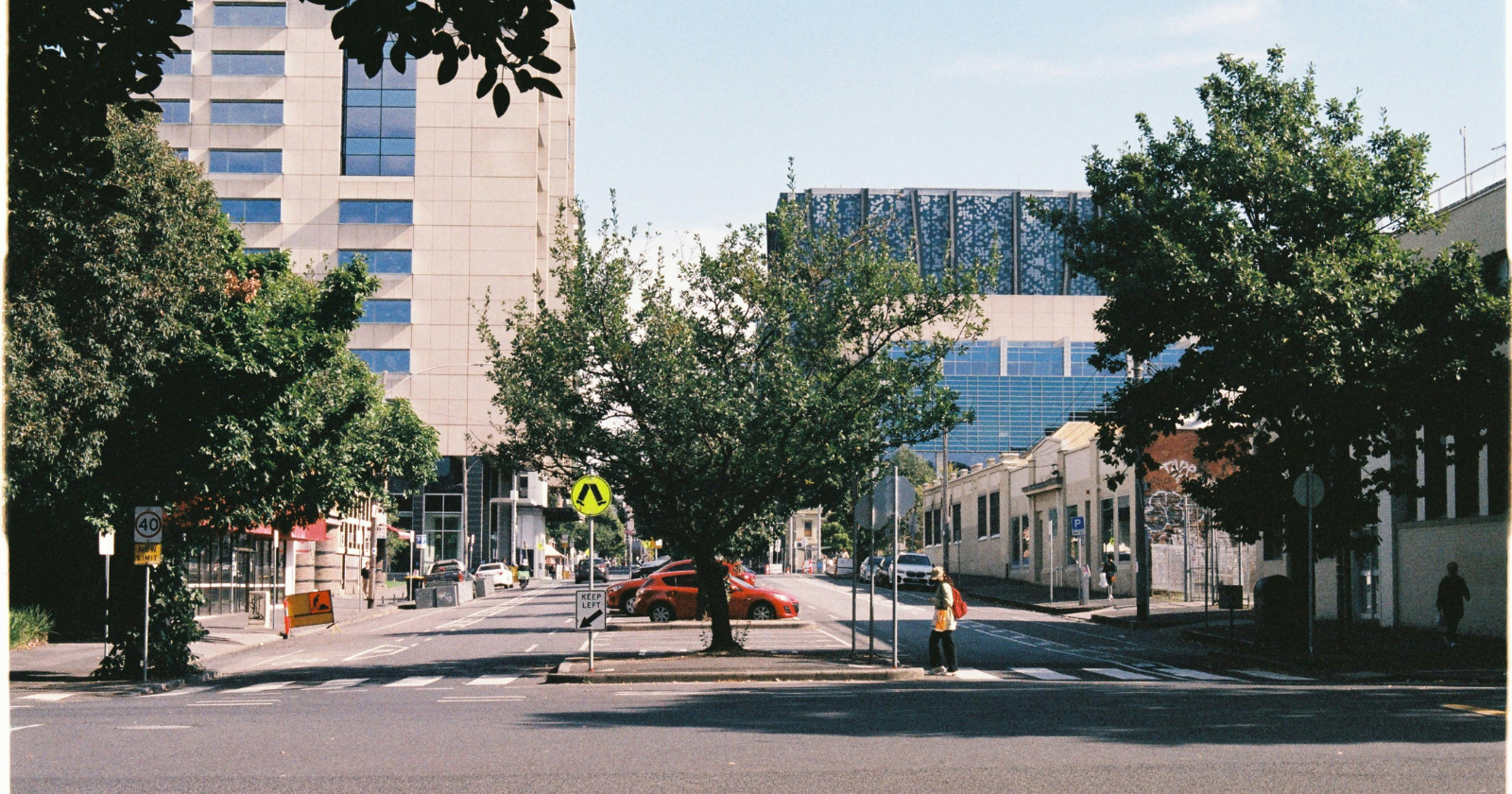
In 2013, the City of Melbourne did something entirely practical and slightly bureaucratic. As part of an urban-forest program, it built an interactive online map of the city’s roughly 70,000 public trees — every one tagged with an ID number, its species and age, and, so citizens could flag problems, a unique email address.
The idea was maintenance. See a dangerous hanging branch, a diseased elm, a limb down after a storm? Click the tree, send an email, and the council’s arborists would know exactly which tree you meant.
The people of Melbourne had other plans.
Dear tree
Instead of reporting broken branches, residents started writing to the trees. Not about the trees — to them.
They sent fan mail and thank-you notes. They sent confessions. They wrote to a favourite elm on the way to work to say it made them happy; they wrote to a gum they cycled past every day to say how much joy it gave them, in any weather. One writer told a tree the whole strange backstory of why it mattered — a driving instructor who smelled of cat food and peppermints had once named it his favourite. Another confessed, tree to tree, to having fallen in love with a different tree elsewhere in the city.
The council had expected a maintenance inbox. What it got was a postbox for a city’s private feelings, addressed to its trees.
Thousands of letters, from everywhere
The story went around the world, and so did the letters. Once news of Melbourne’s emailable trees spread — through the Atlantic, the BBC and countless others — messages began arriving not just from Melburnians but from Russia, Germany, Hungary, Singapore, Britain and beyond.
By some counts the trees received more than 4,000 emails within a few years, and well over 10,000 in the program’s first eight — a running total that has never really stopped. People asked the trees biological questions. They asked their opinions on current events. During the pandemic lockdowns, when Melbourne endured some of the longest stay-at-home orders on Earth, writing to a tree became a small act of connection for people cut off from nearly everything else, and life coaches and bloggers openly encouraged it.
The council’s environment chair called the whole phenomenon an “unintended but positive consequence” of giving each tree an identity — which may be the most Melbourne way imaginable of saying the city accidentally invented a pen-pal service between lonely humans and silent trees.
The trees write back
Here is the part that turns a nice story into a great one: sometimes the trees reply.
The emails are monitored by the City of Melbourne’s Urban Forest team, and when a message asks a genuine question, staff have taken to answering — in character, in the voice of the tree. A cyclist admired a Lemon Scented Gum’s trunk and wished there were more of them along the road; the gum wrote back that it, too, would love more of its cousins in the neighbourhood. Someone asked a Western Red Cedar its view on the Greek debt crisis, and the cedar replied that Greece was “not out of the woods yet.” When a writer asked a willow-leaf peppermint about tree gender, the tree answered with a small, accurate botany lesson about which species carry male and female flowers.
The team happens to be multilingual, so the trees have answered in German, Hungarian and Spanish as well as English. Somewhere in a council office, in other words, there are people whose occasional job is to be a tree — thoughtfully, and in several languages.
Why it worked
It would be easy to treat this as a viral curiosity, but there’s something real underneath it worth naming.
The council never asked anyone to love the trees. It just gave each one a name and a way to be addressed — an identity and an inbox — and it turned out that was the only permission people needed. A tree you can email is a tree you can talk to, and a tree you can talk to stops being scenery and becomes, a little, a someone. The ID number meant to streamline pruning quietly did something else: it made 70,000 anonymous trees into 70,000 named individuals, each one now capable of receiving a confession.
The practical program still runs, and the trees still get the occasional genuine damage report — that part works fine. But the enduring legacy of Melbourne’s urban forest map is the accidental discovery that people are aching to express affection for the living things around them, and mostly just lack an address to send it to. Give a tree an email account and the maintenance requests will trickle in. The love letters will pour. Melbourne set out to manage a forest and found out, by accident, that its citizens were quietly, hopelessly fond of it — and had only been waiting for somewhere to write.
