

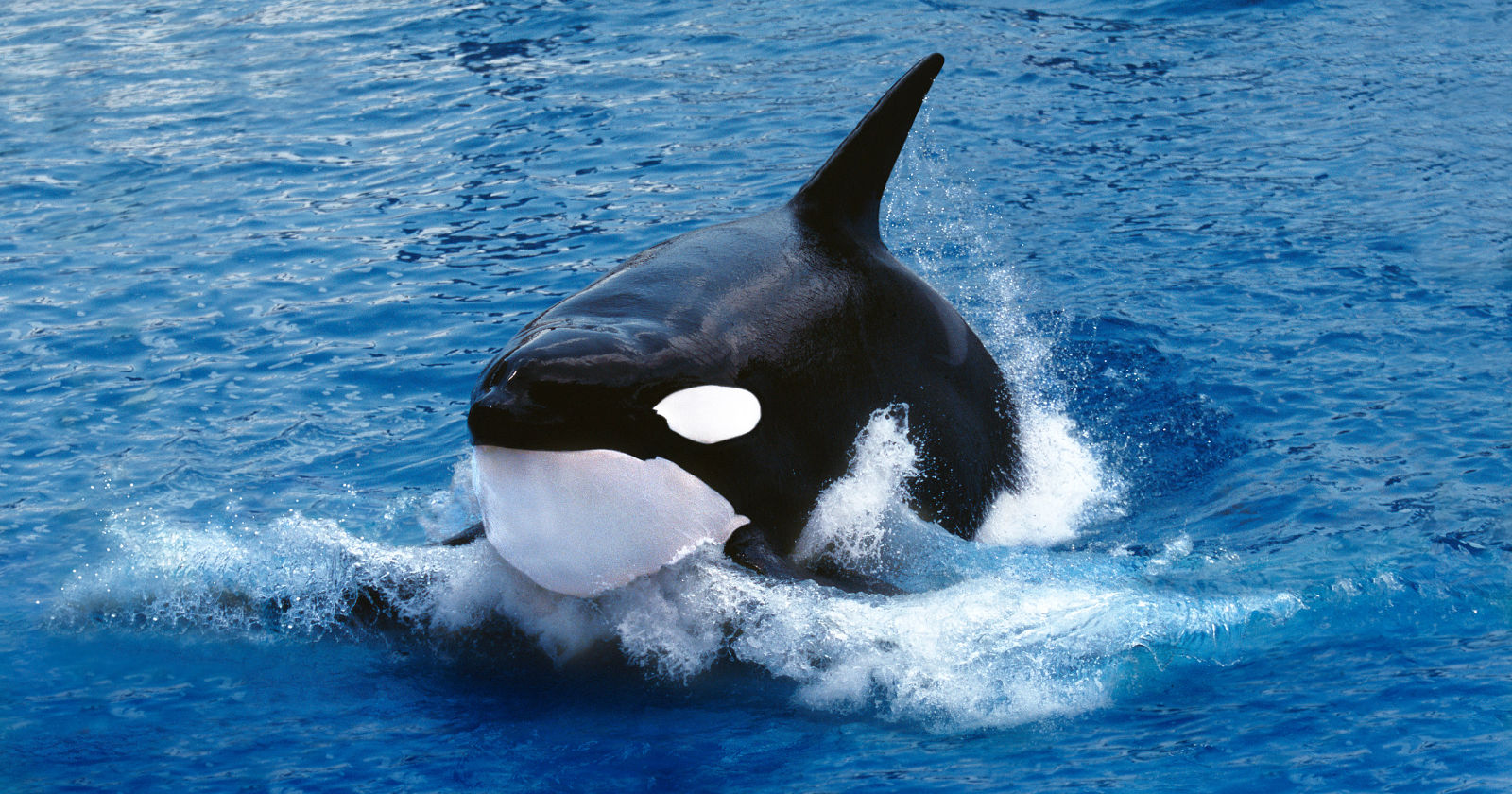
On October 25, 2024, a photographer named Jim Pasola was watching the water off Point No Point, a spit of land in Washington’s Puget Sound, as members of J pod hunted salmon. One of the orcas surfaced looking wrong. A big 33-year-old male known as J27, or Blackberry, was cruising along with a dead salmon draped neatly across the top of his head.
Pasola got the shot, the Orca Network shared it, and marine biologists across the Pacific Northwest all had roughly the same reaction. Not “what is that?” They knew exactly what it was. The reaction was closer to: not this again.
The summer of the salmon hat
To understand why, you have to go back to 1987. That summer, a female orca in K pod, one of the three family groups that make up the endangered southern resident population, began carrying a dead salmon balanced on her head. There was no obvious reason. She was not eating it, exactly. She was wearing it.
Within weeks, the behavior had spread through her own pod, then jumped to J pod and L pod, until whales across all three families were swimming around Puget Sound with fish on their heads. Researchers who watched it happen describe it exactly the way you would describe a human craze, passing from individual to individual for no purpose anyone could identify. Then, as abruptly as it started, it stopped. A few stragglers wore salmon the following summer, the way some people were still buying leg warmers in 1989, and after that the behavior vanished from the population entirely.
For 37 years, nobody saw a salmon hat.
Fashion victims of the sea
The 1987 episode became a small classic in the study of animal culture, cited alongside other documented cetacean fads. Orcas are long-lived, intensely social animals that learn their dialects, hunting techniques and food preferences from their families, and every so often a pod invents something that spreads like a trend and dies like one. Off Spain and Portugal in recent years, a subgroup of orcas took up bumping and breaking sailboat rudders; researchers suspect that, too, is closer to a game that caught on than an act of war.
The salmon hat is the tidiest example because it is so purely pointless. The southern residents eat only salmon, so a dead fish is valuable food, and one guess is that hat-wearing happens in seasons of plenty, when a whale can afford to treat lunch as a toy. It is probably relevant that the fall of 2024 brought an unusually rich run of chum salmon into Puget Sound, and the week of Pasola’s photo, J pod was seen in the area ten days straight, feeding well. Well-fed orcas socialize and play more. Bored, comfortable and surrounded by props, somebody started accessorizing. Sightings that season were reported from South Puget Sound as well, suggesting Blackberry was not entirely alone in the revival.
The memory problem
Here is the wrinkle that elevates the story from cute to genuinely interesting. J27 Blackberry was born around 1991, four years after the fad died. He never saw the original craze. Yet the behavior he performed was, to the researchers who study these whales, unmistakably the same one.
That leaves a few possibilities, all remarkable. Orcas can live a very long time, females sometimes into their 80s, and several members of today’s pods were alive and swimming in 1987. Andrew Foote, an evolutionary ecologist who studies killer whales, suggested that some of the original participants may still remember the fad, meaning the trend could have been revived by a whale carrying the memory across nearly four decades and passing it to a male born after it ended. The alternative is that Blackberry independently reinvented the exact same behavior in the exact same waters, which would say something equally striking about what these animals do with abundance and spare time.
Deborah Giles of the research nonprofit Wild Orca, who has studied the southern residents for years, was frank about the limits of what anyone knows: why it started, why it stopped, and why it surfaced again are all open questions.
A one-off or a comeback?
Not everyone was ready to declare the eighties officially back. Monika Wieland Shields of the Orca Behavior Institute cautioned that a single photographed whale may simply have been carrying a snack for later, something orcas do occasionally, and by December the Orca Network confirmed no further hat images had come in. The southern residents are among the most photographed wild animals on Earth, so if the fad had fully reignited, the evidence would likely have flooded in.
Which, in a way, makes the sighting better. Either a fad returned, or one whale, in rich waters on a good week, performed a gesture last seen when his elders were young, watched by relatives old enough to remember it. The southern residents number only around 73 animals and remain endangered, short of the big Chinook salmon they depend on most. A population healthy enough to be silly, even for one afternoon, was the sight researchers were happiest to see, fish hat and all.
