

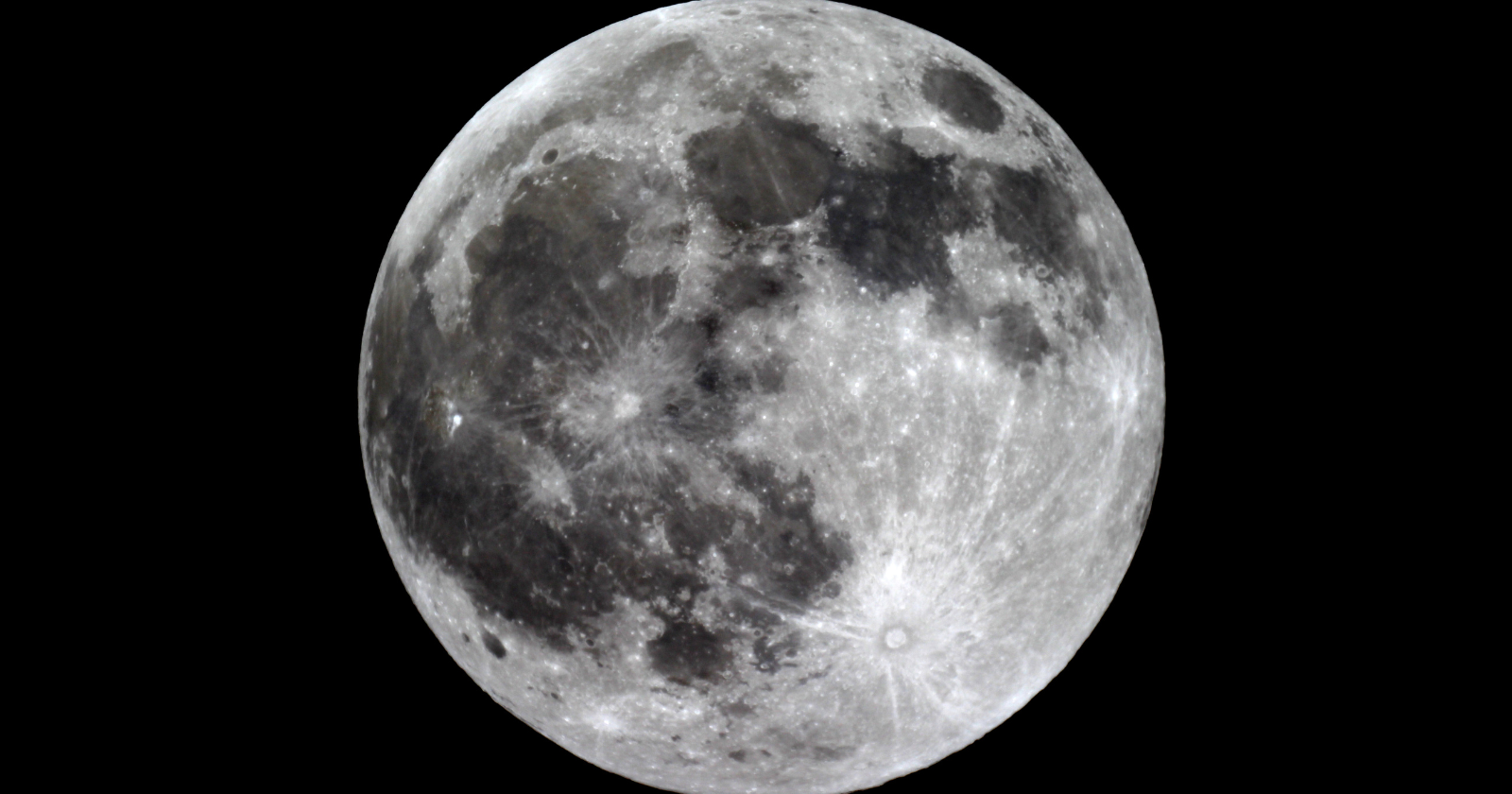
On the morning of 10 January 1946, at a scrubby Army post near the New Jersey shore called Camp Evans, a small team of Signal Corps engineers pointed a modified wartime radar antenna at the horizon and waited for the Moon to rise.
Source note: A U.S. Army history of Project Diana confirms the Signal Corps experiment, the January 10, 1946 date and the 2.5-second round trip.
At 11:48 am, with the Moon just clearing the trees, they keyed the transmitter. A pulse of radio energy left the antenna, crossed 384,000 kilometres of empty space, splashed against the lunar surface, and a faint remnant of it fell back to Earth. Two and a half seconds after each pulse went out, a soft blip appeared on the receiver’s screen and a tone sounded in the loudspeaker.
That blip was history’s quietest first contact. Nothing built by human beings had ever touched another world and been known to do it. Now something had, and it had come back to say so.
The man who waited six years
The project was the obsession of Lieutenant Colonel John DeWitt, a radio engineer from Nashville who had tried to detect radio waves reflected from the Moon as far back as 1940, with equipment nowhere near up to the job. The war interrupted the dream and then, in a roundabout way, funded it: DeWitt spent the war years working on radar, and by 1945 he was running the Army’s Evans Signal Laboratory with a warehouse of surplus equipment and a mandate that fit his old idea perfectly.
The Army’s interest was not poetry. Officials wanted to know whether radio signals could punch through the ionosphere, the electrically charged upper atmosphere that reflects ordinary radio back down to Earth. Ballistic missiles were coming; a future of communicating with, tracking, or listening to things beyond the atmosphere depended on whether radio could get out at all. Bouncing a signal off the Moon would settle the question in the most direct way imaginable.
DeWitt named the effort Project Diana, after the Roman goddess of the Moon, and assembled a small team including the mathematician Walter McAfee, an African American physicist whose calculations of the Moon’s reflectivity were central to the design, though his role went publicly unrecognized for decades.
Junkyard engineering
Nothing about Diana was purpose-built. The team took a standard SCR-271 radar, the kind that had watched for aircraft during the war, and rebuilt it for power and patience. Two antenna frames were bolted together into a bedspring-like array the size of a billboard, mounted on a tower that could only swivel in azimuth, not tilt. That limitation dictated the schedule: the experiment could only run in the roughly 40-minute windows around moonrise and moonset, when the Moon sat near the horizon in the antenna’s fixed gaze.
The physics demanded extreme measures. A radar pulse weakens with the fourth power of distance, and the Moon was thousands of times farther than any target radar had ever been asked to find. The team stretched each transmission into a long quarter-second pulse, cranked the transmitter to around 3,000 watts, and narrowed the receiver to a whisker-thin band of frequencies. They even had to correct for the Doppler shift caused by the Earth’s rotation carrying New Jersey toward or away from the Moon, retuning constantly as the geometry changed.
For weeks through late 1945 and into the new year, it did not work. Then, three days after New Year, with a freshly repaired receiver, the echoes finally came, and on 10 January they came clearly and repeatably. The team let the Moon answer them again and again, measuring the delay at 2.5 seconds, exactly what light-speed travel over the round trip predicted. The Army sat on the news for two weeks to be sure, then announced it to the world on 24 January 1946.
What the echo proved
Newspapers treated it as a marvel, and it was, but the technical implications were the real cargo. The ionosphere was not a sealed roof. Radio at the right frequencies passed straight through it, twice, and survived the trip with enough integrity to be detected. That single fact underwrote everything that followed: satellite communication, deep-space telemetry, planetary radar, the whole radio umbilical connecting Earth to its machines.
It also founded a science. If you could bounce radio off the Moon, you could bounce it off other worlds and read the echoes. Radar astronomy grew directly from Diana’s bedspring antenna, eventually measuring the rotation of Venus, mapping asteroids, and refining the distances of the solar system.
And it started a tradition that never died. Amateur radio operators still communicate by bouncing signals off the Moon, a technique called Earth-Moon-Earth, and every one of those contacts is a small reenactment of that January morning in New Jersey.
Eleven years before the beep
Sputnik’s beep in October 1957 is remembered as the opening note of the space age, and fairly so: it was the first human object physically placed beyond the atmosphere. But the space age’s overture came earlier, in a signal rather than a satellite. Before anything of ours flew to another world, something of ours touched one, at the speed of light, and returned.
The site of Camp Evans still stands, and the science center there bears the project’s name. The Moon, for its part, has been answering us ever since: with echoes, then with probes, then with footprints. The first word in that long conversation was a radar blip, 2.5 seconds late, heard by a handful of engineers on a cold morning who had just proven the sky was open.
