

Investment banks acquire strange things when loans go bad. In 2002, Goldman Sachs bought a portfolio of distressed debt — the kind of bulk purchase of soured notes that Wall Street does routinely — and discovered that one of the assets securing it was a wilderness at the bottom of the world.
The collateral was roughly 680,000 acres of the Chilean side of Tierra del Fuego, the island archipelago shared by Chile and Argentina at South America’s southern tip: old-growth forest, peat bog, grassland and mountain, an area larger than the state of Rhode Island. The debt had belonged to the Trillium Corporation, an American timber company — and Trillium’s plans for that ground are the reason the story matters.
The forest that was going to fall
Trillium had bought the land to log it. The prize was lenga, the southern beech that forms the great old-growth canopies of Fuegian forest, and the company intended a large commercial harvest.
It ran into a wall of opposition — Chilean and international environmentalists fought the project for years — and, tangled in that fight and its finances, Trillium ultimately defaulted on the debt those forests secured. Which is how the notes, and then effectively the land, washed up on Goldman Sachs’s books in New York: a clear-cut waiting to happen, now owned by a bank with no timber ambitions and no obvious reason to hold a Patagonian forest.
The default-driven, do-nothing outcome would have been to flip it — sell the land to another timber operator, or a developer, and book the recovery. That is what the asset was for.
The bank that gave it away
Goldman did the opposite. Then-CEO Hank Paulson — a lifelong conservationist and birder who would soon leave to become U.S. Treasury Secretary — pushed the firm toward a different verdict: that the highest use of this particular property was not to monetize it but to preserve it.
In 2004, rather than selling, Goldman Sachs donated the entire holding to the Wildlife Conservation Society — the century-old New York nonprofit that runs the Bronx Zoo and conservation programs worldwide — and pledged US$12 million to help protect and manage it. WCS took title and ownership; the land became Karukinka, a name meaning “our land” in the tongue of the Selk’nam, the Indigenous people who lived on the island before colonization erased them.
At its creation it was, by WCS’s account, the largest private conservation land donation in the world up to that date. A tract assembled to be logged had, without changing a single boundary line, become one of the largest private nature reserves in Chile.
What the trees were hiding
The land Goldman nearly held as an ordinary asset turned out to be an ecological headline in its own right.
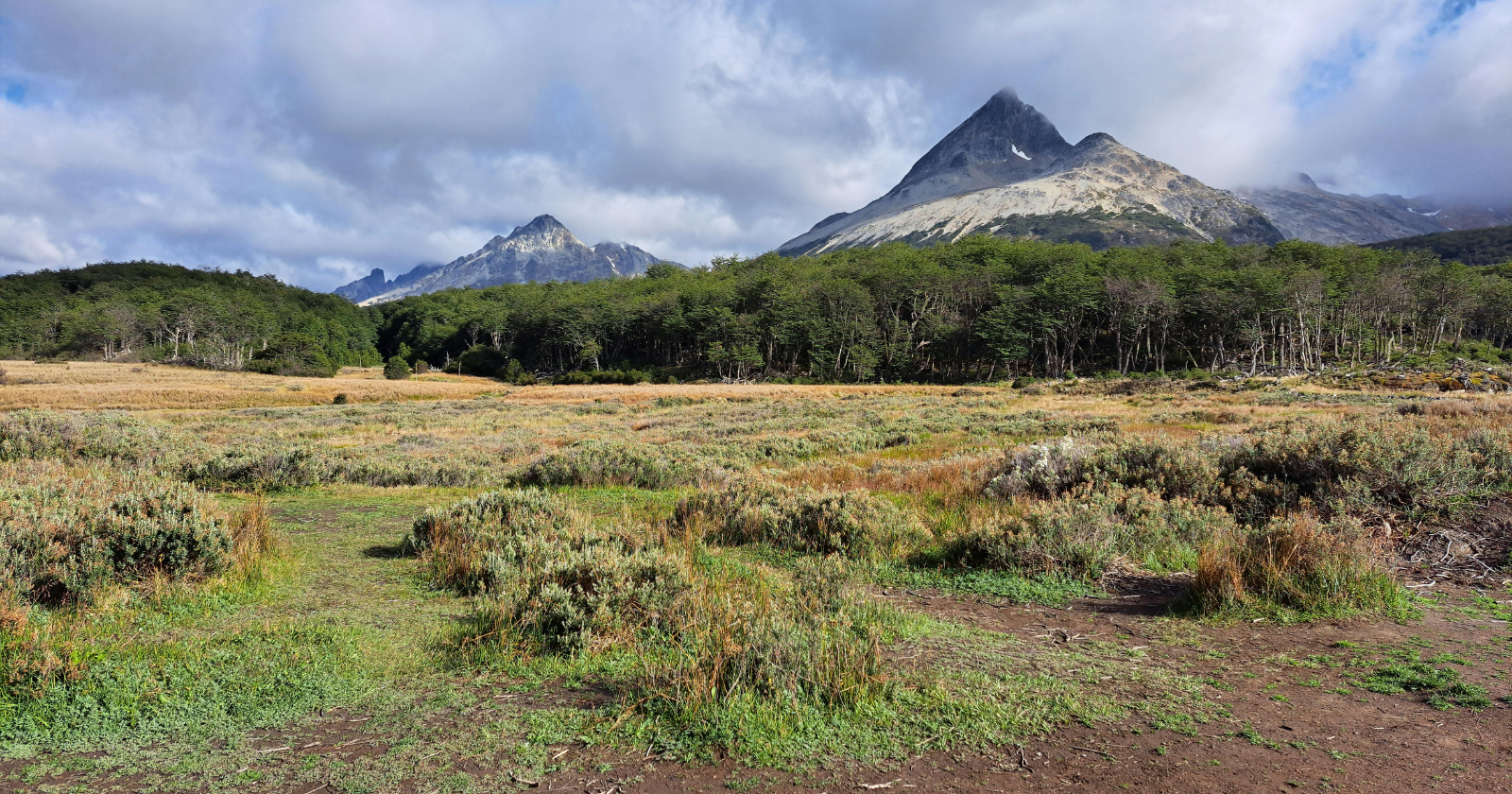
Karukinka protects the world’s southernmost stands of old-growth forest — the lenga Trillium meant to cut — along with grasslands, rivers and vast peatlands, and it holds the largest population of guanacos in Chile, roughly 60 percent of the country’s total, plus condors, foxes and rich marine life. Its intact forests and peat bogs are estimated to lock away on the order of 300 million tons of carbon a year, which reframes the averted clear-cut as a climate asset as much as a scenic one; a logged peatland is a carbon leak.
WCS, later expanding the park past 735,000 acres, has run it as a working conservation science station rather than a fenced-off preserve — managed by Chilean biologists, opened to low-impact hiking and fishing, and used to study Fuegian ecology, including the invasive beavers (introduced from Canada in the 1940s) that are chewing through the very forests the park exists to protect.
The ledger, read sideways
There is no philanthropy story quite like this one, because the donor wasn’t a philanthropist at the moment of acquisition — it was a bank holding collateral. The land arrived by accident, as the residue of somebody else’s failed timber loan, and every default incentive pointed toward a quick sale.
What makes Karukinka worth telling is the choice at the hinge: an institution built to maximize returns looked at 680,000 accidental acres and decided the return was the forest itself, standing. The gift cost Goldman a recoverable asset and $12 million on top; it cost the world nothing and preserved, permanently, the southernmost old-growth on the planet. Trillium’s creditors got a write-off. The Selk’nam’s old land got its name back. And a stretch of Tierra del Fuego that existed, on a spreadsheet in New York, as lumber-in-waiting is instead a reserve the size of a small American state — saved not by a movement or a government but by a bank deciding, once, not to sell.
