

Universe
Mapping star spots with NASA missions offers new insight into exoplanets
Lead researcher Sabina Sagynbayeva of Stony Brook University explained that many exoplanet studies assume stars are evenly bright disks.

Lead researcher Sabina Sagynbayeva of Stony Brook University explained that many exoplanet studies assume stars are evenly bright disks.
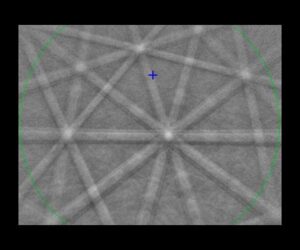
This breakthrough opens the door to less destructive analysis methods for studying materials, offering potential applications in nanotechnology, biomedicine, and spacecraft electronics.
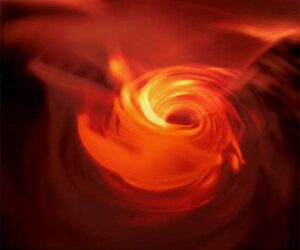
Sagittarius C is known for its distinctive filaments, dynamic structure, and active stellar nurseries.
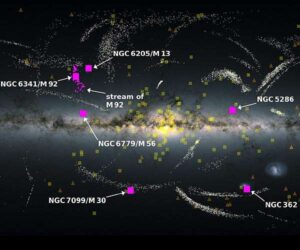
Open clusters serve as natural laboratories because their stars form together and share distance and age, while variable stars reveal interior physics through brightness changes.

Dr Leonardo Giani and colleagues used data from the Dark Energy Spectroscopic Instrument (DESI), which measures the structure of the universe across distances of up to 11 billion light years.
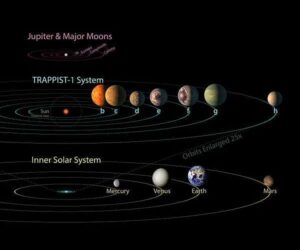
The finding narrows the search for worlds with conditions similar to Earth, according to lead author Caroline Piaulet-Ghorayeb of the University of Chicago and Universite de Montreal's Trottier Institute for Research on Exoplanets.
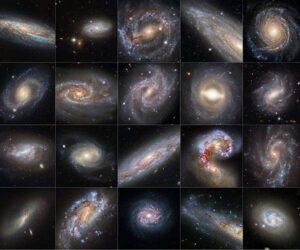
A pilot study led by Lluis Galbany of the Institute of Space Sciences (ICE-CSIC) in Barcelona tested a methodology to obtain supernova spectra within 48 hours-or even 24 hours-of first light.
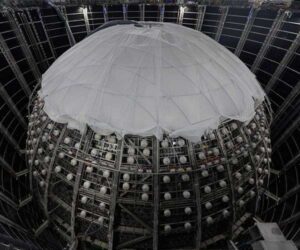
Situated 700 meters underground, JUNO measures antineutrinos from nearby nuclear power plants with record precision.
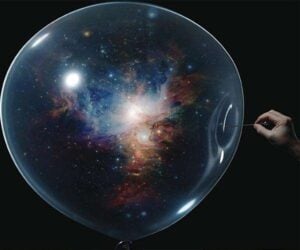
The newly measured gravitational waves came from a collision that formed a black hole weighing 63 times the mass of the Sun and spinning at 100 revolutions per second.
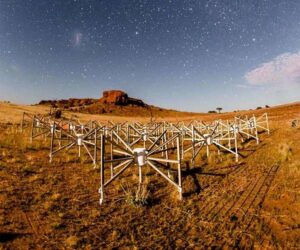
Operating since 2013, the MWA is a powerful telescope comprising 8,192 antennas spread across more than 30sqkm on Wajarri Yamaji land, about 300km north-east of Geraldton, at Inyarrimanha Ilgari Bundara, the CSIRO Murchison Radio-astronomy Observatory.
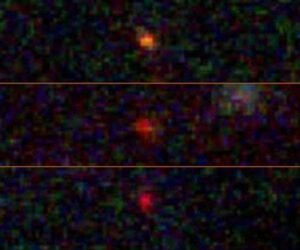
In The Astrophysical Journal Letters, Fabio Pacucci and Abraham Loeb suggest that the dots formed within halos in the slowest 1% of the cosmic spin distribution.
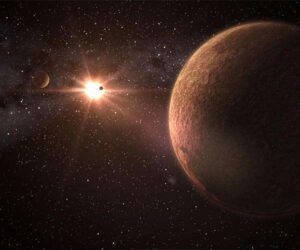
But what makes some planets habitable might have very little to do with water. In fact, an entirely different type of liquid could conceivably support life in worlds where water can barely exist.
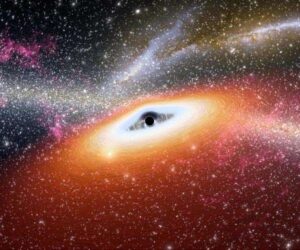
Tan's "Pop III.1" framework proposes that these black holes originated from the first generation of stars - massive "Population III.1" stars - whose growth was fueled by dark matter annihilation.
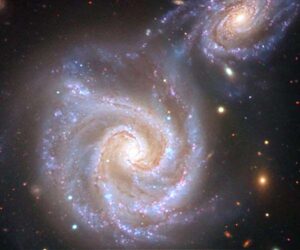
Dr Sarah Sweet from the School of Mathematics and Physics heads Delegate, a collaboration with the Australian National University's Research School of Astronomy and Astrophysics and others, to assess whether the Milky Way's path is typical in the cosmos.
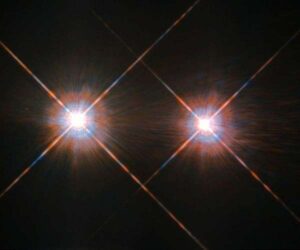
Using Webb's Mid-Infrared Instrument (MIRI) in August 2024, researchers employed a coronagraphic mask to block Alpha Centauri A's light, revealing an object over 10,000 times dimmer than the star and about twice the Earth-Sun distance away.
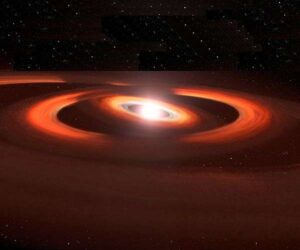
"All young stars have these discs, but we've known little about their orientations with respect to the spin axis of the host stars," said UCSB associate…