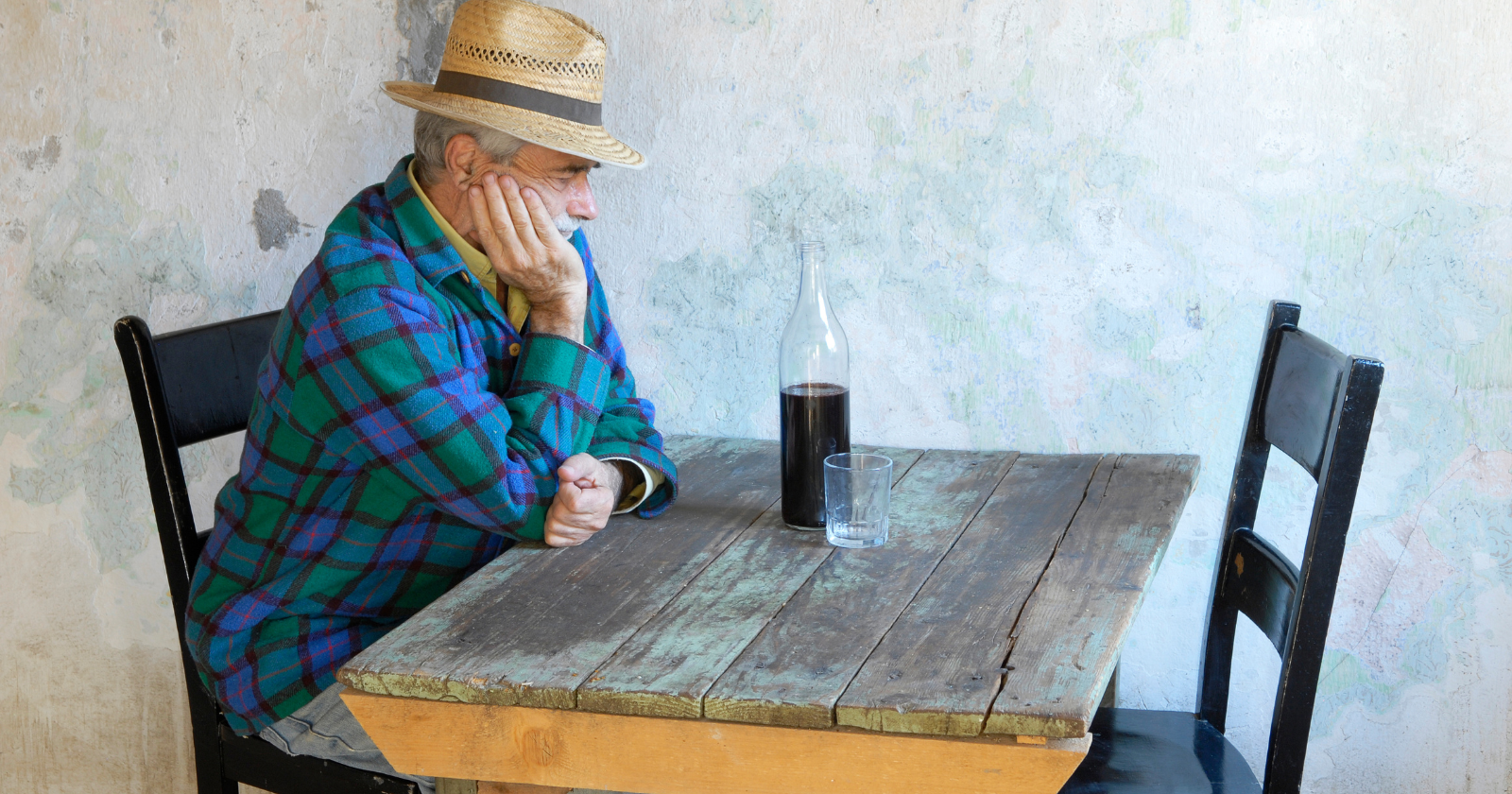
On a Friday evening, being alone can feel entirely different depending on something I cannot always name right away.
The same apartment, the same quiet, the same absence of other people — and yet one version of it feels restorative, almost clarifying, while the other feels faintly like dread.
For a long time, I assumed the difference was mood, or tiredness, or whether the week had been good. It took a while to understand that what I was actually experiencing were two neurologically distinct states that happen to share a surface description: being by yourself.
The word “loneliness” gets used as though it simply means spending time without people. So does “solitude.” The two are treated as points on the same continuum — more time alone, more likely to be lonely — and the solution offered for both tends to be the same: socialise more, get out of the house, call someone. This framing is not only imprecise. It actively makes both conditions harder to address.
What loneliness does to the brain
The most sustained scientific investigation into loneliness came from the social neuroscientist John Cacioppo at the University of Chicago, who spent more than two decades treating loneliness not as an emotion but as a biological signal — one that evolution shaped for a specific purpose. His argument, developed across a series of papers and summarised in his book Loneliness: Human Nature and the Need for Social Connection, was that loneliness functions like hunger or physical pain: a warning that something a social animal needs is missing.
That framing changes what you expect to find in the brain. And what researchers found was not withdrawal or quiet — it was threat activation. Cacioppo and Hawkley’s 2009 review in Trends in Cognitive Sciences documented how loneliness primes the nervous system toward hypervigilance: heightened amygdala sensitivity to social threats, elevated cortisol across the day, disrupted sleep architecture, and a measurable shift in how the brain interprets ambiguous social information. The lonely brain becomes better at detecting the negative and worse at reading the neutral. It starts, over time, to expect rejection where none is intended.
Perceived loneliness and social isolation are distinct constructs. Epidemiological studies associate them with cardiovascular, cognitive, and mortality outcomes, but do not by themselves establish direct causation or a single physiological state.
This matters for the body as much as the mind.
Nguyen and colleagues reported reduced high-arousal affect during chosen solitude. That finding does not by itself demonstrate parasympathetic dominance or an opposite neural signature from loneliness.
There is also a cultural current that treats all time alone as something to be remedied. I grew up in a context — Georgian family life, the particular social texture where being solitary was likely to prompt someone to ask what was wrong. The impulse behind that concern is real, and epidemiological research associates sustained social isolation with poorer outcomes. But the reflex of treating solitude as a symptom misses something important: that for many people, especially those with a strong interior life or a tendency toward emotional overload, voluntary aloneness is not a retreat from functioning. It is part of how functioning is maintained.
My research includes emotion regulation, and the distinction between these two states is one that comes up repeatedly in that literature. The regulatory strategies that work for loneliness — increasing social contact, reducing rumination through engagement, rebuilding trust in the safety of others — are almost orthogonal to what restorative solitude requires: space, low arousal, freedom from demand. If you offer a lonely person more solitude as a cure, you are likely to deepen their threat response. If you push a person who needs solitude into constant social engagement as a preventative, you deny them one of their primary recovery mechanisms. The intervention that helps depends entirely on which state you are actually in.
Learning to tell the difference
This turns out to be harder than it sounds, partly because English offers almost no vocabulary that distinguishes them — “alone,” “solitary,” “isolated,” and “withdrawn” are used interchangeably for states that are neurologically opposite.
What starts as chosen solitude — a quiet morning, time to think — can slide into loneliness if it extends beyond what a person needs or if circumstances remove the sense of choice. Conversely, loneliness can sometimes co-exist with the desire for solitude, particularly in people who are exhausted by social performance even when they are also starved of genuine connection.
The practical question that seems most useful — and the one the research around Cacioppo’s threat-response model implicitly suggests — is not “am I alone?” but “what is my nervous system doing with this aloneness?” Loneliness tends to produce a particular kind of mental activity: rumination, scanning for evidence of rejection, a restless quality to the thoughts that is different from the slower, more generative drift of restorative quiet. The body usually knows before the mind does. A kind of low-grade tension, a flatness, a sense of being slightly braced — these often signal that the state has tipped from chosen solitude into something that needs something else.
What it needs, when it tips, is not necessarily more people. It is specific, genuine contact — the kind that signals safety rather than just filling time. That distinction is as important as the one between loneliness and solitude themselves. The brain that has been in threat-activation mode does not recover through proximity. It recovers through connection that is actually safe.
The two states share a surface. They share almost nothing underneath.