

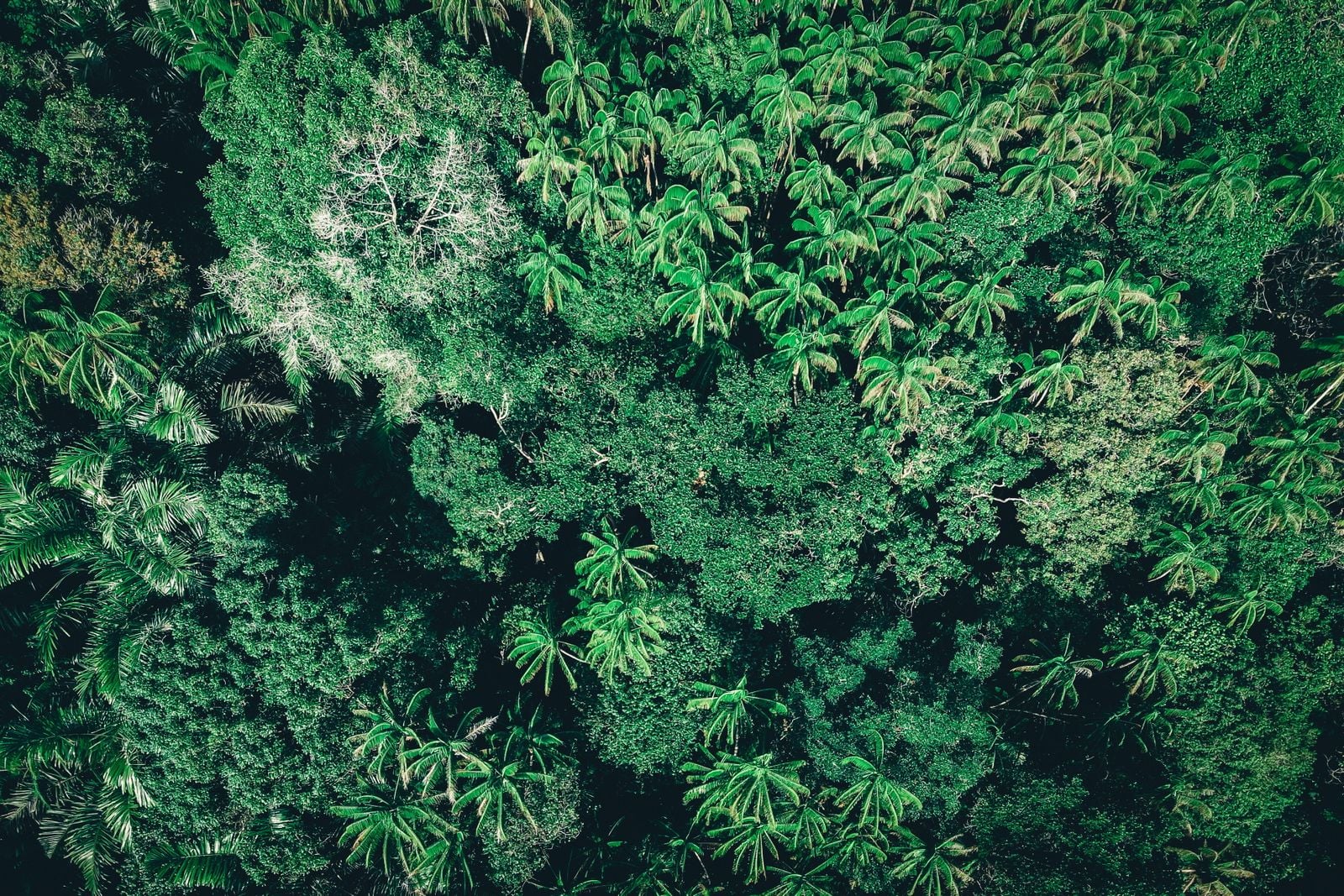
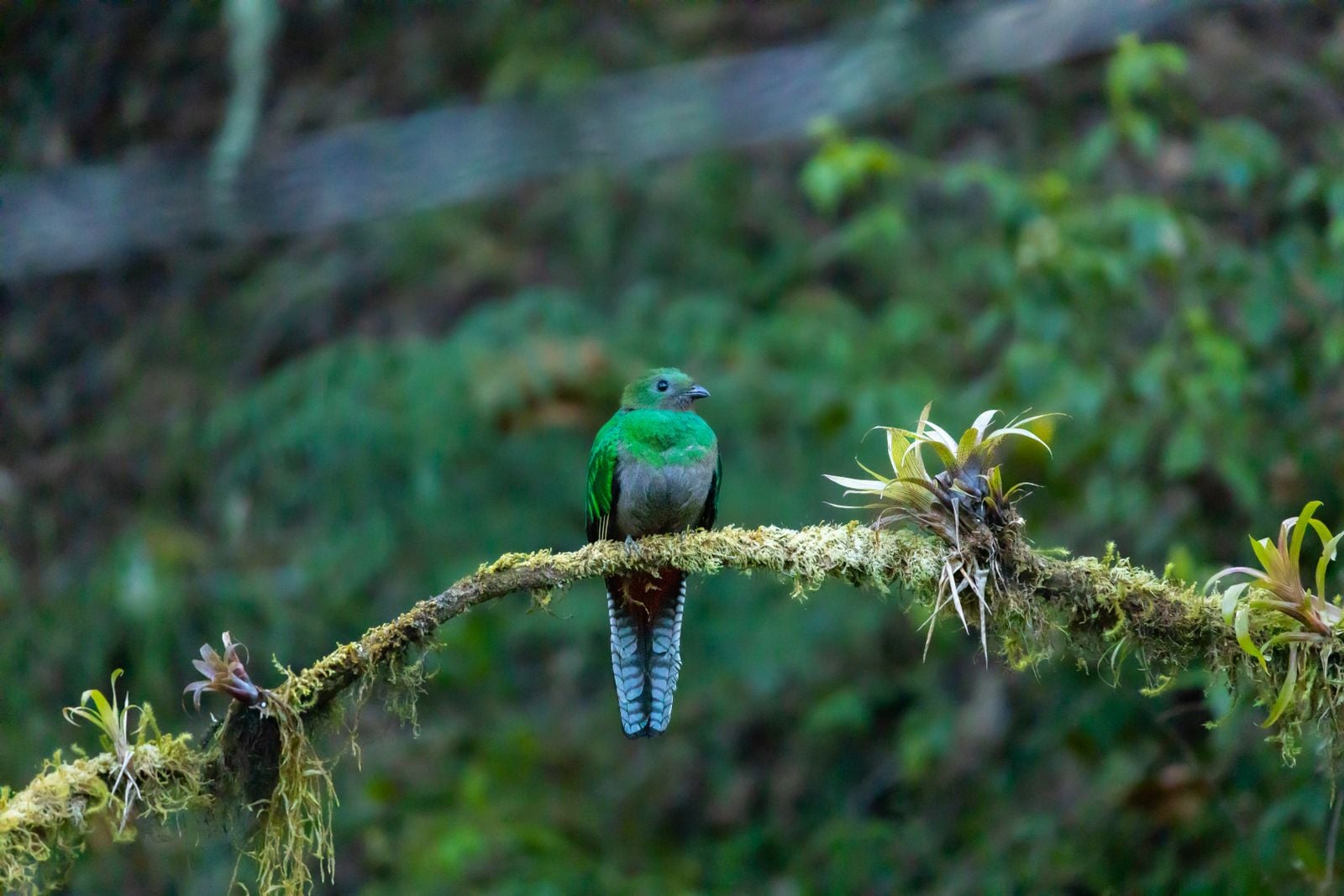
By 1987, Costa Rica had cut down so much of its forest that only about 21% of the country was still covered in trees, down from much higher levels in previous decades. A nation famous today for cloud forests and resplendent quetzals had become, in raw numbers, one of the most aggressively deforested places on Earth. Then it did something almost no other tropical country has managed since: it grew the forest back.
The instrument was unglamorous. A tax on gasoline.
The number that scared a country
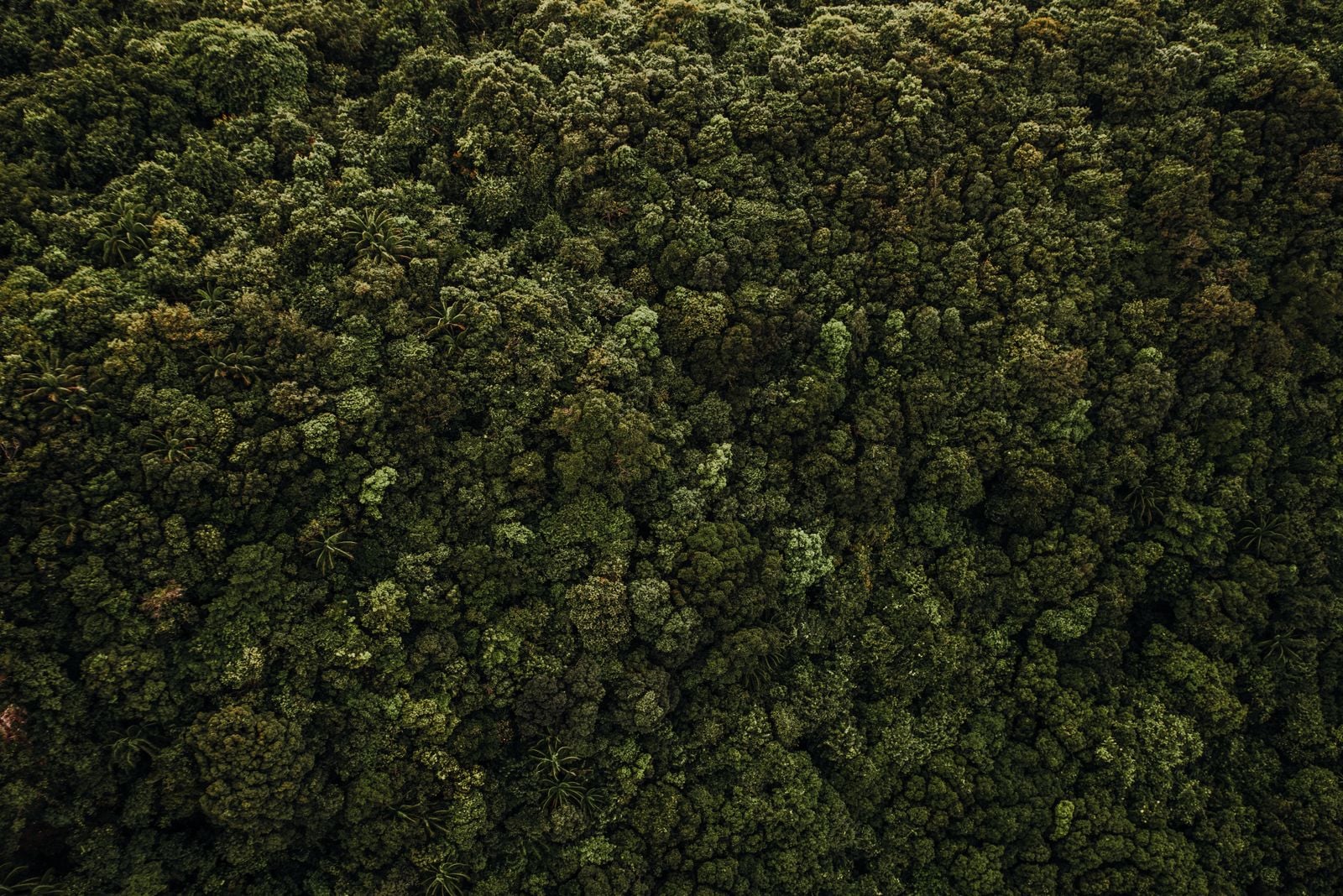
The collapse happened fast. Through the 1970s and into the 1980s, Costa Rica was losing forest rapidly, much of it cleared for cattle pasture during a global beef boom. By the mid-1980s, forest covered less than 25% of the country, and government surveys pegged the low point at roughly 21% by 1987. Scientists at the time projected that, at the prevailing rate, the country would be effectively treeless within a generation.
That projection turned out to be wrong by a wide margin. According to the World Bank, forest cover has since climbed back to close to 60%, making Costa Rica one of the few tropical countries in the world to reverse deforestation. The recovery did not happen by accident, and it did not happen because Costa Ricans simply changed their minds about trees.
The 1996 law that flipped the incentive
In 1996, Costa Rica passed a new forestry law. The law did two things at once. It banned the conversion of natural forest to other land uses, full stop. And it created something stranger: a national program that would pay private landowners to keep forest standing on their property, or to let it grow back.
The reasoning was unusual for an environmental statute. Forests, the law argued, are not just timber waiting to be cut. They are functioning machinery. They pull carbon dioxide out of the atmosphere. They pump water back into the air through transpiration, which seeds the rainfall that downstream farmers depend on. They filter sediment out of rivers before it reaches the hydroelectric dams that power most of the country. They hold soil on hillsides. They attract tourists. Each of those things, the law said, has an economic value, and the people who maintain the forest providing those services deserve to be paid for them.
The mechanism got a clinical name: Pago por Servicios Ambientales, or Payment for Ecosystem Services (PES). Costa Rica was among the first countries in the world to implement such a scheme at the national level.
Where the money came from
A program that pays thousands of landowners every year is only as durable as its funding source. Costa Rica’s answer was to tax the thing most directly responsible for warming the planet: fossil fuels. A portion of the national tax on gasoline and other fuels was earmarked for the forest fund.
The logic was tidy. Drivers burning gasoline release carbon dioxide. Forests pull carbon dioxide back out. Let the first group pay the second. A driver filling up in San José was, without thinking about it, sending a few colones to a rancher in Guanacaste who had agreed to let a hillside revert to secondary forest.
The fund was channelled through a state institution called FONAFIFO, the Fondo Nacional de Financiamiento Forestal. As Diego Vincenzi, chief of staff at Costa Rica’s Ministry of Environment and Energy, wrote in a Mongabay commentary, the shift in framing mattered as much as the money: Costa Rica moved from thinking about forest conservation as a subsidy to thinking about it as economic recognition of services already being rendered.
Over time, the funding base broadened. A fee on water users was added, on the same principle — if your tap water depends on a forested watershed, you should help pay for the watershed. International climate finance came in. But the gasoline tax remained the spine of the system for more than two decades.
What a landowner actually gets paid
The contracts are specific and the prices are public. A landowner who plants native trees on degraded land can earn, on average, around $170 per hectare per year, for a contract lasting 16 years. A landowner who agrees to protect existing forest on their property earns somewhere between $44 and $110 per hectare per year. Allowing pasture to regenerate naturally pays less than active planting, but still pays.
By the early 2020s, FONAFIFO held more than 20,000 active contracts covering roughly 540,000 hectares — an area a little smaller than the state of Delaware. The agency is now extending payments to landowners who possess land but lack formal title, a change that brings many Indigenous and smallholder communities into the program for the first time. Ambitions for the program’s annual reach have grown from 40,000 hectares a year to a target of 182,000 hectares.
What grew back, and what didn’t
The headline number is striking. Forest cover roughly tripled from its 1987 low. Jaguars have been recorded in corridors that were cattle pasture thirty years ago. Howler monkeys have moved back into watersheds where they had been locally extinct. Acoustic monitoring placed across regenerating land enrolled in the PES program has documented soundscapes measurably closer to healthy primary forest — more frog calls, more insect layers, more bird species — than to adjacent unenrolled pasture.
But the recovery is uneven, and the causality is messier than the headline suggests. Multiple peer-reviewed studies have tried to isolate how much of the forest comeback can be attributed specifically to the payment scheme, as opposed to everything else happening at the same time. Some studies have found modest but statistically significant increases in forest area on enrolled land. Others have found effects that diminished over time, or no detectable effect at all in particular regions.
The reason is that several things happened at once. The 1996 deforestation ban had teeth. The global price of beef collapsed in the late 1980s and early 1990s, making cattle ranching less profitable and leaving marginal pastures abandoned. Ecotourism exploded — by the 2000s it was one of the largest sectors of the economy, which meant a standing forest was suddenly worth more as scenery than as lumber. With that many forces pushing in the same direction, separating the gasoline tax from the rest is genuinely hard.
The honest assessment, gathered across two decades of research, is that the PES program produced a modest positive effect on forest cover and a clearer positive effect on biodiversity — but it was one piece of a larger machine, not the whole machine.
The fragility built into the design
There is a paradox inside the funding model that Costa Rica is now being forced to confront. The country has committed to eliminating fossil fuel use by 2050. A national decarbonization plan targets a fully electric public transport fleet and the end of the internal combustion engine in private vehicles. The country already generates nearly all of its electricity from renewables.
If gasoline use falls to zero, so does the gasoline tax. And the forest payment system loses its largest single source of revenue. The mechanism that saved the forest is engineered to consume itself.
This is one reason Costa Rican policymakers are diversifying the funding base — adding water fees, carbon credit sales, and what FONAFIFO calls biodiversity certificates, tradable instruments that pay estates for the species richness on their land, not only for the trees. As El País reported, the question of how to sustain the program past 2050 is an active policy conversation in San José, not a theoretical one.
What the forest is still missing
A tripled forest is not a restored one. Much of what grew back is secondary growth on former pasture — younger, lower in canopy, less structurally complex than the primary forest that was cut down. Carbon storage in secondary forest is a fraction of what it is in old growth. Some species recover quickly; others, especially large vertebrates and specialist canopy species, do not.
And some have not recovered at all. The golden toad of Monteverde, once endemic to a sliver of cloud forest in Costa Rica’s central highlands, went extinct in the late 1980s — at exactly the moment forest cover was bottoming out. The cause was not direct logging but a combination of climate-driven drying and the chytrid fungus. Reforestation cannot bring back species that are already gone. It can only protect what remains.
The same warming that helped kill the toad continues to shift the elevation bands where cloud forest can exist at all. A hectare that pays a landowner today may, in fifty years, be a different ecosystem entirely.
Why other countries copied it, and why it hasn’t been enough
Mexico built its own national payment scheme starting in 2003. Vietnam followed with a program funded partly by hydropower companies, on the logic that dams depend on forested watersheds. Ecuador, China, and several African countries have piloted versions. As an Ensia survey of these programs documented, the Costa Rican template — a national fund, a dedicated revenue stream, per-hectare contracts with private landowners — is now the dominant model for paying for forest conservation worldwide.
It has not stopped tropical deforestation. In 2024, the tropics lost a record 16.6 million acres of primary forest, more than half of it in Brazil and Bolivia. Payment schemes work best when they sit on top of strong legal protections, functioning land registries, low corruption, and an economy that does not depend on continued clearing. Costa Rica had all of those things in 1996. Most tropical forest nations do not.
Paying landowners to keep forests standing is a useful tool but not, by itself, a forest policy. Costa Rican forestry officials have been blunt about this for years: the gasoline tax worked because it was paired with a deforestation ban, a collapsing beef sector, a booming tourism industry, and a population that, for a mix of reasons, had decided forests were worth more alive than dead.
A country smaller than West Virginia
Costa Rica covers about 51,000 square kilometres — a little smaller than West Virginia, a little larger than Denmark. Inside that area live an estimated 500,000 species, roughly 5% of all known life on Earth. The density of biodiversity per square kilometre is higher than almost anywhere else on the planet.
That fact would not be true today if the curve had kept falling after 1987. A driver paying a few colones extra at the pump in 1997 was, in a small and almost invisible way, paying for the howler monkeys that returned to Sarapiquí in 2015, for the jaguar tracks now recorded in corridors between national parks, for the soundscape that microphones picked up in regenerating forests in recent years.
The forest that grew back is not the same forest that was cut down. The trees are younger, the canopy thinner, the species mix different. Some of what was lost is gone for good. But the country that hit 21% in 1987 is approaching 60% today, and the mechanism that pulled it back was, in the end, a line item in a fuel tax — quiet, technical, and one of the more consequential pieces of environmental legislation any small country has ever written.