

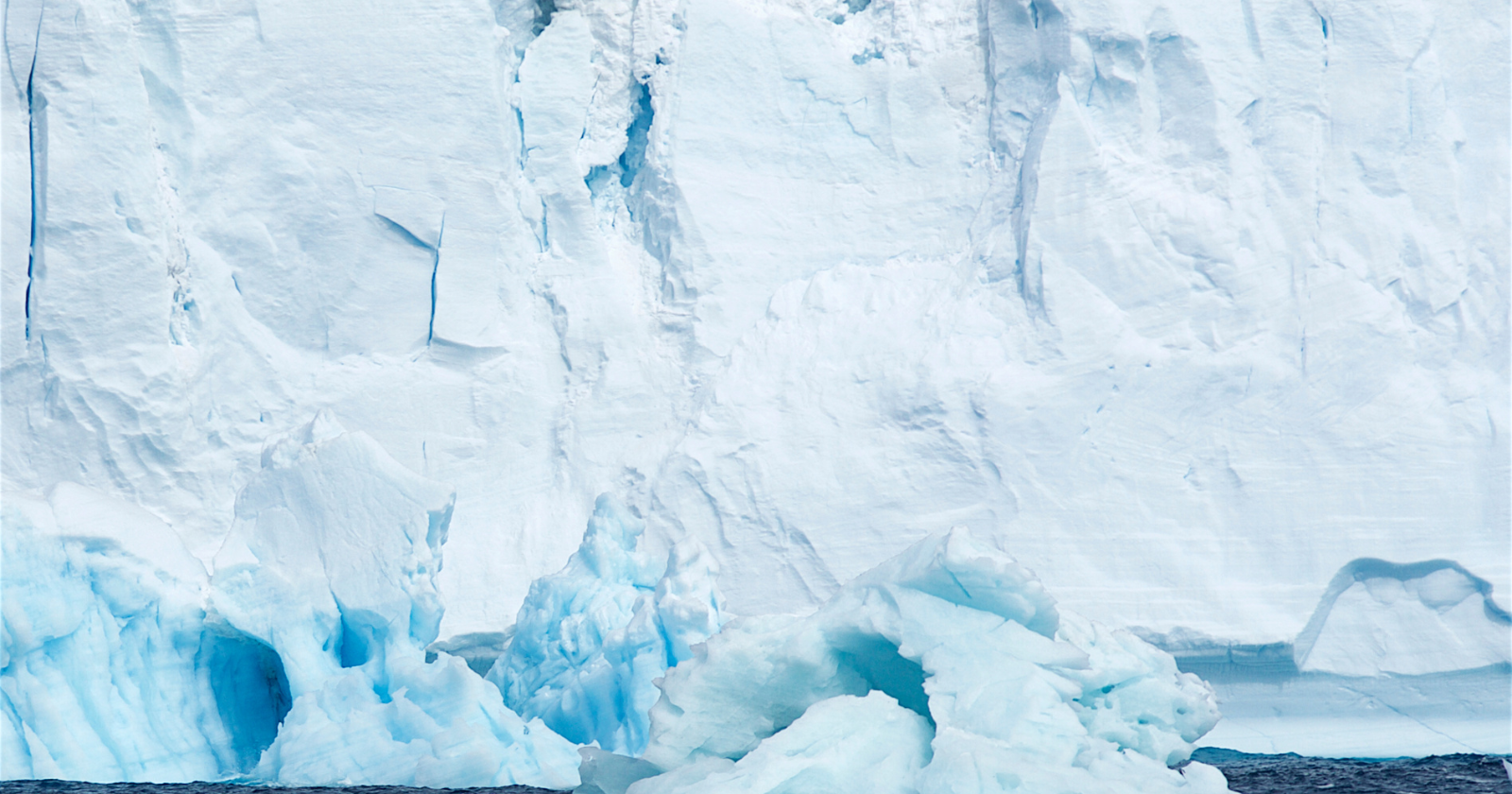
A modelling study published in Communications Earth & Environment in June 2025 found that the West Antarctic Ice Sheet could begin an irreversible collapse at ocean temperatures between zero and 0.25°C above current levels — meaning the threshold may have already been reached
Once the collapse begins, the authors argue, it would be self-sustaining: not a process that could be halted by subsequent emissions reductions, but one that would continue until the ice sheet had contributed roughly four metres to global sea levels. That contribution would unfold over centuries to millennia. The study is one modelling paper, not a settled consensus, but the threshold it identifies is lower than many prior estimates, and the mechanism it describes is worth examining closely.
The authors are David Chandler, Petra Langebroek, Ronja Reese, Torsten Albrecht, Julius Garbe, and Ricarda Winkelmann, working across the Potsdam Institute for Climate Impact Research, the Norwegian research centre NORCE, and Northumbria University. To examine how the ice sheet has responded to past conditions, they ran model simulations extending back 800,000 years, giving the analysis a long baseline of Antarctic ice sheet behaviour against which to calibrate the projections.
What the threshold means
The 0.25°C figure refers to ocean warming at depth around West Antarctica, not to global average surface temperature. The distinction matters. Ocean temperatures in the Amundsen Sea, which washes against the base of the West Antarctic glaciers, have already been rising as warmer Circumpolar Deep Water intrudes further onto the continental shelf. The study does not claim that threshold has been crossed; it identifies where, in the model, collapse becomes self-sustaining.
The mechanism at the centre of the analysis is marine ice sheet instability. The West Antarctic Ice Sheet sits largely on bedrock below sea level. Its glaciers are held in place partly by ice shelves, floating extensions of the sheet that buttress the flow of ice toward the ocean. As warm water undercuts those shelves, they thin. As the grounding line, where the glacier meets the ocean floor, retreats into deeper water, the geometry of the ice sheet becomes less stable. In this configuration, retreat can accelerate under its own weight without requiring additional external warming to continue.
This is the self-sustaining character the paper describes. Beyond the 0.25°C threshold in the model, the process continues even if ocean temperatures were to stop rising. The four metres of sea-level rise is not a peak that would be reached and then reversed; it is the new equilibrium state the ice sheet would settle toward over the following centuries and millennia.
What the paper does not show
This is one modelling study, not settled consensus. The result should be taken seriously, but it should not be read as the final word on the timeline, the precise threshold, or the certainty of collapse.
Modelling the West Antarctic Ice Sheet involves choices about ice physics, ocean forcing, and bedrock properties that different research groups represent differently. Other recent work has reached varying conclusions about how close the system currently sits to a tipping point, and the question of whether the ice sheet has already been destabilised is actively debated in the literature. A 2023 paper from a separate group concluded the sheet had not yet been pushed past tipping, while noting the path toward it was concerning.
The 800,000-year baseline the team used is a strength of the analysis, providing a longer view of how the ice sheet has behaved under past climate states than most studies can offer. But extrapolating from past behaviour to future response under conditions that may be outside the range of the historical record carries its own limitations, and the authors acknowledge these.
The asymmetry of the timescales
One detail in the paper that the coverage has noted is the asymmetry between the timescale of destabilisation and the timescale of ice sheet growth. It takes tens of thousands of years for a large ice sheet to accumulate. The conditions that could initiate collapse can be reached in decades. The four metres of sea-level rise would then play out over centuries. That sequence has a particular character: a fast trigger, a slow-moving consequence, and a very long tail.
Four metres of sea-level rise distributed over centuries is not an outcome that falls within ordinary planning horizons. It is an outcome that would affect coastlines and populations far beyond any current infrastructure’s design life. The paper frames the next few years as a period in which the trajectory of deep ocean warming around Antarctica will become clearer, and in which emissions choices will continue to influence where the system ends up relative to the threshold the model identifies.
What to watch
The Amundsen Sea embayment, where Thwaites and Pine Island glaciers are already showing significant grounding-line retreat, is the region the paper’s concerns centre on most directly. Ongoing observational work on those glaciers, including the International Thwaites Glacier Collaboration’s field campaigns, will provide ground-truth data against which modelling results like these can be tested.
Whether observed ocean temperatures at depth around West Antarctica are approaching the 0.25°C increment the study identifies, and how quickly, is a question the oceanographic record will continue to answer over the next several years.