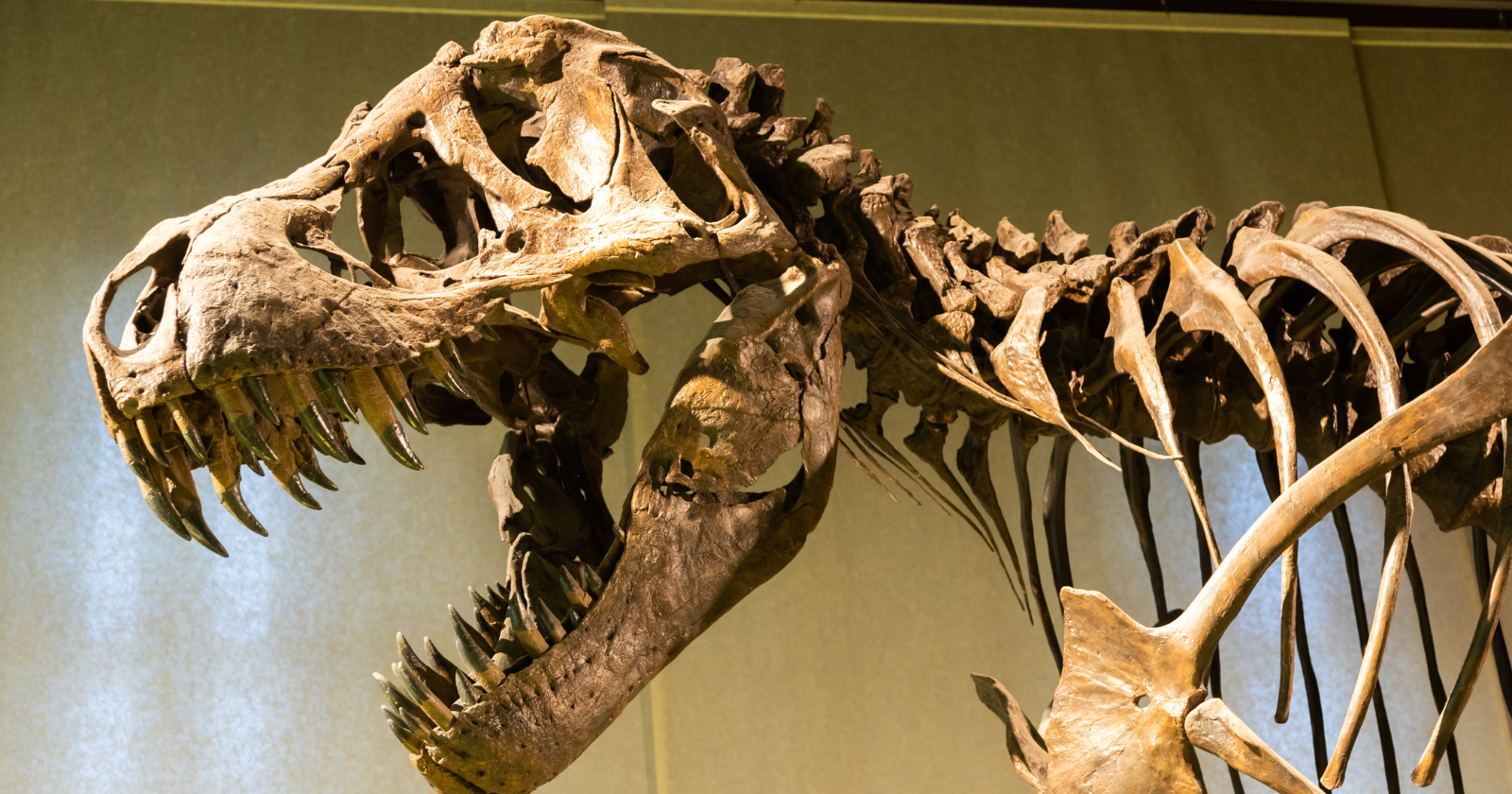
A new species of marine reptile, identified from fossils that have been sitting in various museum collections in North Texas and elsewhere for as long as several decades, has just been formally described in the Bulletin of the American Museum of Natural History. The species has been named Tylosaurus rex, with the species name meaning “king of the tylosaurs.” The animal is, by every available measure, one of the largest mosasaurs ever identified. It stretched up to 43 feet in length, which is approximately the length of a school bus and roughly twice the length of the largest great whites currently swimming in the world’s oceans. The animal lived approximately 80 million years ago, in the warm shallow seaway that, during the Late Cretaceous, divided North America into eastern and western halves.
The feature worth attending to is not, on close examination, the fact of the discovery itself. The fact is striking. The more interesting feature is that the discovery was, in some real way, sitting in plain sight for decades. The fossils that constitute the species were collected from various sites in northern Texas across a period that began in the late 1960s and continued through the early 2000s. The fossils were, until very recently, classified as Tylosaurus proriger, a previously known species. The reclassification, on the available scientific record, took until 2026 to occur, despite the relevant material having been physically available for inspection by the wider research community for considerably longer.
What the animal actually was
It is worth being precise about what kind of animal Tylosaurus rex was, because the standard cultural register has tended to absorb the various marine reptiles of the dinosaur age into a single vague category of “sea monster” without engaging with their actual biological distinctions.
Mosasaurs were not, despite the wider register’s frequent confusion on this point, dinosaurs. The mosasaurs were a group of marine reptiles that lived during the Late Cretaceous, roughly 100 to 66 million years ago, and that were, on the available phylogenetic analysis, more closely related to modern monitor lizards and snakes than to anything in the dinosaur lineage. The mosasaurs evolved from terrestrial ancestors and returned to the sea, developing flippers, streamlined bodies, and in some cases enormous size, in a way that paralleled the much earlier evolution of the ichthyosaurs and plesiosaurs but that occurred independently.
Tylosaurus rex, on the available reconstruction, occupied the apex predator role in the Western Interior Seaway during the period it lived. The published documentation describes the animal as ranging from 25 feet to 43 feet in length, with a suite of adaptations for exceptionally strong jaw and neck muscles. The teeth were finely serrated, which is a trait the wider research has identified as uncommon among mosasaurs. The serration suggests that the teeth were calibrated to inflict particularly severe damage on the animals the mosasaur was hunting, in a way that the simpler conical teeth of most other mosasaurs were not.
The combination of size, jaw strength, and serrated teeth gives the animal a particular ecological profile. The animal was not, on the available evidence, primarily an ambush predator that swallowed smaller prey whole. The animal was, more accurately, calibrated to inflicting catastrophic damage on large prey through powerful bites, which is the same general ecological strategy that the terrestrial Tyrannosaurus rex employed in its own environment several million years later. The naming is, in some real way, accurate. The two species are not, in any deep evolutionary sense, related, but they were doing similar work in their respective environments.
The evidence of violent combat against its own kind
The feature of the new species that has, on close examination, produced some of the most striking commentary from the research team is the evidence of violent combat against members of its own species. The wider research has documented that the recovered fossils show patterns of damage that are best explained by intraspecific combat at a degree of severity that previous tylosaurs had not displayed.
The evidence includes bite marks, broken bones, and various other forms of damage that are consistent with the animals fighting each other. The damage is not unique to a single specimen. The damage appears across multiple fossils in the collection, which suggests that the combat behavior was a regular feature of the species rather than an isolated incident.
The standard interpretation, on the available comparative evidence from other apex marine predators, is that the combat was likely related to either competition for mates, competition for territorial dominance, or competition for prey. Ron Tykoski, vice president of science and curator of vertebrate paleontology at the Perot Museum, has characterized the species as “a much meaner animal than other mosasaurs,” with the meanness being a function of the evidence of intraspecific violence at a degree not previously seen in the tylosaur lineage.
Why the species took so long to be identified
The feature of the discovery worth dwelling on, on close examination, is the question of why the species took so long to be formally identified. The fossils have, in many cases, been in museum collections for decades. The holotype specimen, the name-bearing fossil now displayed at the Perot Museum, was discovered in 1979 along an artificial reservoir near Dallas. Other key specimens, including the well-known “Bunker” specimen at the University of Kansas and “Sophie” at the Yale Peabody Museum, were discovered considerably earlier, with Bunker dating back to a 1911 discovery.
The reason for the delay involves what the paleontologist John Thurmond first noted in the late 1960s, when he informally recognized that some of the Texas tylosaur specimens stood out for their size and might constitute a distinct species. Thurmond informally referred to them as “Tylosaurus thalassotyrannus,” meaning “sea tyrant,” with an explicit acknowledgment that the name was somewhat cliche. The informal recognition did not, however, produce a formal species description for nearly sixty years.
The formal description required, on the available scientific record, a particular combination of comparative analysis across multiple specimens, comparison to the original Tylosaurus proriger holotype at the Harvard Museum of Comparative Zoology, and the kind of systematic revision of the wider mosasaur evolutionary framework that the research team has now completed. The published study notes that the dataset used to study mosasaur evolutionary relationships had changed little in nearly 30 years before the current revision. The wider field had, in some real way, been operating on outdated taxonomic infrastructure that was not capable of resolving the distinctions the new study has now articulated.
The lead author, Amelia Zietlow, began the work as a comparative biology Ph.D. student at the American Museum of Natural History’s Richard Gilder Graduate School, when she came across a mosasaur fossil in the research collection that appeared to be misidentified. The misidentification had been in place for decades. The correction required someone to actually look carefully at the specimen with the question of whether the existing identification was correct, which is, on the available evidence, exactly the kind of work the wider research community has not consistently been resourced to perform on its existing collections.
What this reveals about how paleontology actually progresses
The lesson from the Tylosaurus rex discovery is, on close examination, considerably more interesting than the species itself. The lesson is that the world’s natural history museums contain, in their existing collections, considerable amounts of material that has not been adequately analyzed by the wider scientific community, and that the slow work of going back through these collections is, in some real way, producing scientific discoveries at a rate that the wider register has not fully absorbed.
The fossils for Tylosaurus rex were not, on the available record, found by some heroic expedition into a remote region. The fossils were already in museum drawers. The discovery, more accurately, was the work of looking at them carefully enough to notice what previous researchers had not noticed. The work took years. The work involved comparing specimens across multiple institutions, consulting historical records, and reconstructing the evolutionary framework that the new species belonged to. The work was, in some real way, archival rather than expeditionary.
This is, on close examination, an underappreciated feature of how contemporary paleontology actually progresses. The dramatic new discoveries that capture the wider register’s attention are, in many cases, less significant than the slow ongoing work of revisiting the existing collections. The collections contain, on the available evidence, considerable material whose true significance has not yet been recognized. The recognizing requires the kind of careful comparative work that the wider research community is, in most cases, under-resourced to perform at the pace the available material would justify.