What do you imagine is responsible for keeping a human being functional during six months in one of the most extreme environments our species has ever visited?
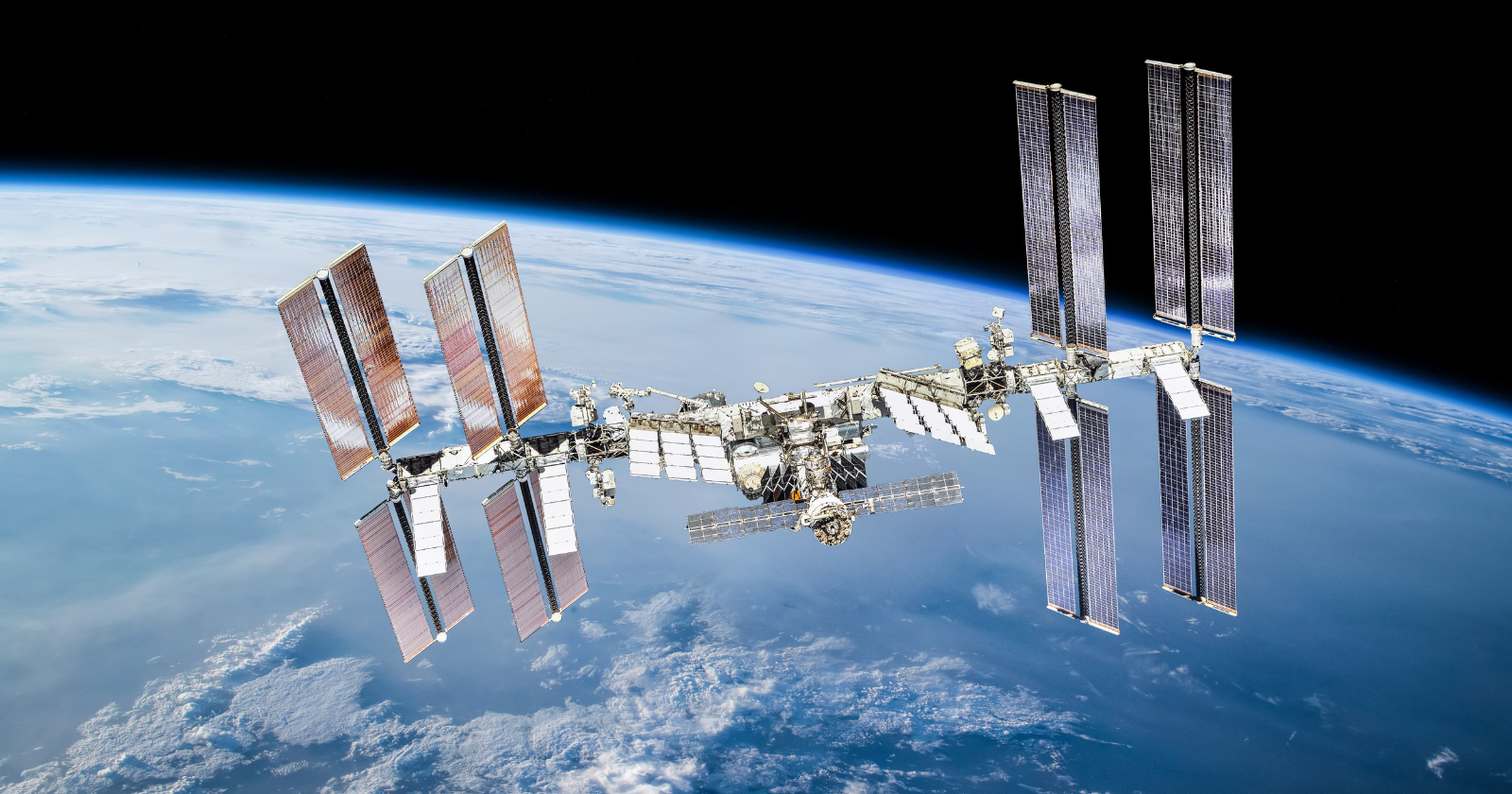
The International Space Station has maintained a continuous human presence since November 2, 2000 — over twenty-five years of unbroken occupation. More than 290 people from 26 countries have passed through its hatches. The station orbits at roughly 250 miles above Earth, traveling at 17,500 miles per hour, cycling through sixteen sunrises every twenty-four hours. There is no breathable air outside its walls. The margins are genuinely thin.
Given all of that, you might expect the secret to surviving up there to be something suitably dramatic. Advanced psychological techniques. Military-grade discipline. Some hard-won resilience available only to people who cleared every test NASA could devise.
Well, the answer turns out to be quite different. The habits that keep long-duration ISS crews functional are, to put it plainly, not that remarkable.
What the schedule actually looks like
Long-duration ISS crew members are typically scheduled for about two hours of physical exercise each day— resistance training on a weight-lifting machine, cardiovascular work on a treadmill, cycling on a stationary bike. Not weekly. Every day, for the full duration of the mission. Without it, microgravity strips muscle and bone density fast enough to make returning to Earth dangerous. The exercise is not optional and not impressive to describe. It is just two hours, repeated.
Eight hours of sleep is scheduled at the end of every mission day. Meals are timed. The crew’s daily plan is tightly structured by ground teams. Astronauts work and sleep to fixed schedules that match circadian rhythms — the same ancient rhythms of waking and sleeping hard-wired into any human body.
The specifics are precise, but none of them are dramatic. They are the kind of things a person might do at home if they were paying genuine attention to their performance. Sleep at a consistent time. Move every day. Keep to a schedule. Eat at regular intervals. The station’s twenty-five-year track record rests on habits that, listed in a row, sound more like a sensible personal routine than the foundation of the most sustained human space mission ever attempted.
Why ordinary is the point
There is a version of the astronaut story that tends to circulate — the superhuman test pilot, forged by adversity, sustained by vision and iron resolve. It makes for a compelling biography. It is probably not, however, a precise description of what keeps a crew functional across six months of continuous spaceflight.
The mundane habits are not a supplement to something more impressive working behind the scenes. They are the primary mechanism. Consistent exercise preserves the body that all the discipline and vision is housed in. Regular sleep protects the cognition that runs the experiments, handles the maintenance, and manages the emergencies. As noted by Harvard Medical School, “continuous sleep deprivation has a cumulative effect, so after about a week of short nights, cognitive performance declines in a way similar to that seen with intoxication.” The fixed schedule means the crew’s mental resources go toward the actual work, rather than being spent on the constant low-level question of what comes next.
Part of what makes a habit useful is that it does not require the right mood. You do not need to feel motivated to do two hours on the treadmill when it is simply what the morning means aboard the ISS. The habit does not negotiate with how you feel. A sophisticated technique, by contrast, tends to ask something of you — the right conditions, enough energy, some belief that it will work. When those are in short supply, the technique is usually the first thing to go.
I have arrived at something similar in my own working day, through a considerably less rigorous selection process. Time-blocking protects the hours I want to write in. Phone stays in another room. Every social media tab closed before a work block begins. Walking to a different coffee shop when one task is done rather than starting the next one at the same desk. None of this is impressive to describe. But those habits are not there for the good mornings — they are there for the ones when motivation is low and the pull toward something easier is right there. That is what the routine is for.
What the station adds is consequence. In an environment that is actively trying to kill you, the habits most people treat as optional — the workout you can skip, the sleep you can compress, the meal you can take at an odd hour — become non-negotiable. Every deviation compounds. The ISS cannot permit the casual relationship with routine that most of us default to on Earth, and so it does not.
Twenty-five years of unbroken human presence above this planet was not built on extraordinary acts alone. It was maintained by people doing fairly ordinary things, in roughly the same order, with unusual consistency. The ordinary part is not incidental to the achievement. It is perhaps what the achievement is made of.