The International Space Station is sealed, filtered, and controlled — and astronauts have described its smells as antiseptic, garbage-like, or metallic. Scott Kelly said that “the smell of space when you open the hatch smells like burning metal,” while NASA has suggested that the burnt quality may come from oxidation caused by excited oxygen interacting with exposed materials, including spacesuits.
Against that backdrop, it is perhaps less surprising than it first appears that when people asked Doug Wheelock — a NASA astronaut who spent more than 178 days in space— what he enjoyed most on returning, the answer was not food, not the feeling of weight on a mattress.
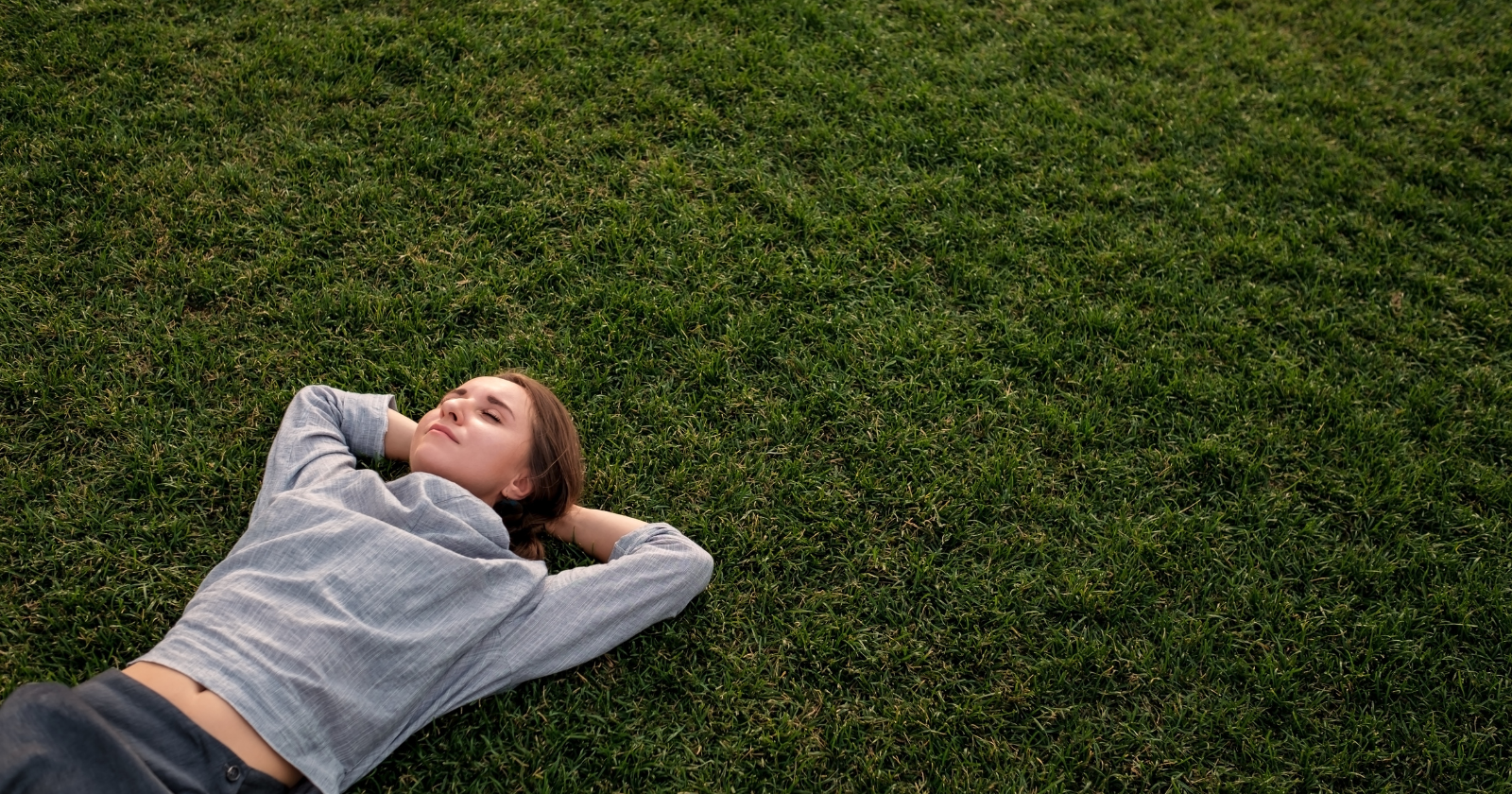
As noted in a 2015 ABC News piece, Wheelock described what those his time had done to his relationship with the planet’s ordinary smells: “Your sense of smell and taste are dulled in space. I craved the aroma of leaves and grass and flowers and trees. These things are not present on the space station. When you get back to Earth they are literally intoxicating.”
He was not alone in this. Clay Anderson, another NASA astronaut who logged extended time on the ISS, told the same outlet: “I craved smelling fresh cut grass and the sounds of birds chirping in the trees and animals barking. It was amazing to me the things I missed and how acute those senses are when you first come home.”
The word “acute” is the one that stays with me. Not different. Not new. Acute — a sharpened version of something that had always been there, now arriving with a force it had never seemed to carry before. The things they experienced when they landed were the same things that had been outside the front door the morning they left. What had changed was not the planet. It was what six months of forced absence had done to the filter they had previously been looking through — or in this case, breathing through.
Most of what surrounds us is present every day. The smell of the world, the sound of it, the way the air changes between seasons. We do not experience most of it because we have adapted to it so thoroughly that our attention long ago moved on to whatever felt more urgent. It seems it takes something like months in a sealed metal box above the atmosphere to make the ordinary feel like a discovery again.
I have had a version of this, scaled down to something far less dramatic. After a long stretch in Southeast Asia — months of a particular heat and humidity, of market smells and petrol and a shade of green that feels different from the green at home — arriving back in rural Ireland in summer is always a jolt. The cut grass registers first. The air is colder and fresher than anything I had been breathing for months, and the combination sits differently than it usually does. It is the smell of home the way home smells only when you have been away long enough that the familiarity has worn off.
It does not last. By the next morning it has become unremarkable again, folded back into the background along with everything else I pass without registering. The filter reinstates itself, quickly and without ceremony. Wheelock’s equivalent window — the weeks of re-entry after six months in orbit — was longer and presumably more disorienting. But it was the same phenomenon: a period of actual noticing that most people on Earth rarely access, because we never stopped long enough to lose it in the first place.
The process that closes that window has a name. Habituation is what happens when the brain stops flagging stimuli that are constant and predictable. It is an efficient system. A smell that is always present stops being processed as new information. Without it, the world would be overwhelming. The cost is that a great deal of what surrounds us — particularly the parts that do not change — effectively disappears from conscious experience.
What orbit gave Wheelock was forced de-habituation. Not a new environment to discover. The same one he had grown up in, registered as if for the first time, because months in a sealed capsule had stripped away the accumulated familiarity that had been standing between him and it. The grass was the same. The filter, briefly, was gone.
None of us are going to orbit the Earth to reset our sensory baselines. But perhaps there is something worth sitting with in the gap between what Wheelock missed from 250 miles above the planet and what was, even as he missed it, available outside most of our front doors — unremarked, unremarkable, present every single day. The aroma of leaves and grass and flowers and trees has not gone anywhere. The only thing standing between us and actually noticing it is the fact that we stopped doing so a long time ago, and have simply never found a reason to start again.