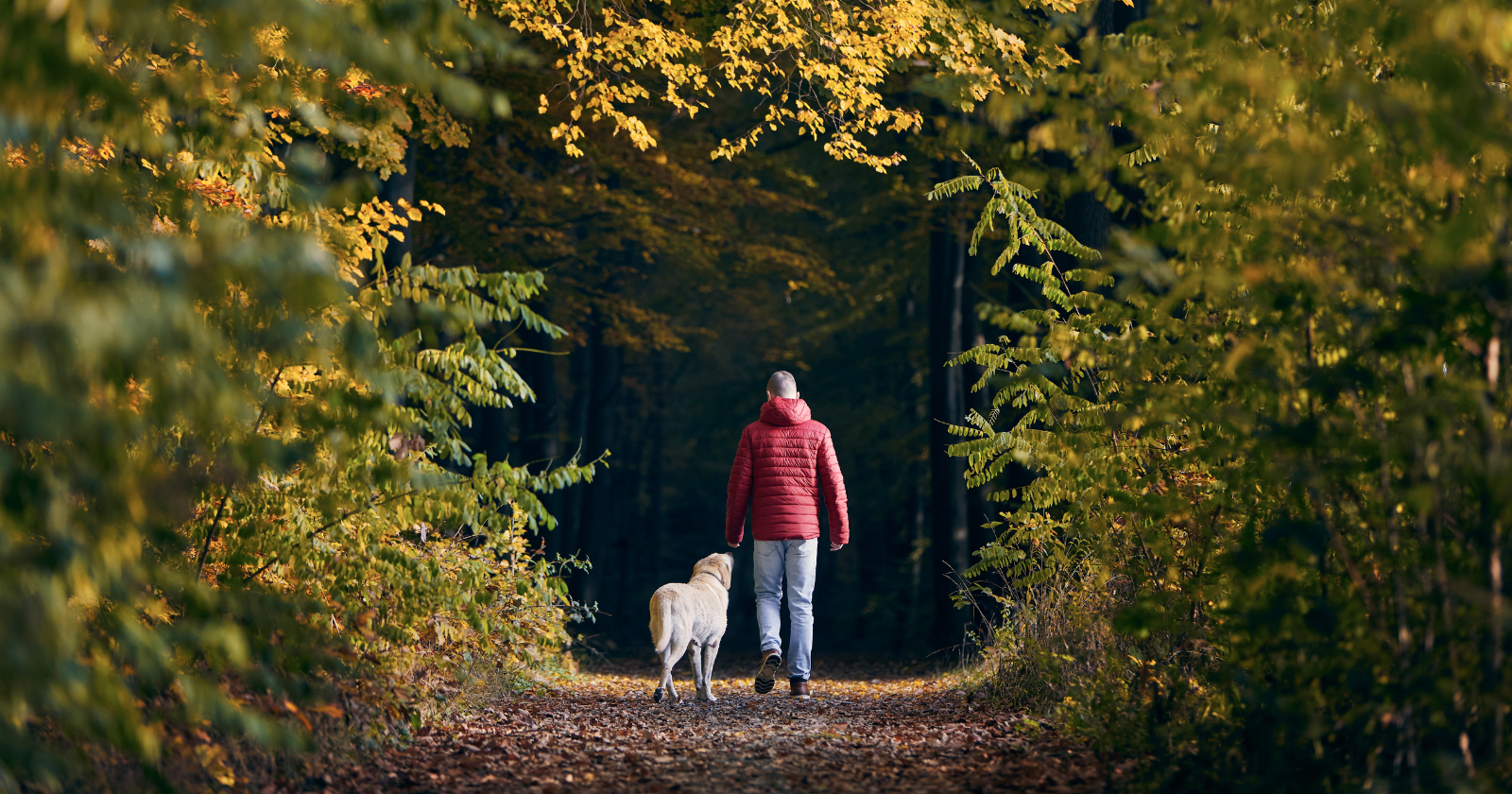
When I’m working in, I have a small routine I have come to rely on. I work from cafés. I am sitting in one as I write this!
There are coffee shops dotted around everywhere near enough to where I stay, and when a work block ends I close the laptop, leave, and walk to the next one. There is a park I cut through. There is a river I walk beside. I had been doing this for a while before I realized it might be doing more than the obvious thing of breaking up the day.
A 2019 paper helped me understand what was actually going on.
What the study found
The paper, published on nature.com, was led by Mathew P. White with a team of co-authors. Using survey data from almost 20,000 people, they looked at the relationship between time spent in natural environments — parks, beaches, woodland, riverbanks, the countryside. The “nature” in the study was defined broadly but with one notable exclusion. Time spent in your own garden did not count. Routine shopping trips did not count.
I guess, my walk to the café through the park would count.
Anyway, the pattern in the data was fairly clean. In the authors’ own summary: “individuals who reported spending ≥120 mins in nature last week had consistently higher levels of both health and well-being than those who reported no exposure.”
Interestingly, the benefit did not keep climbing forever. As the paper notes: “Positive associations peaked between 200–300 mins per week with no further gain.” Whatever this effect is, it has a ceiling. Past about five hours a week, in this data, there was no further gain.
How you get to 120 minutes does not appear to matter
I think the second half of the title is the more practically useful finding. The researchers explicitly tested whether the two hours had to come from a single long Saturday walk, for instance, or whether it could be broken into smaller pieces across the week. The answer was that the shape did not seem to matter. In the abstract: “It did not matter how 120 mins of contact a week was achieved (e.g. one long vs. several shorter visits/week).”
That sentence is the reason a routine like mine in District 7 can plausibly clear the bar. None of the individual walks is long. Strung across a week, they add up.
How to actually get to 120 minutes
Two hours a week is, on paper, around twenty minutes a day with a day off. That doesn’t sound too difficult, to me. It is also one long Sunday walk. It is fewer minutes than most adults spend scrolling between dinner and bed. The question is not usually about whether you have the time. It is about whether you have a setup that takes you into a natural environment as a normal part of your week, without having to make a fresh decision every time.
Pair it with something you already do
The cleanest version of this is to attach the nature time to a routine that is already in place. For me it is the gap between work blocks; the walking is the transition. For other people it might be a coffee run, a phone call you take on foot, a commute leg you do outside, a school pickup. Nature time you have to invent from scratch is more likely to slide off the calendar than nature time you have wedged into a habit you already have.
Choose a route where the nature is the path, not the destination
This is the part of the District 7 setup that I think makes it stick. I am not going to the park. I am walking to the next café, and the park is between me and it. There is no “should I go for a walk” decision to lose every day. The route is the walk.
Count the small bits
Because the paper found distributed visits add up the same as one long one, the eight-minute river-side walk between morning and afternoon work counts. So does the fifteen-minute park crossing on the way somewhere else. Most people undercount these because individually they do not feel like a walk in nature. By the paper’s measure, they are.
One honest caveat
It should be noted that the study is correlational. The authors are explicit about this. As they put it: “we are unable to rule out the possibility that the association is, at least in part, due to healthier, happier people spending more time in nature.” Healthier people may simply walk in parks more; the park may not be doing the work. Also note that, none of this is medical advice — it is an observation about a population-level association.
For me this caveat does not change the practical move much. The downside of trying to get to two hours of nature a week is roughly zero. The downside of skipping it, if the association is real, is not.