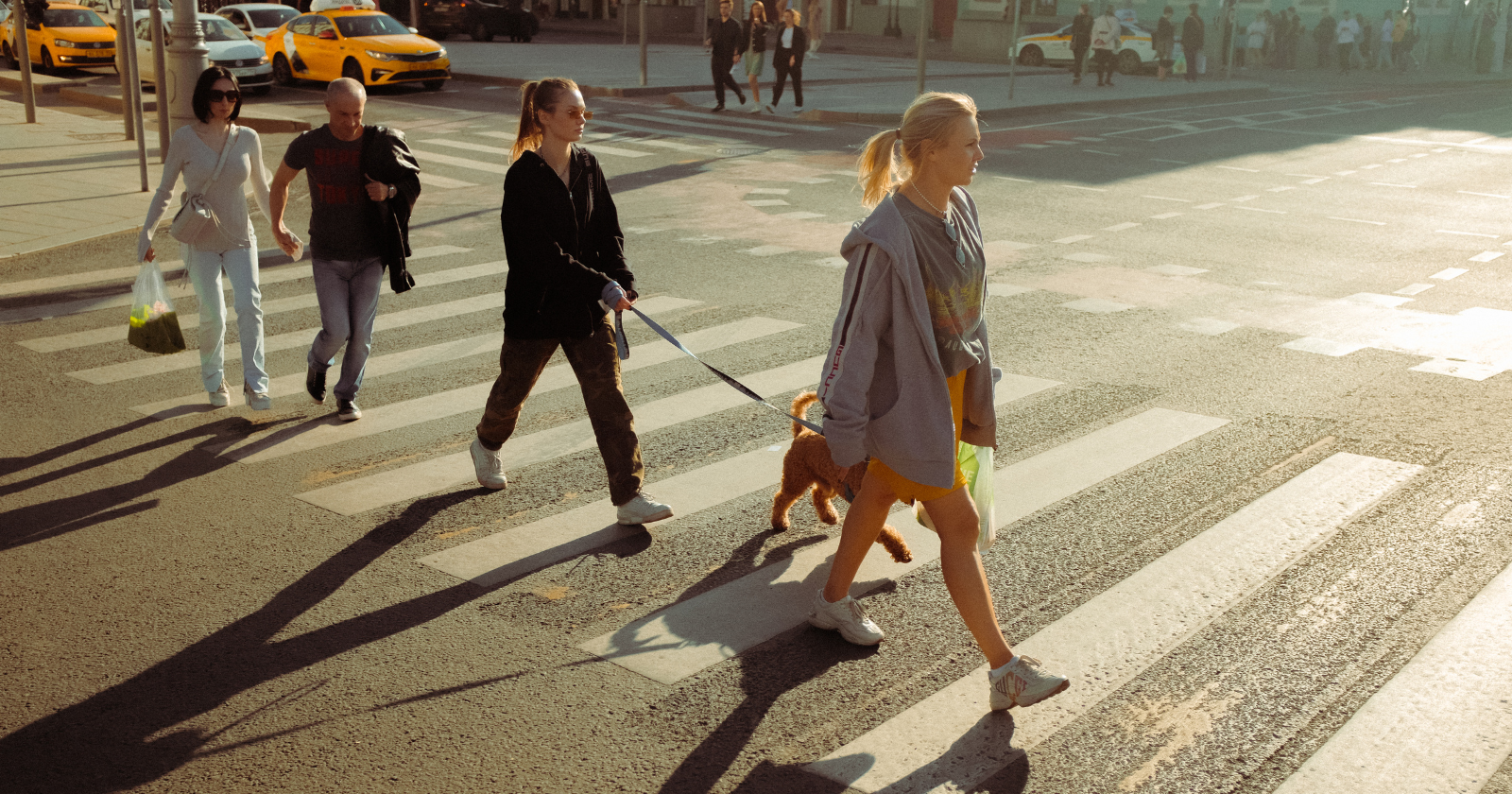
Darwin did his laps on a path near his house. Nietzsche walked alone for hours every day, notebook in hand, and eventually wrote down his conclusion: “All truly great thoughts are conceived by walking.” Wordsworth reportedly covered 180,000 miles on foot over his lifetime. Steve Jobs held walking meetings.
I used to think this was just a personality quirk — some people like to pace, others don’t — and that whatever benefit people felt from walking and thinking was probably just the relief of stepping away from a screen or page, as it may be. There’s actually some research on it now, and the results are more interesting than I expected.
What the study found
In 2014, Stanford researcher Marily Oppezzo and her colleague Daniel Schwartz ran a series of experiments to test whether walking genuinely improves creative thinking, or whether people who believe it does are just fooling themselves. They put 176 participants through creativity tests — either sitting or walking — and measured the difference.
The core test was simple: take a common object and come up with as many uses for it as you can. A tire could be a swing, a planter, a flotation ring. A Frisbee could be a hat, a plate, or a small shovel. The more ideas you generated, and the more original they were, the better your score. Most people produced significantly more while walking. Creative output went up by an average of 60 percent.
“Many people anecdotally claim they do their best thinking when walking,” Oppezzo and Schwartz wrote. “We finally may be taking a step, or two, toward discovering why.”
It works on a treadmill in a boring room
The part that surprised even Oppezzo: it didn’t matter where you walked.
“I thought walking outside would blow everything out of the water,” she said, “but walking on a treadmill in a small, boring room still had strong results, which surprised me.”
The environment wasn’t the point. The movement was. And the effect lingered — participants who walked and then sat back down were still scoring higher than those who’d been sitting the whole time. The boost carried over even after they stopped moving.
I notice something like this myself. When a piece of writing isn’t coming together, going for a walk almost always helps. I assumed I was just resetting — getting away from the problem long enough to come back fresh. This suggests something more specific is happening: the walking itself is doing something, not just the break.
What it doesn’t improve
There’s a catch worth knowing. Walking helped people generate ideas, but it made them slightly worse at focused, analytical tasks — the kind where there’s one right answer and you need to find it.
“This isn’t to say that every task at work should be done while simultaneously walking,” Oppezzo said, “but those that require a fresh perspective or new ideas would benefit from it.”
So it’s not a universal upgrade. Walking opens thinking up — it’s not good at narrowing it down. If the task is brainstorming, drafting, or figuring out what angle to take on something, walking is the right tool. If the task is proofreading or solving something precise, you probably want to be sitting down.
The rest of the case for it
The creativity finding sits on top of everything else walking already does for you. Cleveland Clinic summarizes the evidence: regular walking can reduce the risk of heart disease, lower stress, help regulate blood sugar, and can even improve sleep quality. That list was already compelling before Oppezzo’s work.
What I am taking from this
I already walk a lot. On most working days, I’ll move between two or three cafes, partly because I get restless sitting in one place, partly because I like the small reset of packing up and heading somewhere new. I’d always framed this as a focus thing — change of scenery, fresh chair, fewer distractions. Reading Oppezzo’s work, I think I had the mechanism slightly wrong.
The walk between cafes wasn’t just a break from the work. It was probably where a lot of the work was actually getting done. The bits where I figure out what I’m trying to say, or notice that the angle I started with isn’t quite right, or land on the line that makes the rest of the piece click — those almost never arrive at the desk. They arrive somewhere between one black coffee and the next.
What I’m taking from this isn’t really a behaviour change, because the behaviour is already there. It’s more a reframe. The sitting-down time is for executing. The walking time is for thinking — and I should probably stop treating it as the in-between bit and start treating it as a real part of the working day. Bring a notebook. Don’t fill the walk with a podcast every time. Leave room for the thing to actually happen.