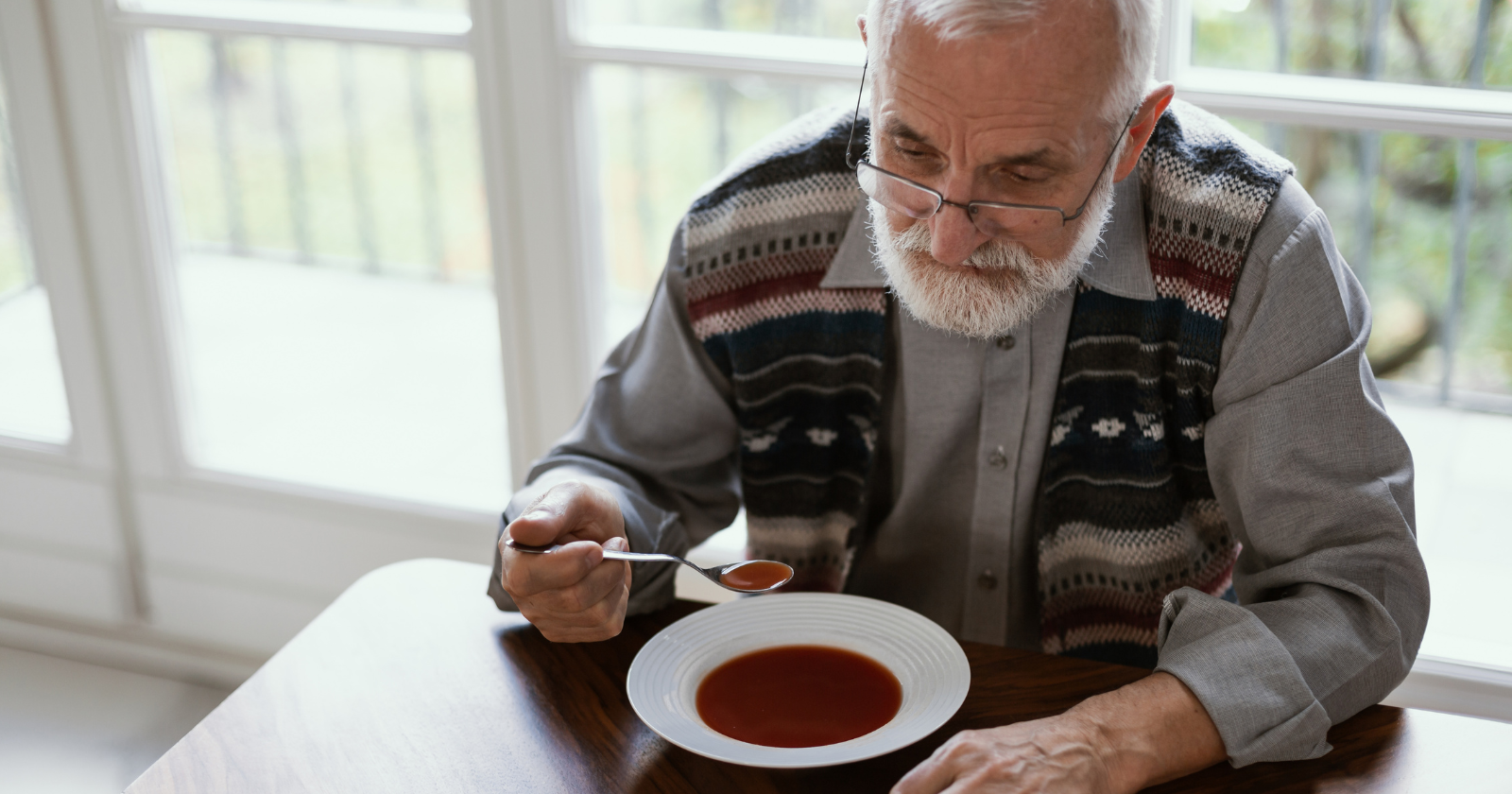
I want to write about a particular kind of meal, and a particular kind of person who has, over time, come to prefer it.
The person is the one who dines alone, by choice, with some regularity. They are not, in the standard cultural reading, lonely. They are not, on close examination, antisocial. They are simply someone who has, somewhere along the way, made a calculation about which kinds of meals are restorative and which kinds are depleting, and the calculation has consistently produced a particular answer. The answer is that, given the choice between the wrong kind of company and no company at all, the no-company option is, by their honest accounting, the less expensive one.
I want to be precise about how this calculation gets installed, because the cultural framing tends to assume it is the product of social failure rather than of considered judgment. The cultural framing, in this case as in others, is wrong.
The dinners that taught the lesson
The person who has come to prefer dining alone has not arrived at the preference because they have never had company at a meal. They have arrived at it, in most cases, by having had a great deal of company at meals over the years, and by having noticed, somewhere along the way, that a particular subset of that company was, in some real way, worse for them than no company would have been.
The subset in question is not the openly hostile company. The openly hostile dinner is, in some sense, easier to process. You know what happened. You know how you feel about it. You can, afterwards, file the experience under the appropriate heading and move on.
The subset that does the actual damage is the dinner across from someone whose attention is somewhere else. The someone is not openly unkind. They are not visibly distracted. They are, in most cases, perfectly pleasant. They are also, in some structural sense, not in the room with you. Their mind is on the work they did today. Their attention is, partially, on the phone face-down beside their plate. Their listening is, when you say something, calibrated to the form of listening rather than to the content of what you said. They produce the appropriate responses. They produce them on autopilot. The meal looks, to any nearby table, like a perfectly successful dinner between two people.
What the meal feels like, to the person sitting across from this kind of company, is something specific that the cultural register does not have good words for. It feels like being alone with the additional burden of having to perform companionship for someone who is not currently providing any. The burden has two parts. The first is the actual experience of not being met. The second is the social labor of keeping the meal looking, from the outside and possibly to the other party, like a meal that is, in some sense, working.
I had a string of these dinners in New York, in my late twenties, with a partner I have written about elsewhere. The dinners were warm enough, on paper. We had been together long enough by then that the warmth was, in some structural sense, a default rather than a current event. The meals proceeded. The food was eaten. We left the restaurants holding hands. What I remember, more than the food or the conversation, is the particular fatigue I would feel by the end of these meals. The fatigue did not match what I had been doing. I had been sitting in a restaurant for ninety minutes. I had not, by any external measure, done any work. The fatigue was, I now understand, the cost of having spent ninety minutes performing okayness for someone who was no longer in any active sense receiving the performance, and the cost was real.
What the solo meal stops asking for
I started dining alone, on purpose, somewhere in my early thirties. I want to be careful about how I describe the early experience of it, because it was not, at first, comfortable. The solo meal, for someone who has not done it much, has its own difficulties. The waiter’s small softening of tone. The brief glances from other tables. The interior management of one’s own sense of whether one is doing something slightly sad. The discomfort is real, and it takes a while to settle.
What settles, eventually, is the recognition that the solo meal has stopped asking for a particular kind of work that the dinners across from absent company had been asking for, all along. The solo meal does not require the performance of okayness. There is no audience to perform it for. The meal can proceed at whatever pace one’s actual hunger sets. The conversation, if there is one, is the one happening in one’s own head, and the conversation in one’s own head has the advantage of being calibrated to one’s actual current state rather than to the social register a tablemate might require.
The first time I noticed, with any clarity, that I preferred this configuration to the alternative, I was in a small restaurant in Bangkok, eating a bowl of khao soi at a corner table with a book. The book was not particularly interesting. The khao soi was excellent. I had been alone for the entire meal. I had not, for the entirety of the meal, performed any version of myself for anyone. I had simply eaten. The eating, taken on its own terms, had produced a particular kind of satisfaction that the previous several years of dinners-across-from-absent-company had not, on close examination, been producing. I noticed, walking home, that I was not depleted in the way the New York dinners had left me. I was, in some real sense, slightly more myself than I had been when I sat down.
This is, I now think, the actual function of the solo meal for the people who have learned to prefer it. The solo meal is not, primarily, about the food. It is not about the protected period of being alone. It is, more specifically, about the cessation of a particular kind of work that the wrong kind of company had been requiring. The cessation is what restores. The solo meal is the small daily ritual in which the restoration occurs.
The performance of okayness, and what it costs
The performance of okayness is, on examination, a particular kind of social work that most adults are doing, in most social settings, more or less continuously. The performance involves the ongoing maintenance of a particular face, tone, and energy level that signals to the people around one that one is, in some basic sense, fine. The performance is not, in itself, dishonest. Most of the time, in most settings, one is in fact fine. The performance is, more accurately, the small ongoing labor of converting one’s actual interior state, whatever it happens to be at the moment, into the version of that state that the social register currently requires.
The labor is, by itself, sustainable. The labor becomes expensive in particular contexts. The most expensive context, in my own experience, has not been the contexts where the performance is most clearly required. The office is expensive in this way, but the office at least pays you for the performance. The expensive context is the one where the performance is, on paper, not required, but where the absent attention of the company makes the performance necessary anyway. The dinner across from a partner who is no longer present at the table. The lunch with a friend who has, in some real way, stopped tracking your current life. The family meal where the relatives are operating on a model of you that has not been updated in fifteen years. These contexts ask for the performance of okayness without offering any of the structural reciprocity that would, in the office, justify the cost.
The person who has learned to dine alone has, in most cases, accumulated enough of these expensive contexts to have made the calculation I described at the start. The calculation is not, in their internal experience, a complicated one. They have noticed, repeatedly, that they come home from these meals more depleted than they should be. They have noticed, eventually, that the solo meal does not produce the same depletion. The repeated observation has, over time, produced the preference. The preference is, in some real way, the structural result of having paid the cost often enough to have begun to notice it.
What this looks like, from outside
The cultural framing of the regular solo diner tends to read them as someone who has, in some sense, opted out of social life. The reading is, on examination, almost exactly wrong. The solo diner has not opted out of social life. They have, more accurately, opted out of the particular subset of social life that, in their internal accounting, has been costing more than it has been providing. They are still available for the subset that does provide a return. They are simply no longer willing to spend their finite social energy on the meals that do not.
The reading also tends to assume that the solo diner is, in some way, settling for less. The assumption is that the ideal configuration is the meal with the right company, that the solo meal is the consolation when the right company is not available, and that the person regularly choosing the solo meal is, accordingly, regularly settling for less than they would have if the right company had been on offer.
This assumption is, in most cases, also wrong. The right company is, for many of these solo diners, available. They could be calling someone. They could be arranging the dinner. They are not arranging the dinner because they have, by long experience, learned that the available company, even when warm and well-intentioned, is rarely the right company for the specific meal they are currently in the mood to have. The solo meal is not a consolation. It is, more accurately, the configuration the person has chosen because the available alternatives do not, on the available evidence, reliably outperform it.
This is, I want to say plainly, not a sad fact. It is, in my own experience, simply a fact. There are some meals I want to have with other people. There are many meals I want to have alone. The wanting-to-have-alone is not, in my internal accounting, a defeat. It is a recognition that some of the most restorative meals available to me are the ones in which I am not, for the duration, performing any version of myself for any audience. The meal is the meal. The eating is the eating. The performance, briefly, is suspended.
The honest acknowledgment
The solo diner, in most cases, is not running from anyone. They have, more often, lived through enough dinners across from absent company to have learned that the worst kind of solitude is the kind that happens at a table for two, and that the solo meal is the one configuration that finally stops asking them to perform okayness for someone who is not, in any active sense, available to receive the performance.
The preference is not, on close examination, a verdict on the people in their lives. The people in their lives, in many cases, are loved. The preference is, more accurately, a verdict on the structural fact that not every dinner with a loved person is, by virtue of the love, a nourishing dinner. Some dinners, even with people we love, are the wrong configuration for what we currently need. The willingness to recognize this, and to choose the solo meal accordingly, is one of the more underrated forms of self-care available in adult life.
The waiter, bringing the bill, may give the small sympathetic look that the cultural framing has trained them to give. The look is, in most cases, misdirected. The person at the table is fine. The person at the table has, in fact, just had the most restorative meal available to them this week. The book is not a prop. The phone, if it is out, is being attended to at the diner’s own pace rather than the pace another person would have set. The meal, in some real way, has worked.
I will, on most nights this week, eat alone. I will, on some nights, eat with people whose company actually adds something to the eating. The distinction between these two kinds of evenings is, I now understand, one of the more important pieces of relational arithmetic I have learned in my thirties. The solo meal, on the nights it is the right configuration, is not the lesser option. It is, in some real way, the meal that lets me come home as the person I was when I went out. Most meals, across from the wrong attention, do not let me do that. The solo meal does. That is, on examination, the entire point.