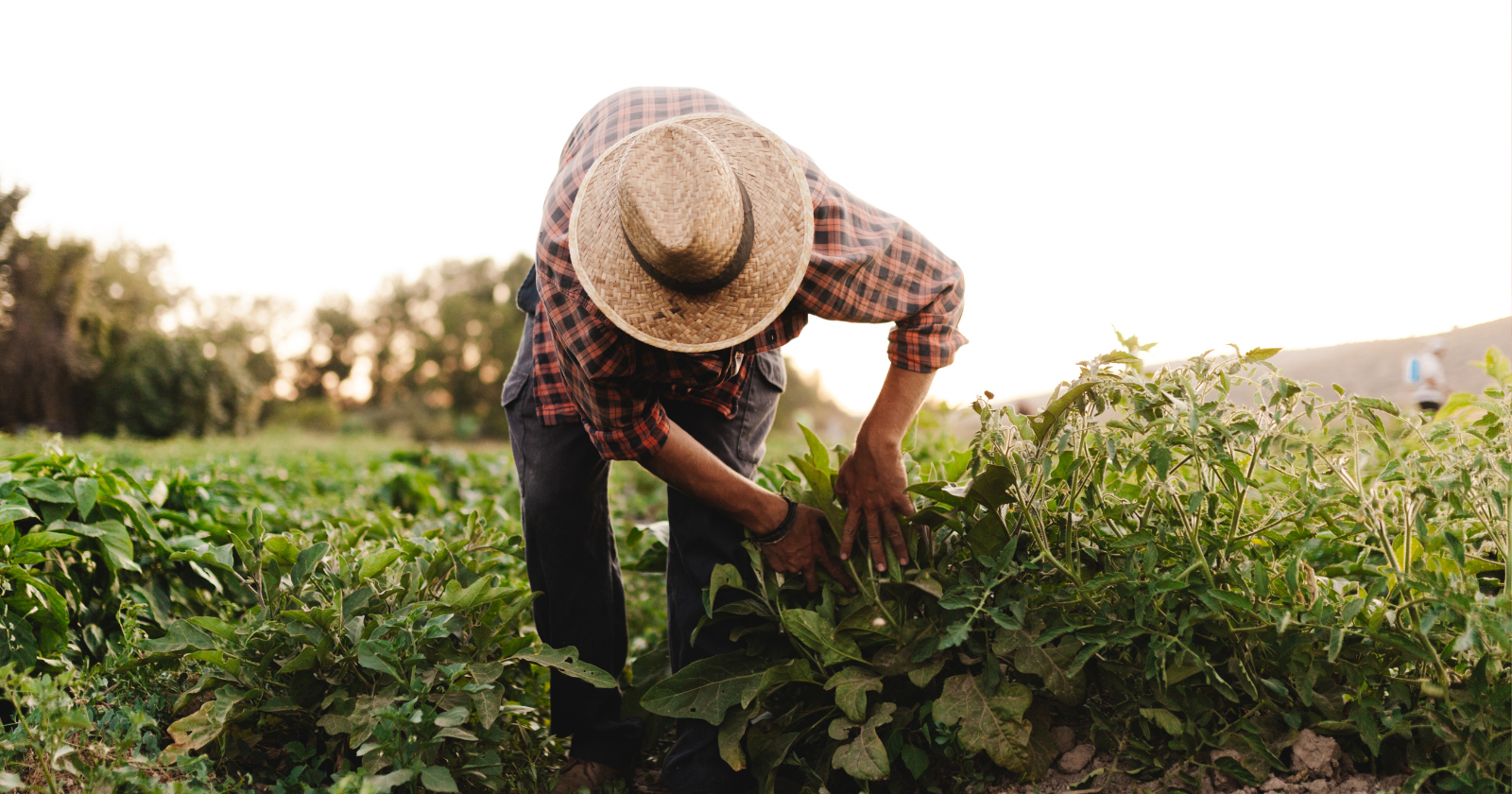
The standard number that conventional crop scientists give for growing corn is thirty inches of rainfall a year, roughly 760 millimetres. That’s the figure the farming press has repeated for decades, and it’s the assumption baked into most of the maize varieties on sale in North America. On the Hopi mesas in northeastern Arizona, the annual rainfall is between six and ten inches, or 150 to 250 millimetres. Hopi farmers have been growing corn there without irrigation for at least two thousand years, and they’re still doing it. The way they do it says something specific about what a crop variety actually is, and about how narrow the assumptions behind industrial agriculture have become.
The place and the practice
The Hopi Tribe currently lives on about 1.5 million acres of the Little Colorado Plateau in northeastern Arizona, a semi-arid landscape of sandstone mesas and dry washes about 90 minutes from Flagstaff. According to the University of Arizona Indigenous Resilience Center’s profile of Hopi dryland farmer and academic Michael Kotutwa Johnson, the tradition is called dryland farming, and it depends on rainfall alone. There’s no groundwater pumping, no drip line, no reservoir on the property. Just seeds, a wooden planting stick, and a farmer who has to know when to plant, how deep, and what the winter snowpack has left behind in the soil.
The tradition is old enough that its accumulated selection pressure is measurable. Old Oraibi on Third Mesa has been continuously inhabited since around 1150 CE, which makes it the oldest continuously occupied settlement in what is now the United States, and the corn varieties grown there have been under selection by generations of Hopi farmers for roughly that whole period. Kotutwa Johnson describes himself as a 250th-generation traditional Hopi dryland farmer, and the seeds he plants have been passed down through that chain.
The Hopi answer to no water was to plant deeper. The Aztecs had the opposite problem and solved it by farming on the lake itself — the video covers how the chinampas worked and why they still outproduce the ground around Mexico City.
Why they plant deep
Conventional corn is planted at a depth of one to two inches, or two to five centimetres. That’s the standard for industrial maize varieties, and it works because those varieties are bred for shallow planting into wet spring soil that gets irrigated afterward. Kotutwa Johnson plants his corn between six and eighteen inches deep, or roughly fifteen to forty-five centimetres, depending on what the winter’s melted snow has left in the ground. The specific depth for any given hole is a judgement call based on the vegetation the farmer sees in spring, the texture of the soil in that patch of field, and the elevation of the dry wash the field sits in.
The reason for planting that deep is straightforward. The surface layer of soil on the Hopi mesas dries out fast under Arizona sun, and shallow-planted seed either fails to germinate or germinates and then dies in the top few centimetres before it can reach anything wet. The moisture that will keep a seedling alive is stored deeper down, in the layer that held the winter’s snowmelt through spring. To reach it, the seed has to be placed there directly. And then it has to be able to get back up.
What the seed does underground
This is where the specific varieties matter, and it’s where the science and the tradition converge on the same answer. Between the seed and the first leaf, a maize seedling grows a structure called the mesocotyl, which pushes the shoot upward through the soil until it reaches light. In most maize varieties the mesocotyl can extend only a few centimetres before it runs out of stored energy from the seed, which is why deep-planted conventional corn dies before it emerges. In Hopi corn, the mesocotyl has been selected to elongate far more than that, and to keep growing until it reaches the surface even from planting depths above twenty centimetres.
According to a peer-reviewed review by Sáenz Rodríguez and Cassab in the journal Plants in 2021, Hopi maize has been documented as having “the maximum degree of extensibility” in mesocotyl length among the maize landraces studied, meaning that of all the corn varieties in the world that have been characterised for this trait, Hopi corn goes further underground on stored energy than any other. The paper notes that landraces domesticated by southwestern Native Americans in prehistoric times were selected for the ability to germinate from depths greater than twenty centimetres in the soil, a trait that is entirely absent from most commercial maize varieties on sale today.
Why the varieties can’t just be transplanted
The genetic adaptation isn’t the whole of it. Hopi farming techniques have evolved together with the seeds, and the two only work as a system. Seeds get bundled together, eight to ten kernels in a single hole, so that the seedlings emerge as a cluster and hold their soil moisture collectively rather than each competing alone with the wind. The fields sit in sandy washes and clay loam soils that mulch themselves after rain. Fields are planted in multiple locations across the reservation as a hedge against localised failure, and the pattern of runoff from rare summer storms is read into the site selection.
None of this is simply portable. A Hopi corn seed planted at eighteen inches in irrigated Nebraska loam won’t germinate the way it does at home, because the soil chemistry, the water regime, and the microclimate are all different, and the seed has been optimised for its own particular environment over centuries. As Kotutwa Johnson has put it in interviews, Hopi corn is raised to fit the environment; the environment isn’t manipulated to fit the corn. That’s the exact reverse of the design philosophy behind industrial maize, and it’s the reason the two systems can’t be swapped one for the other.
What’s changing
The tradition is under pressure. The 2004 Natwani Coalition assessment of Hopi food and farming practices found that only around fifteen per cent of tribal members on the reservation are now growing crops, down from about eighty-five per cent in the 1930s. The younger generations have jobs that leave little time for farming, and access to lands, capital, and federal conservation funding has been structurally harder for Native farmers than for their non-Native counterparts. On top of that, the rainfall itself is changing. Kotutwa Johnson has noted that the Hopi mesas have received six inches or more of precipitation in only three of the last ten years, which puts the entire dryland farming premise under strain even for the farmers who are still working it.
What’s at stake if the tradition contracts further isn’t just a set of seeds, though the seeds themselves are irreplaceable and are held only by the community that developed them. It’s an entire body of knowledge about how to grow food in a climate that industrial agriculture insists is unfarmable. As the American Southwest gets hotter and drier under the current climate trajectory, the practical value of that knowledge to the wider world is only going to increase. The people who still hold it grew it in a place that gets less rain than most of the planet’s failed crop seasons, and they did it for two thousand years without a drop of imported water.