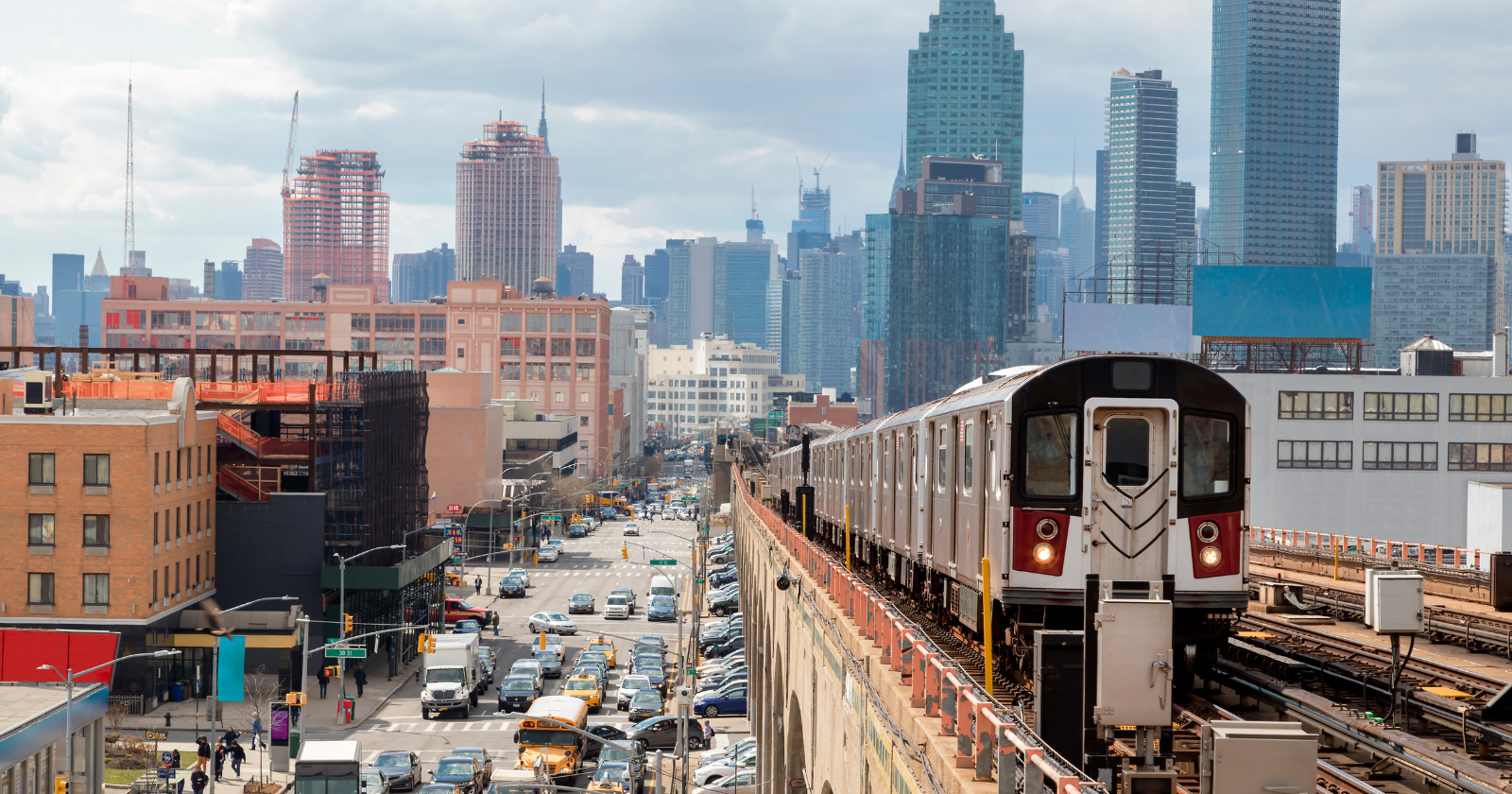
The Metropolitan Transportation Authority, which runs the New York City subway system, had a problem in the late 1990s. It was in the middle of a major fleet modernisation programme that was going to retire roughly two and a half thousand ageing subway cars over the following decade. These were mostly the red-painted R-33 and R-36 cars that generations of New Yorkers had ridden through the 1970s, 80s and 90s, followed by the older stainless steel Brightliners that would come off the tracks later. Each retired car was worth essentially nothing as scrap. Each also cost the MTA roughly twelve thousand dollars to dispose of through conventional demolition. Which meant the total disposal bill for the fleet retirement, at prevailing rates, was going to run to something north of thirty million dollars. And the MTA, being a public transit authority in a permanent state of budget crisis, was not enthusiastic about that particular expense.
The solution the agency arrived at, in partnership with a handful of coastal state governments and the U.S. Fish and Wildlife Service, was one of the more counterintuitive recycling programmes of the early twenty-first century. Instead of paying to demolish the cars, the MTA would clean them, ship them south by rail and barge, and drop them into the ocean off the eastern seaboard. There they would form artificial reefs. The states would get new marine habitat for essentially free. The MTA would save the disposal costs. And the fish would, in theory, work out what to do with the rest.
How you turn a subway car into a reef
According to the New York Transit Museum’s own summary of the MTA Artificial Reefing Program, produced in collaboration with the programme’s former director Michael Zacchea and Robert Martore of the South Carolina Department of Natural Resources, the operation ran from August 2001 through to April 2010 and deployed more than 2,500 deaccessioned train cars to underwater sites off the coasts of New Jersey, Delaware, Virginia, South Carolina, and Georgia. The first phase concentrated on the Redbird fleet, which was already being pulled off the tracks in 2001, and which had a particularly recognisable red livery that made the sunken cars a photographable subject long after they had gone down. The Delaware Bay took approximately six hundred and nineteen Redbird cars alone, at a site now known as the Redbird Reef, located sixteen and a half nautical miles off Indian River Inlet at a depth of around eighty feet. Subsequent phases involved the stainless steel Brightliner fleet, which was deployed at reef sites further down the coast through the second half of the decade.
The engineering of the actual reef deployment was not trivial. Each car had to be stripped down first. According to the New Jersey Division of Fish and Wildlife’s own news bulletin on the deployment of 44 stainless steel subway cars at the Atlantic City Reef site in April 2008, every car went through a full preparation process before it went into the water. Windows were removed. Wiring was pulled out. Plastic components, degradable materials, hydraulic fluids, oils, and grease were all stripped or drained. The remaining shell was inspected to make sure that when the car eventually corroded, nothing toxic would leach into the surrounding marine environment. Only after that inspection was the cleaned steel body loaded onto a barge and towed offshore.
The actual sinking process was almost comically straightforward. The cars, weighing around eighteen tonnes each in their prepared state, were rolled off the deck of the barge by a hydraulic tipping mechanism and simply dropped through the water column to the seabed below. The MTA covered all of the cleaning, transport, and deployment costs. Individual cars in the New Jersey deployment measured roughly sixty feet long, ten feet wide, and eleven feet tall. Deployed in tight clusters at pre-selected coordinates, they formed roughly the same kind of hard-structure habitat that a natural rocky reef would offer, but at a scale and geometry that had never previously existed on the sandy Atlantic continental shelf.
What the fish did with them
What happened next surprised the marine biologists monitoring the sites, though it probably shouldn’t have. The subway car reefs, unlike almost any natural feature of the mid-Atlantic seabed, offered vertical structure. They offered cavities and shelter. They offered hard surfaces for sessile organisms to colonise. And they were essentially unlimited in supply. Marine invertebrates began settling on the exposed steel within weeks. Barnacles arrived. Blue mussels followed. Sponges and soft corals began to establish themselves on the vertical surfaces. Within a year or two, the once-bare metal shells of the retired subway cars had become the physical scaffolding of thriving benthic communities that had not existed anywhere on that stretch of ocean floor beforehand.
The fish arrived in response. Delaware’s Department of Natural Resources and Environmental Control has since documented that the invertebrate communities colonising the artificial reef structures provide up to four hundred times more food per square foot than the bare sandy ocean floor they replaced. Species that had been effectively absent from the region because of the lack of suitable habitat began to appear regularly at the sites. Sea bass, tautog, tuna, mackerel, flounder, scup, and triggerfish were all documented in significant numbers within a few years of the deployments. Recreational fishing operators in the coastal towns of Delaware, New Jersey, and Virginia found their nearshore catches rising. Dive operators found themselves with a genuinely unusual attraction to offer. The sunken subway cars, which had cost the MTA nothing to dispose of and had cost the states essentially nothing to acquire, became one of the more productive artificial reef complexes anywhere on the North American Atlantic coast.
The programme was not without complications. Inspection reports from New Jersey in 2009 found that some of the newer stainless steel subway cars were showing significant structural damage after only a few years underwater, which prompted the state to pause further stainless steel deployments while investigations continued. Not every car remained intact. Not every deployment site delivered the ecological returns the biologists had hoped for. And the specific question of whether artificial reefs simply concentrate existing fish populations rather than creating new ones is still debated within the marine biology community. But the general pattern held across the majority of the deployment sites through the 2010s and 2020s. The bare sand became structured habitat. The structured habitat became invertebrate communities. The invertebrate communities became feeding grounds. And the feeding grounds became fisheries.
By the time the programme officially ended on Earth Day 2010, 2,580 New York subway cars had been placed on ocean reef sites along the eastern seaboard of the United States. The MTA had saved something close to thirty million dollars in disposal costs. Delaware alone had received nearly a thousand of them. The Redbird Reef off Slaughter Beach now covers roughly 1.3 square miles of what used to be featureless sand and is one of the most biologically productive stretches of continental shelf in the entire mid-Atlantic region. Which is a strange kind of legacy for a fleet of subway trains that once carried millions of people through the tunnels underneath Manhattan and Queens. The trains never made it to the recycling yard. They made it to the ocean floor instead. And the fish have been living in them ever since.