A hole in the bedroom ceiling, black grit spread across the bed, and a smell like struck matches. Nobody signed for it.
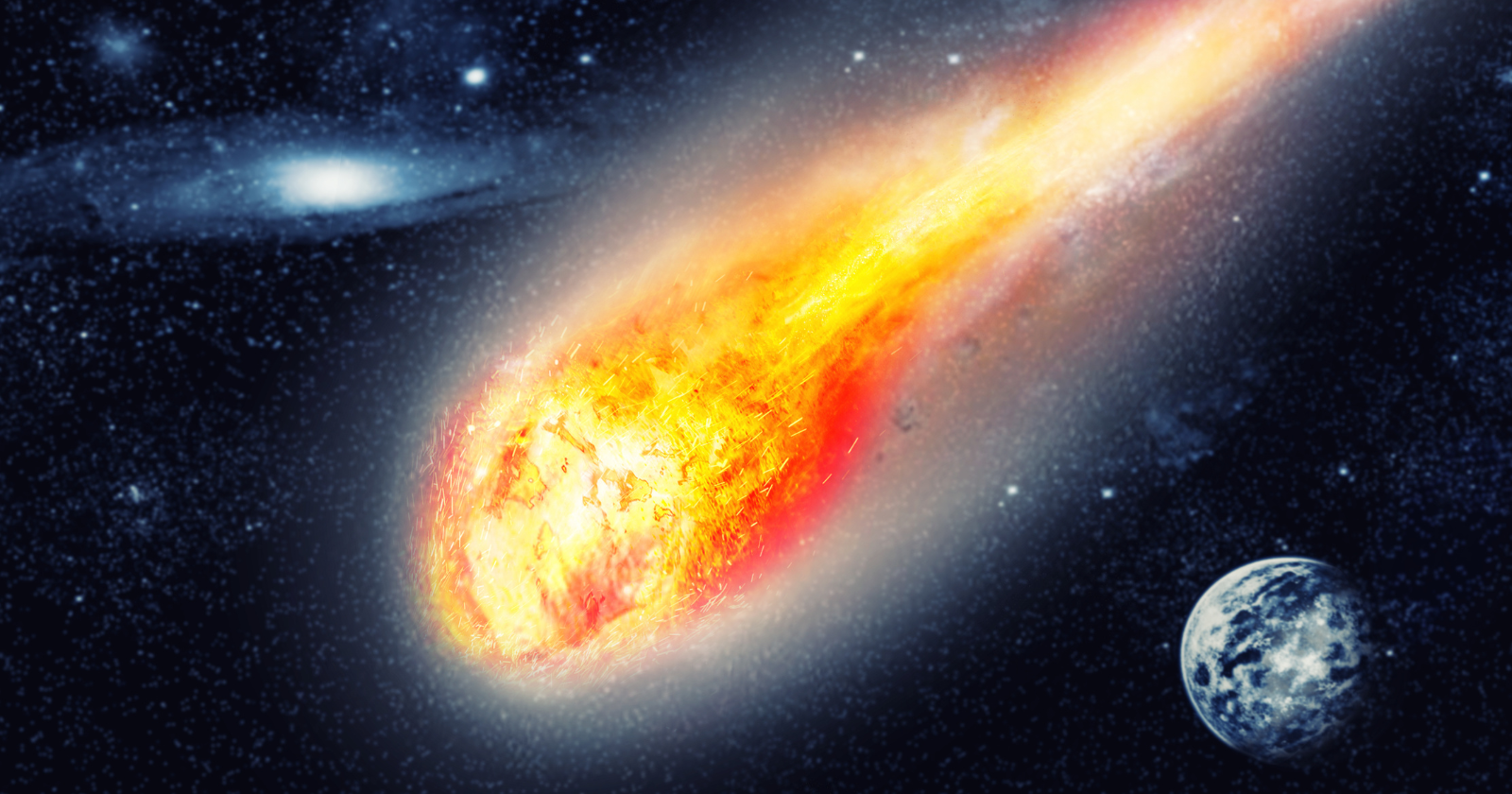
The delivery had been a long time coming. On 16 July 2024, a fireball crossed the New York metropolitan area in broad daylight and let off a sonic boom as it passed just south of the Statue of Liberty. Sixty people across five states reported the sighting to the American Meteor Society, and sixteen of them felt the shockwave arrive.
The object itself was about the size of a heavy suitcase, some 53 kilograms, moving at roughly 14 kilometres a second. It broke apart with the force of about 1.3 tonnes of TNT, as reported by Science News. Doppler weather radar at Newark Airport picked up a long cloud of pebbles drifting down from Staten Island into New Jersey.
One piece was recovered, and only because it hit something a person owned.
The homeowner who saved the science
A fragment weighing a little over a kilogram punched through the ceiling of a master bedroom in Hillsborough, New Jersey. The owner heard the crash, found the hole, and noticed a strong sulfur odour. What he did next turned an insurance claim into a laboratory specimen: disposable gloves, aluminium foil, clean glass jars, and a patched roof before the evening rain arrived.
Rock of this type is porous and thirsty, and it pulls water straight out of humid air, which wrecks exactly the fragile salt minerals scientists most want to look at. Meteor astronomer Peter Jenniskens of the SETI Institute and NASA’s Ames Research Center led the analysis. In a statement released by his institute, he said the homeowner’s quick reaction left science with “the most pristine CM1/2 meteorites we know of”.
Brines in a small salty world
Hillsborough, as the meteorite is now called, belongs to a family known as CM carbonaceous chondrites. The M honours Mighei, a rock that landed in Ukraine in 1889. These are leftovers from the early solar system, rich in carbon and reworked by water long before Earth had oceans of its own.
Witnessed falls of this family are scarce.
Hillsborough is only the 22nd on record, and just the second involving the intermediate CM1/2 classification, meaning parts of it were altered by water far more heavily than is typical for CM meteorites. The only earlier case was the Kolang meteorite, which fell in North Sumatra in 2020.
Inside it, meteoriticist Mike Zolensky of NASA’s Johnson Space Center and colleague JangMi Han found small salt-rich fragments, along with microscopic fractures filled with sodium-rich material. Sodium carbonate salts turned up too, a first for this class of meteorite. Together the signatures point to briny water, saltier than seawater, that once moved through the near-surface of the parent asteroid and evaporated, leaving its salt behind. That is the central claim of the team’s paper in Science Advances, which reports the first demonstration of brine formation in a meteorite of this kind.
Salty water is chemically busier than fresh water. Concentrated brine keeps phosphate dissolved rather than locked into solid minerals, and it encourages reactions between organic molecules and the minerals crystallising around them. Similar brine chemistry had already shown up in the pristine samples that Hayabusa2 and OSIRIS-REx brought home from the asteroids Ryugu and Bennu. It had never been demonstrated in a CM meteorite, the class most often credited with delivering water and carbon to the young Earth.
Amino acids that Earth never uses
Then there is the organic side of the ledger. Cosmochemist Queenie Chan of Royal Holloway University of London and biogeochemist Nana Ogawa of Japan’s marine-earth science agency JAMSTEC put numbers on it. The sample is 1.8 per cent carbon and 0.07 per cent nitrogen by weight, with a chemical signature typical of its family.
Astrobiologist Danny Glavin, whose Goddard Space Flight Center lab also handled the Bennu samples, told CNN that most of the amino acids found in Hillsborough are “rare or nonexistent in life on Earth”. Molecules that Earth’s biology essentially never makes are hard to explain as contamination from a bedroom carpet, which is why the researchers concluded the whole complex mixture formed inside the asteroid itself, helped along by those brines.
Not everything is nailed down. Organic mass spectrometry specialist Philippe Schmitt-Kopplin of the Technical University of Munich flagged that the magnesium-bearing organic compounds in the sample might be products of brine chemistry, or might be leftovers from earlier impact shocks, and the team cannot yet tell which.
What one rock can settle
Ingredients only get you so far. Amino acids and other organic acids are raw material, and finding them in a space rock says nothing about whether anything alive ever stirred on the asteroid they came from.
There is also the plain arithmetic of the evidence. This is one meteorite, described in one paper, and as ScienceAlert noted, questions about the rock’s origins and its place in the wider CM family will be difficult to settle without going back to the asteroid belt. Work on identifying the specific salt minerals is still underway, so they can be compared with material already returned from Bennu and Ryugu.
Peter Brown, a physicist at Western University in Ontario who was not involved in the study, called the brine finding a strong indicator of how water moved and evolved inside these bodies. Speaking to CNN, he added that it also shows how that water reacted with organics, which is the sort of detail astrobiology has long been short of. Coverage by EarthSky made the same distinction the researchers do: the building blocks of life, and not evidence of life.
Fragments are headed for curation at the American Museum of Natural History, a short drive from the flight path. As for the householder whose ceiling paid for all this, Jenniskens gave Science News a view most insurers would struggle with: the odds of a strike are tiny, a meteorite is a treasure, and anyone it lands on should count themselves lucky.