

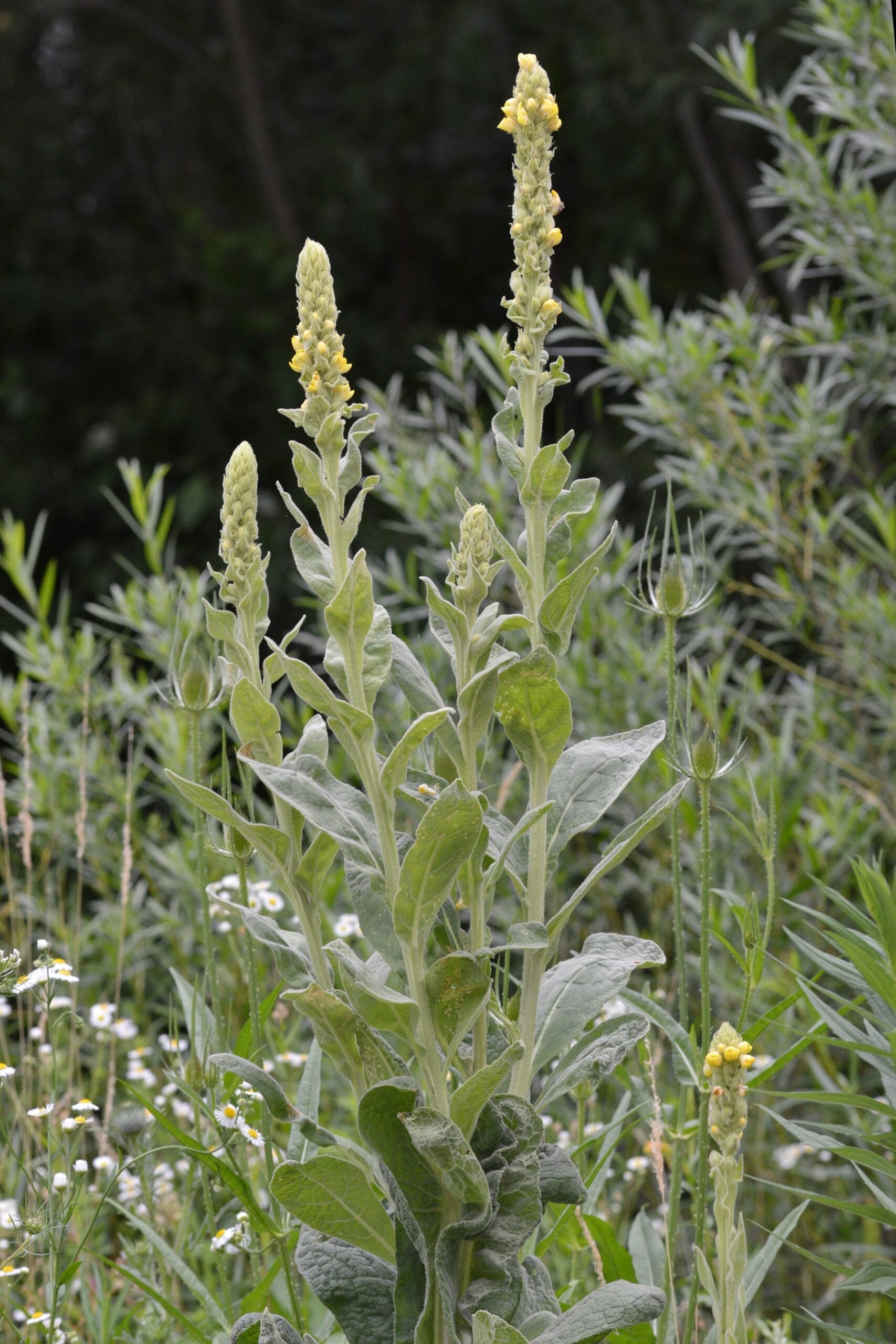
In the fall of 1879, a botanist at what was then Michigan Agricultural College filled 20 pint bottles with sand and weed seeds, walked them out to a sandy knoll on campus, and buried them mouth-down in a single east–west row — and when the sixteenth of those bottles was lifted out of the ground on an April night in 2021, roughly 142 calendar years later, 20 of its seeds still woke up and grew. The experiment William James Beal started with those bottles is still running. Under the schedule now kept by the W.J. Beal Botanical Garden at Michigan State University, the last bottle comes up around the year 2100.
That makes this one of the longest continuously running experiments in biology, and one of the few whose final data point will be collected by people not yet born. The seedlings from the 2021 dig were described in the American Journal of Botany in 2023 under the title "The 141-year period for Dr. Beal's seed viability experiment: A hybrid surprise" — the paper counts the buried interval as 141 years, while the calendar from fall 1879 to April 2021 runs 142, a small bookkeeping gap that says something about how a project outlives the tidy intentions of the person who started it.
Fifty seeds, twenty-three kinds, twenty bottles
Beal's question was practical and agricultural: how long do the weed seeds already sitting in a farmer's soil stay dormant and still viable? A field cleaned of weeds one summer erupts again the next, and Beal wanted to know how deep in time that reservoir went.
His design was almost aggressively simple. He counted out 50 seeds of each of 23 kinds of common plants — the weeds a Michigan farmer would have known by sight and by curse — and mixed each lot with moist sand. That is 1,150 seeds per bottle, more than 23,000 seeds across the set. He used uncorked pint bottles, so the seeds would sit at the moisture and temperature of the soil around them rather than in a sealed jar, and he buried each bottle with its mouth slanting downward so water would drain away instead of pooling inside. Twenty bottles went into a sandy knoll on campus in a row running east to west, and the location has been kept quiet by custodians of the experiment ever since.
The first bottles came up every five years. That interval held for the first 40 years. In 1920, Beal's successor Henry Darlington stretched the schedule to a decade between digs; by 1980 it had been stretched again, to 20 years, on the reasoning that the seeds that remained were the stubborn ones and the experiment should be made to last. The arithmetic in the 2023 paper puts the full span at about 221 years from the 1879 burial.
A night dig, 244 days of watching, and a hybrid nobody ordered
The sixteenth bottle was due in 2020. It was pulled in April 2021 instead, the delay attributed to the pandemic year, and the excavation was done in the dark — headlamps and red light, per the garden's account — both to keep the buried row's location from becoming a campus landmark and to avoid exposing the seeds to light cues that might bias what happened next. The team on the shovels included Frank Telewski, who has curated the experiment for decades, along with Lars Brudvig, Marjorie Weber, David Lowry and Margaret Fleming.
The contents went onto potting soil in a growth chamber, and then came the part that no press release can compress: 244 days of looking at trays. Twenty seedlings emerged over that assay. All 20 were Verbascum — mulleins, the tall rosette-and-spike weeds of roadsides and old fields. Of the 50 Verbascum seeds Beal had put in that bottle, 40 percent germinated after fourteen decades underground. Most of the other species in the bottle had already gone quiet; the paper reports that viability for the bulk of Beal's lineup was lost within roughly the first 60 years.
Then the surprise the title advertises. Nineteen of the seedlings were moth mullein, Verbascum blattaria. The twentieth was not quite either parent, and DNA work — including ITS2 sequence data, the first genomic confirmation in the experiment's history — identified it as a hybrid, V. blattaria × V. thapsus. Beal's own notes had listed only V. thapsus among the Verbascum he buried. Something in the 1879 seed collection was mixed up, or mislabeled, or already hybridized in the field where it was gathered. A century and a half later, a sequencer caught the discrepancy that no one alive could testify to.
Four bottles left, and a count that outlasts everyone
The 2021 dig leaves four bottles in the knoll. The next is scheduled for about 2040, and then the row goes down to three, then two, then the last one around 2100 — nineteen years, roughly, between each of the remaining data points, each dig handed off to a custodian who was not born when the previous one happened.
What the experiment has actually established so far is narrow and hard: that mullein seeds mixed with moist sand and buried in a Michigan knoll in 1879 could still germinate at 40 percent after roughly 142 years, and that at least one of them was not the plant the man who buried it thought it was. What it has not established is where the ceiling sits. The next answer arrives in 2040, in the dark, on a knoll whose coordinates are deliberately not written down here — 20 bottles down to four, 221 years planned, and the count still unfinished.