

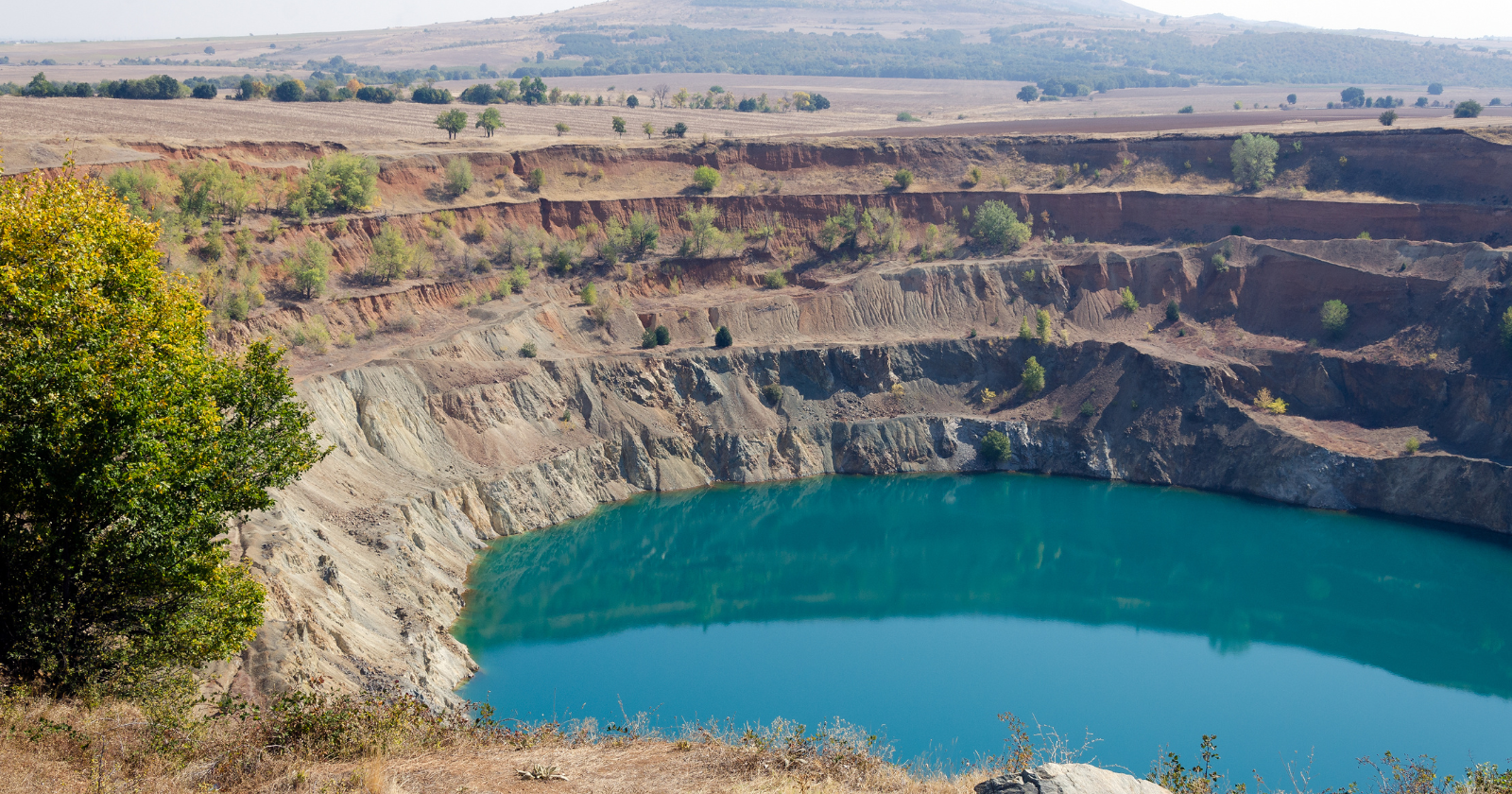
When a gold mine dies, it leaves the one thing nobody wants: the hole.
Kidston, 270 kilometers northwest of Townsville in far north Queensland, was once Australia’s biggest and richest gold operation. More than ninety years of digging ended in 2001, when the gold ran out and the town emptied, leaving behind an airstrip, worker housing, and two enormous open pits gouged into the outback — the classic stranded liability of the mining age.
Then somebody looked at the two holes and noticed the only fact that mattered: they sit close together, and one is much higher than the other.
A battery is just water and a hill
Pumped storage hydro is the oldest big battery there is, and the recipe is kindergarten physics. Put water in a high reservoir. When the grid needs power, let it fall through turbines to a low reservoir. When power is cheap and abundant, pump it back up. The water shuttles between two pools forever; the elevation difference is the battery.
The expensive part has always been building the two pools — dams, valleys flooded, decades of approvals. Kidston’s insight, developed by Genex Power, was that the mine had already dug them. The Wises pit became the upper reservoir, its rim raised with a ring dam built from the mine’s own waste rock. The deeper Eldridge pit became the lower one. Between them, engineers excavated what the miners never needed: a powerhouse cavern underground, with shafts and tunnels connecting the two pits, water from the upper pit falling some 220 meters through two reversible pump-turbines.
It is the first pumped hydro built in Australia in some 40 years — and the first anywhere on Earth built inside an abandoned gold mine.
The numbers on the nameplate
The converted mine, commissioned as K2-Hydro, stores 2,000 megawatt-hours — 250 megawatts of generation sustained for eight hours, enough to power on the order of 143,000 homes through an evening peak, making it the third-largest electricity storage device in the country.
And it is fast. From standstill, the plant can be generating in under 30 seconds — the rapid-response trick grid operators prize most, because it means the old gold pits can catch a sudden supply shortfall, or help restart a collapsed network, quicker than almost anything else on the system.
The mine’s leftovers subsidized the whole build. The workers’ accommodation, roads and airstrip were reused; the waste rock became the dam; an existing pipeline from the Copperfield Dam supplies the water. A 50-megawatt solar farm has operated beside the pits since 2017, with wind and more solar planned — the sun pumps the water uphill, and the pits give it back after dark. The $777 million project drew the largest loan in the history of the Northern Australia Infrastructure Facility, $610 million, plus $47 million from the federal renewables agency, and a new ~187-kilometer transmission line now ties the old mine to the coast.
There is even a dynastic flourish: the Genex co-founder who championed the project is named Simon Kidston — a descendant of the family line behind the town’s name, returning to switch the family hole back on.
The template in the ground
The reason agencies threw money at a remote dead mine is that Australia — like everywhere chasing high shares of solar and wind — has a storage problem measured in evenings: sunset removes gigawatts of solar just as demand peaks, and batteries of lithium can carry an hour or four, expensively. Pumped hydro carries eight, for decades, with machinery that outlives its financiers.
And the country is pocked with candidate holes. Australia has thousands of disused mine sites, and a national audit famously found many multiples more potential pumped-hydro sites than the grid could ever need. What Kidston proves is the conversion math: pits already dug, elevation already paid for in diesel and dynamite decades ago, infrastructure already standing. The knowledge from this build, the funding agencies note, is explicitly meant to be copied at other mines.
Which gives the story its clean inversion. For a century, the measure of Kidston was what came out of the ground — tonnes of gold, carted away until there was nothing left but absence. The absence turned out to be the second orebody. The miners dug a shape, and the shape was worth mining again: two voids and a height difference, refilled with the cheapest substance on Earth, now banking sunlight for north Queensland. The gold made men rich for ninety years. The hole may serve longer.
