

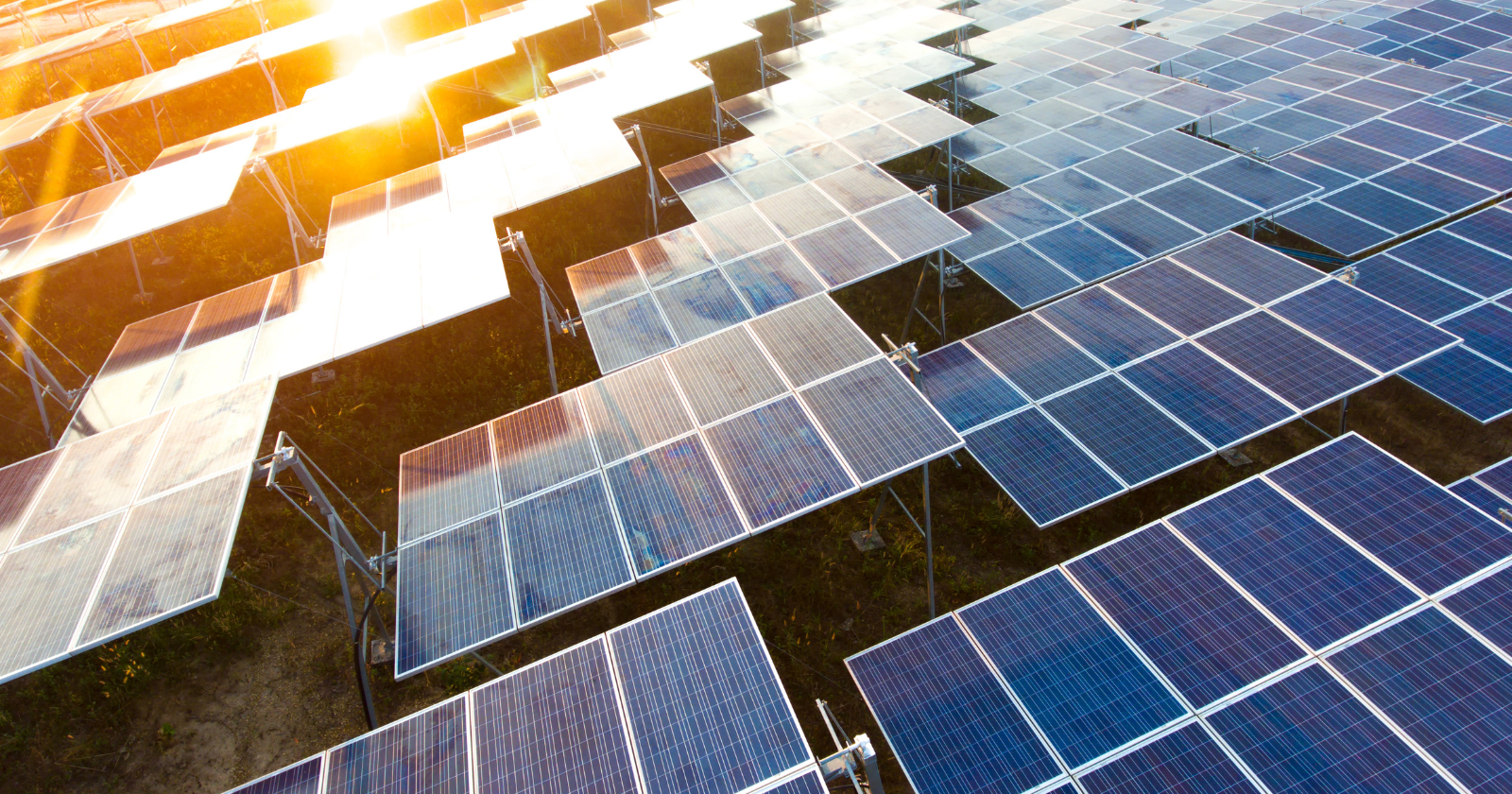
Solar farms and cropland are usually cast as rivals for the same acres. Every field of panels is a field that stops growing corn or soybeans, and in farm country that framing has real teeth. The Department of Energy’s Solar Futures Study estimates that roughly 10 million acres could be needed for large-scale solar in the United States by 2050, and researchers on the Minnesota work note that about 80 percent of future ground-mounted solar could land on farmland. The question of what happens under and around the panels is not a small one.
A five-year study at two sites in southern Minnesota complicates the either-or version of that story. The land didn’t have to sit idle or grow crops. It grew flowers, and the flowers brought insects, and the insects didn’t stay put.
A quick note on how we’re reading this. We’re not ecologists or entomologists, and this is one observational field study at two specific sites, not a settled verdict on solar and biodiversity everywhere. The numbers below are patterns from restored habitat in one part of the Midwest, not a promise about how any given solar project would turn out.
What the Minnesota sites actually did
The two large solar sites, operated by Enel Green Power North America, were built on retired farmland. Rather than leaving bare gravel or mowed grass beneath the panels, the developers planted native grasses and flowering plants. Same acres, same panels, different ground cover.
Then came the counting. Researchers from Argonne National Laboratory and the National Renewable Energy Laboratory ran 358 surveys from August 2018 through August 2022, tallying flowers and insects on repeat visits.
What five years of surveys found
The plantings took time to mature, and the survey record tracks that. Over the five years, the habitat improved on every measure: more kinds of native plants, more flowers, and more insects to match. By the end of the study, total insect numbers roughly tripled, and native bees increased about twentyfold.
One of the authors, Heidi Hartmann described the change as something the team watched unfold on the ground: over time, she noted, the numbers and types of flowering plants increased as the habitat matured, and measuring the matching gains for pollinators was gratifying. The pace is part of the story.
Bees weren’t the whole picture. The team logged almost 11,000 insects from helpful groups, with beetles (mostly goldenrod soldier beetles) and hoverflies making up a large share. It’s a fuller community than the headline bee number suggests.
The part that leaves the fence line
The finding that turns a solid biodiversity result into something a neighboring farmer might care about: the bees didn’t treat the solar site’s fence as a boundary. The peer-reviewed study reports that proximity to the solar habitat boosted bee visits to soybean flowers in nearby crop fields. Bees raised next to the panels were showing up on the crop itself.
One useful yardstick: bee visits to soybean flowers near the solar habitat were about as common as near Conservation Reserve Program land. That land is ground the government pays farmers to set aside for conservation, and a working solar site was roughly its equal. Soybeans don’t strictly need insect pollination, but they do respond to it, so the spillover isn’t purely decorative.
The potential scale of that spillover is not trivial.
How we’d read the caveats
Two sites, one region, five years, and no comparison plot that stayed bare while everything else changed. It’s a before-and-after study, which is good at showing that things improved and weaker at proving exactly why, or that the same approach works elsewhere.
Walston’s own language keeps the conditionals in place: habitat-friendly solar, he argued, can be a feasible way to safeguard insect populations and improve pollination services in adjacent fields. Can be, if properly sited. Those hedges carry weight, and the study is explicit that more research is needed to know how well the approach works across different regions.
Our read of the whole thing is that it’s a strong proof of concept that the solar-versus-farmland framing is not the only option on the table, not a guarantee that every array on old cropland will hum with native bees. A prairie planting in southern Minnesota is not a desert site in the Southwest or a rocky one in the Northeast, and what grows and pollinates in one won’t automatically show up in the others.
There’s also a plainer barrier the survey numbers don’t settle. Seeding native grasses and wildflowers and managing them for years costs more than gravel and a mower, and someone has to carry that cost over the life of the project. Whether pollinator plantings become standard on solar sites, or stay a choice a few developers make, depends on that math and on who’s willing to pay for the upkeep. The insects, in Minnesota at least, have shown they’ll do their part. Whether the economics follow is the harder question.