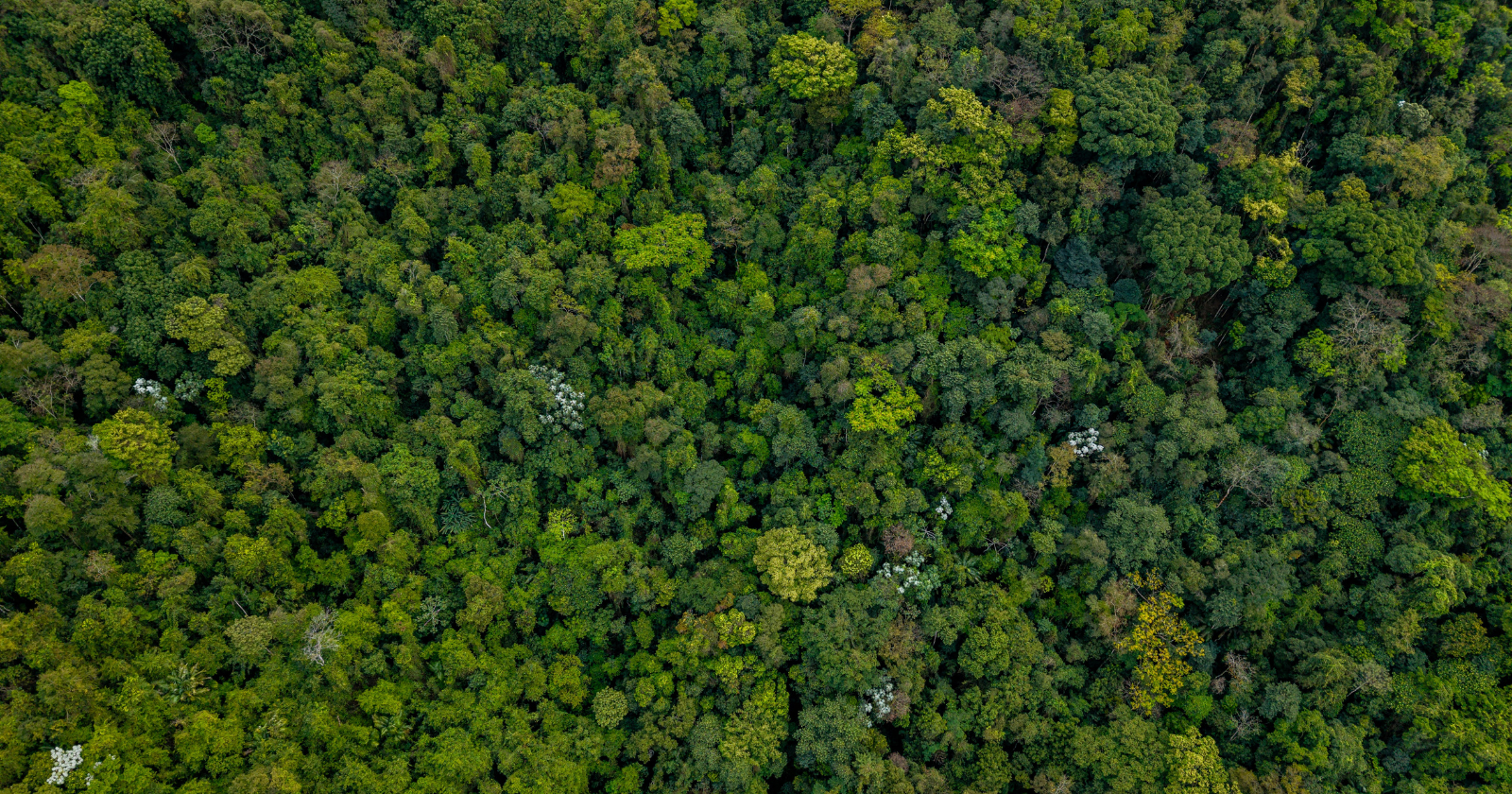
A hawk slips between the leaves, and the forest immediately starts talking behind its back.
In a remote stretch of the Peruvian Amazon, Ari Martínez’s Forest Fear Lab at the University of California, Santa Cruz turned up with a falconer, several trained raptors and a lot of recording gear, and set about frightening birds on purpose. Their paper in Current Biology, published in April, tracks what happens next: a warning cry gets picked up and repeated by animals that never saw the hawk, crossing the canopy in seconds.
Ettore Camerlenghi of Deakin University and Martínez borrowed a phrase for it in a piece for The Conversation: an “internet of the forest”.
How to make a rainforest panic on cue
Wild hawks refuse to appear on a research schedule, so the team enlisted a falconer. Trained raptors flushed genuine alarm calls out of birds and primates, and the researchers recorded those calls, played them back into the forest, and logged who reacted, who repeated the message and who fell silent.
Playback has a real limit. A recording shows how animals respond to a signal, which says nothing about how the same animals would behave face to face with an actual predator. The study captures the spread of information, not the outcome of a hunt.
Small birds set the agenda
An alarm call holds a great deal of information, Camerlenghi said in a news release from UC Santa Cruz, “but the first note is really important”. An animal weighing up whether to bolt has milliseconds to spend on the decision, not seconds, so the front of the call carries the freight.
Weight turns out to matter as much as timing. Calls from species under 100 grams were the ones most likely to be passed along, with other small canopy birds doing the bulk of the relaying. Two species stood out as habitual repeaters: the black-fronted and white-fronted nunbirds, which spread their neighbours’ warnings with unusual reliability.
Alarms raised in the understorey, the shadier layer beneath the canopy, mostly died where they were made.
Silence did some of the work too. Birds high in the canopy nearly stopped singing after a predator alert, while animals lower down carried on vocalising as though nothing had happened. A sudden gap in the soundtrack is itself a message. The researchers read it as bursts of alarm moving through the canopy, punctuated by stretches of quiet.
Monkeys on the same line
Why would a capuchin care what a bird thinks? Because the same raptors hunt both, and a warning about a shared enemy is useful regardless of who raised it. Capuchins and spider monkeys sometimes joined the relay.
That cross-species traffic had already been tested head-on. In a reciprocal field experiment published in Oikos in 2022, Martínez and colleagues used a trained bicolored hawk, a predator of both, to draw alarms from bluish-slate antshrikes and saddle-backed tamarins, before playing each species the other’s calls. Both fled more often than they did for a harmless control sound, regardless of which species had sounded it. Tamarins also moved further after a bird’s alarm than after the control.
The trouble with taking a bird’s word for it
In the mid-1980s, an ornithologist watching Amazonian flocks noticed something odd: the birds leading them kept crying hawk when there was no hawk. Charles Munn reported in Nature in 1986 that the white-winged shrike-tanager and the bluish-slate antshrike were sounding false alarms, scattering the flock and improving their own chances of grabbing the insects everyone else had flushed out. His reading has been argued over ever since, with later researchers suggesting the calls may be plain aggression, but the incentive to lie is real enough.
Reliability also varies by neighbourhood. A playback study in The American Naturalist in 2019 found flock associates responded far more strongly to alarms from whichever sentinel antshrike shared their patch of habitat, so the worth of a warning depends partly on the sender and on where in the forest it is heard.
What this does and does not show
Eavesdropping between species is well established. Robert Magrath and colleagues, in a review for Biological Reviews, documented it in birds, mammals and even a lizard, across habitats on several continents.
The canopy-wide relay described in April is a narrower claim. One observational study, one forest, and by the authors’ own admission no clear answer yet on what an alarm actually specifies, whether that includes the predator’s type, its distance or its direction. Martínez has raised the possibility of using acoustic monitoring to map these signals across space and time, which would show whether the pattern travels beyond Peru.
There is a harder question the paper leaves open. If a handful of small canopy specialists carry most of the traffic, a forest missing them may still produce warnings that nobody bothers to pass on.