

The report the UN released in Nairobi this week is the first of its kind, and it opens by conceding defeat on the number the world spent a decade defending.
Crossing 1.5°C of warming, says the UN Environment Programme’s Limiting Overshoot assessment, published September 2, is now unavoidable — likely around the end of this decade, with the planet already sitting near 1.4°C. The Paris target will be breached.
What makes the report new is what comes after the concession: a mapped route back. The pathway it names — overshoot, peak and decline — would cut emissions deep into net-negative territory, scale up carbon removal, and haul global temperature back below 1.5°C by late this century.
The air, in other words, might be recoverable. The report is equally clear about what is not. The ocean does not run in reverse.
Why the sea ignores the thermostat
Global temperature responds to emissions within years to decades. The sea runs on a different clock entirely, and the report’s sea-level findings turn on two mechanisms with enormous lag built in.
The first is thermal expansion. Water takes up more space as it warms, and the ocean has been quietly banking the heat of the industrial era — over 90 percent of the excess energy trapped by greenhouse gases has gone into seawater. That heat is still working its way down into the deep ocean, and the expansion it drives will continue long after surface air temperatures peak. Cooling the atmosphere does not un-warm two miles of water; the ocean gives its heat back on a timescale of centuries.
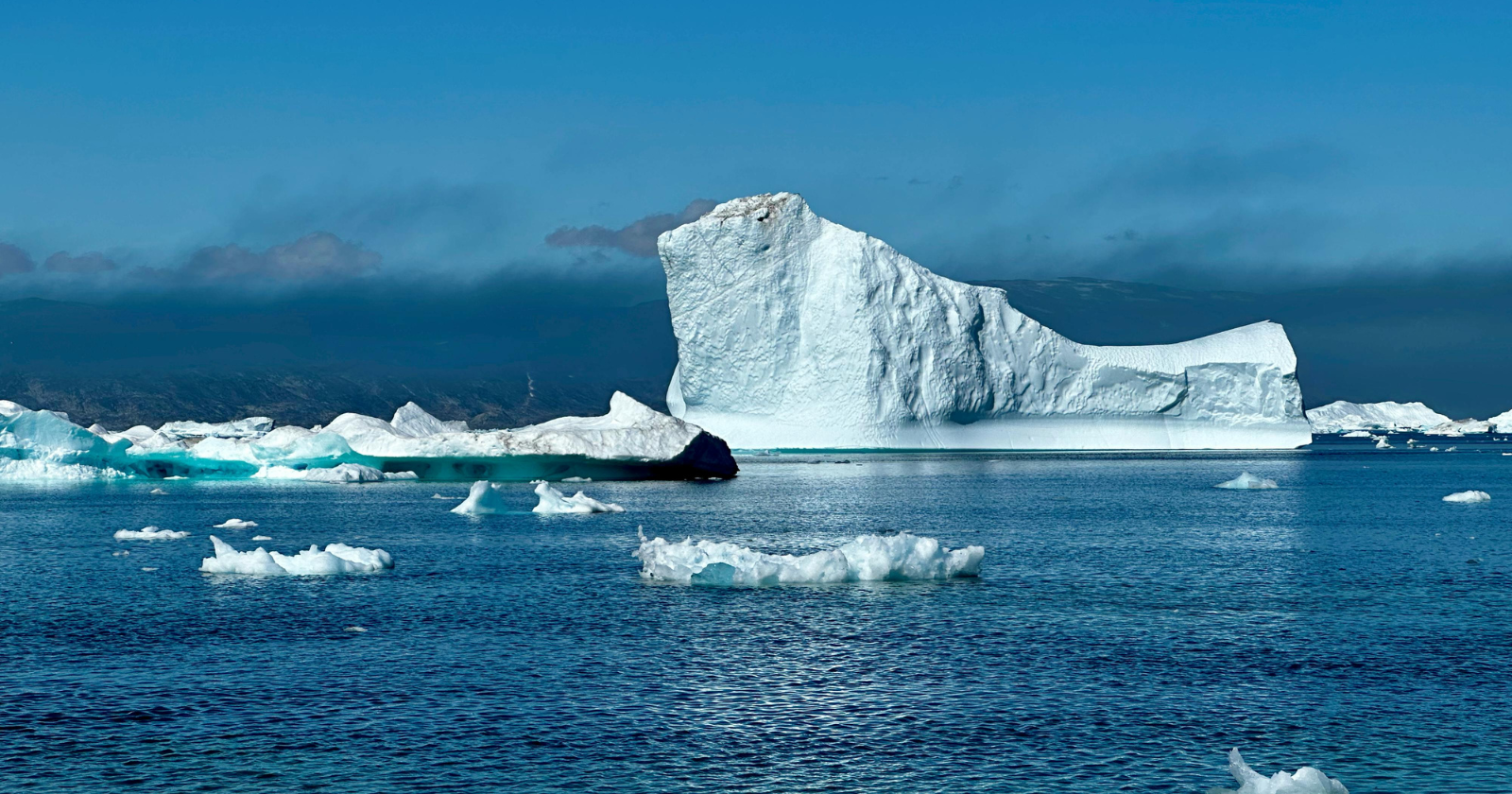
The second is the ice. The Greenland and West Antarctic ice sheets respond to warming the way a glacier does everything — slowly, and then unstoppably. Once destabilized, their glaciers keep flowing, thinning and calving for centuries, committed to losses set in motion by temperatures that may no longer exist by the time the ice actually reaches the sea. The report warns that additional warming raises the odds of pushing parts of these systems — along with the Atlantic’s overturning circulation — past thresholds where the changes become effectively irreversible on any human timescale.
Put together: even in the report’s best case, where temperature comes back below 1.5°C before 2100, the sea keeps rising through the recovery and beyond. Some of the rise triggered during the overshoot, UNEP warns, is effectively permanent.
What an overshoot doesn’t erase
The sea is the report’s clearest example of a broader principle it works hard to establish: an overshoot is not a round trip.
Species lost during the hot decades do not return when the thermostat comes down. Ecosystems pushed past critical limits can reorganize into different states and stay there. Glaciers that vanish from mountain ranges are gone on any timescale that matters to the people who drank from them. The authors state it plainly: even if a return below 1.5°C is secured, many nations and communities face irreversible losses and permanently changed conditions.
For the low-lying nations that fought hardest to put 1.5°C into the Paris Agreement, this is the bitterest clause. Palau’s president called it hard to overstate the emotion of frontline states reading a report that converts their red line into a scheduling question. A delta or an atoll doesn’t experience the century-end recovery; it experiences the water, which by then has moved in.
The case for hurrying anyway
None of this is an argument that the recovery is pointless — the report’s arithmetic runs the other way.
Because the sea’s response scales with how high and how long the overshoot runs, every fraction of a degree shaved off the peak, and every year trimmed from the exceedance, subtracts from a rise that will otherwise compound for centuries. The most optimistic pathway peaks near 1.8°C and returns toward 1.5°C by 2100; the pessimistic ones sail past 2°C and may not return at all. UN Secretary-General António Guterres compressed the report into a sentence: make the overshoot as small and as short as possible.
The deeper shift is in what “success” now means. For thirty years, climate policy was framed as prevention — hold the line, keep the number. The line is gone, and the new framework is damage arithmetic: how high, how long, and how much of the harm can still be chosen. On land, quite a lot of it can. At the coast, the report’s honest answer is that part of the future is already in the water — expanding, flowing downhill off the ice sheets, and indifferent to whatever the thermometer does next. The air can be talked back below the line. The sea has stopped negotiating.
