

In 1958, the U.S. government built a lake to cool the machinery of the nuclear arms race.
Par Pond sits on the Savannah River Site, the 310-square-mile South Carolina reservation where America made the plutonium and tritium for its Cold War arsenal. The reservoir — around 2,300 acres of impounded water — was dug to dissipate heat from the P and R production reactors, its very name an abbreviation of the pair.
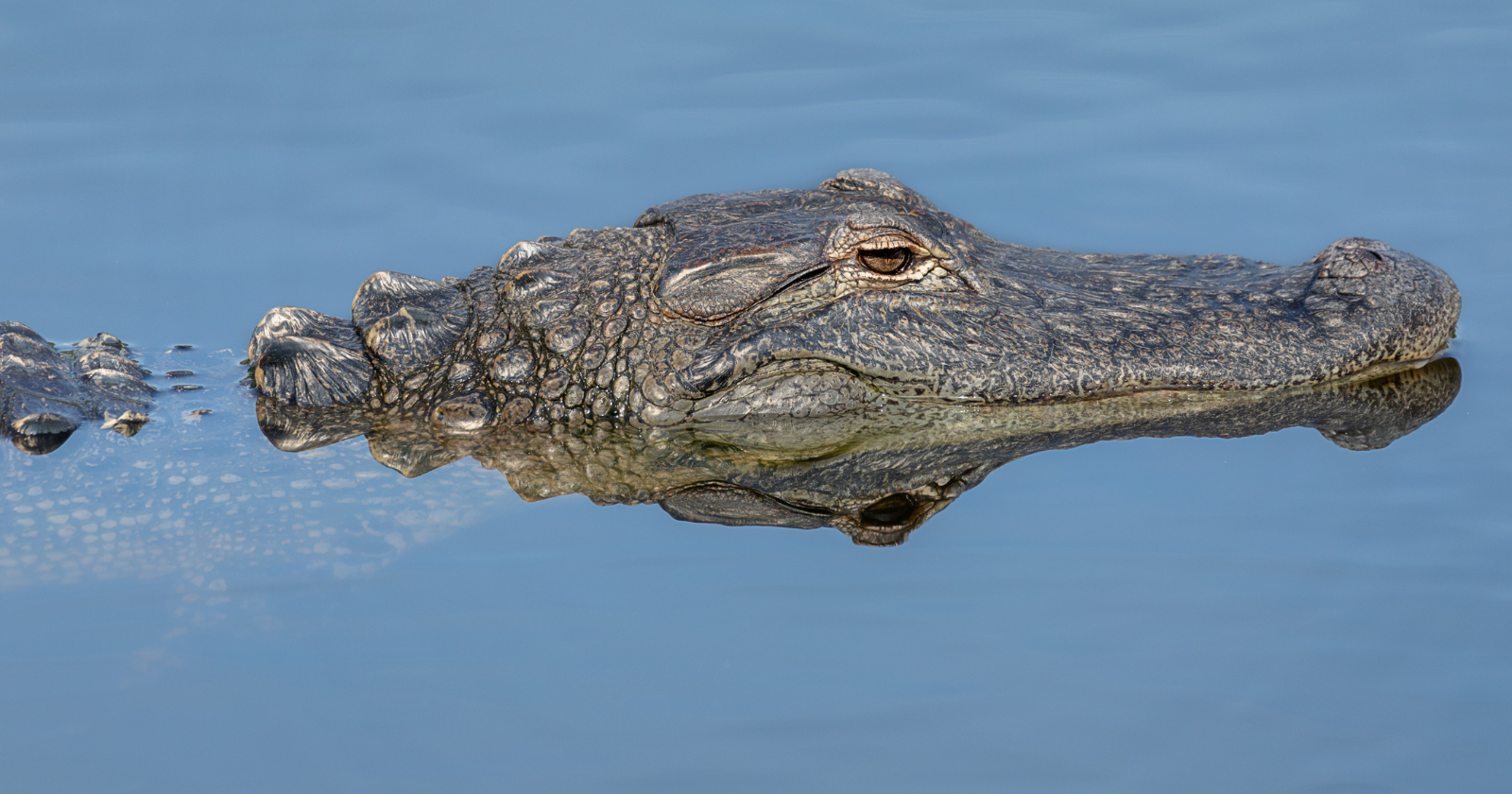
The reactors have been cold for decades. The lake is still full. And it is full of alligators.
The moat that became a refuge
Nobody planned the wildlife. When the government seized the land in the early 1950s, it evicted the farming towns and fenced 310 square miles against the public — and, without meaning to, created one of the largest de facto nature reserves in the eastern United States.
Deer multiplied into the thousands. More than a hundred reptile and amphibian species moved through the swamps. And in the warm reactor-cooling reservoirs, American alligators found something the region had never offered them: big, quiet lakes with no hunters, ever.
Today several hundred alligators live on the site, with Par Pond holding one of the densest concentrations. Ecologists studying the populations have concluded the nuclear operations were, on balance, a net benefit to the species — the reactors built alligator habitat that hadn’t existed before.
The catch is what got into the water along the way.
What the lake remembers
Par Pond’s sediments hold a Cold War archive. Radioactive cesium-137 from decades of reactor operations settled into the lakebed, and mercury arrived too, pumped in with Savannah River water drawn from below an off-site chemical plant.
Mostly, that legacy stays put in the mud. But in 1991, a precautionary drawdown to repair the Par Pond dam stirred the contaminated sediments back up, making buried mercury bioavailable again — a reminder that a sealed archive can reopen.
Which is where the alligators become scientific instruments.
Why you sample the oldest thing in the water
An alligator is close to the perfect contamination monitor, for three reasons.
It sits at the top of the food web, eating the fish that eat the smaller fish that live in the sediment, so anything moving through the lake’s food chain concentrates in its body. It doesn’t travel far, so its chemistry describes its home water, not somewhere upstream. And it lives an extraordinarily long time — decades in the wild, with 70-plus years possible — so a single big animal has been continuously sampling the same lake since before some of the cleanup programs existed.
A water sample tells you about the lake this week. A gator tells you about the lake since Eisenhower.
So researchers from the University of Georgia’s Savannah River Ecology Laboratory run a long-term catch-test-release program: hook or snare an alligator, draw blood, take a tail-tissue sample, measure it for cesium and mercury, tag it, and put it back to keep recording. The same logic covers turtles across the site — if a reptile “beeps,” its home zone needs more help, as Atlas Obscura summarized the program.
What the blood says now
The results are the cleanup’s report card, written in reptile.
The famous era of genuinely “hot” gators — workers once nicknamed two of them Tritagator and Dioxinator — is largely over. By the ecology lab’s account, radioactivity in the site’s animals today is nowhere near historic levels, and a large alligator tested in one high-profile check came back free of radiation entirely. Decades of remediation show up as declining numbers in the blood.
Mercury is the stubborn one. A recent study of Par Pond and L Lake alligators found average tail-muscle mercury above the World Health Organization’s threshold for safe consumption — which matters because South Carolina runs public alligator hunts outside the fence, and gators occasionally walk. The researchers paired the tissue data with hunter surveys to estimate real exposure risk, exactly the kind of question only a long-running animal archive can answer.
The instrument that swims
There is something fitting in the arrangement. The government built Par Pond as plumbing — a heat sink for weapons production, no more. The lake outlived its job, filled with the wildlife its security fence protected, and now its top predator has been drafted into the site’s longest-running audit.
Every alligator hauled onto the bank is a core sample with legs: four decades of the lake’s chemistry, integrated through ten thousand meals, waiting in a syringe of blood. The reactors wrote the record. The cleanup is editing it. And the animals that swim in it are how anyone checks the work.
