

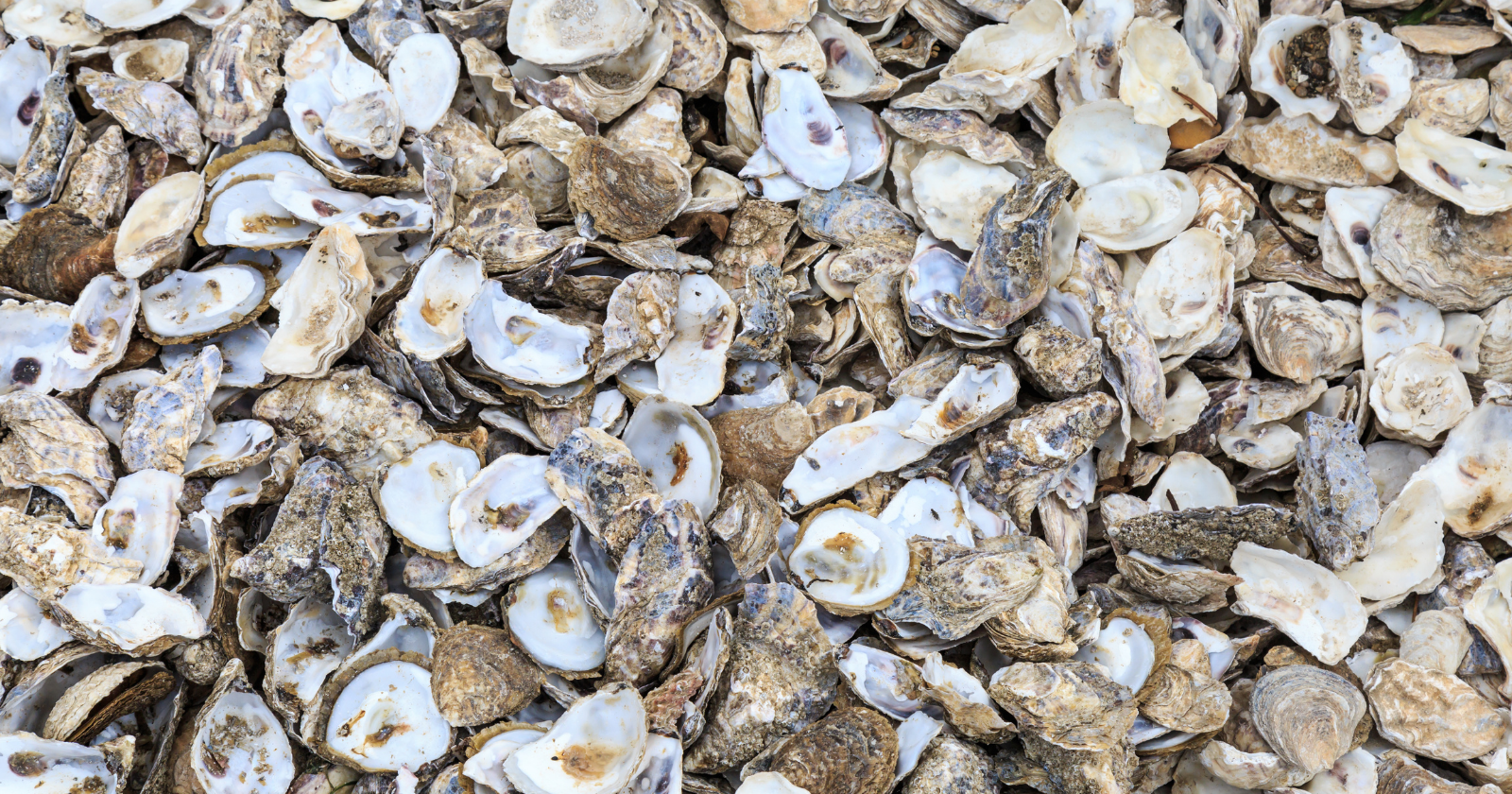
A baby oyster drifting in the water needs a hard place to land, and the best hard place for it is the shell of a dead oyster. So when a plate of oysters is cleared at a restaurant, the shell isn’t waste. It’s the foundation of the next reef, if someone bothers to collect it. In New York, someone does.
We’re not marine biologists or ecologists, and this is a piece of reading and reflection on how one restoration program works, not advice on anything. The figures below come mostly from the organization running the program and from its 2025 monitoring, so treat them as one group’s reporting on its own effort rather than a settled scientific verdict.
What happens to a shell after the plate is cleared
The Billion Oyster Project, a New York nonprofit that grew out of the New York Harbor School, collects used shells from restaurants across the city. By its own count, its restaurant partners send back more than 300,000 pounds of shell a year, roughly 800 pounds a day, instead of sending it to landfill. That’s a steady river of shell that would otherwise be thrown away.
The shells are gathered from around the city and hauled to Governors Island in batches. They can’t just be rinsed and dropped back in the water. They have to wait.
Why the shells sit outdoors for months first
On the island, the shells are cleaned and then left in the open to weather. As the Billion Oyster Project describes it, “Once on Governors Island, shells are cleaned and left to cure in the open air for months. This process removes bacteria and organic material so they are safe and stable.”
Sun and air kill off anything living on the shell before it goes into the harbor. Curing slowly, in the open, leaves the shell safe and stable while keeping the rough, hard surface a young oyster can grip.
The problem the shell is actually solving
To see why this is worth the trucking and the waiting, you have to know how oysters reproduce, which is strange. They don’t pair off. As Stony Brook University’s Shinnecock Bay Restoration Program puts it, “In nature, oysters are broadcast spawners – meaning that eggs and sperm are released into the water column where fertilization occurs.” Fertilization happens out in the open water, and the resulting larvae drift.
Then comes the bottleneck. The same program explains that “After floating for a short time, oyster larvae seek a hard substrate on which to settle. Once oyster larvae permanently attach to a surface, they are known as spat.” A larva that finds hard bottom becomes a spat and stays put for life. A larva that finds only soft mud dies. In a harbor whose oyster reefs were dredged and buried generations ago, there’s almost nothing left to land on. That’s the gap the recycled shell fills.
In practice the project doesn’t wait for wild larvae to wander over. It seeds the cured shell with hatchery-grown larvae, so each returned batch goes back to the water already carrying young oysters.
What 3.2 million pounds buys, and what it doesn’t
By the end of 2025 the numbers were substantial. The project reports recycling more than 3.2 million pounds of shell through partnerships with more than 75 restaurants, and restoring more than 183 million oysters across nearly 18 acres of reef. More than 16,000 volunteers have done the shell-hauling and reef-building work along the way.
The ecological pitch behind all that is filtration. A single oyster can filter around one gallon of water per hour, pulling algae and sediment out as it feeds. Multiply that by millions of oysters and the mental image is a self-cleaning harbor. We’d urge some caution here, and to its credit, so does the project.
Its restoration page doesn’t oversell. “Here’s the hard truth. Small reefs are not self-sustaining. When populations are too small, mortality outpaces reproduction,” the organization writes. In plain terms, the reefs are still dying faster than they replace themselves. The end-of-2025 monitoring report notes that while new oysters were turning up at several sites, their numbers stayed low and variable and did not yet outpace deaths. The reefs have not become self-sustaining. That’s why the stated goal is a billion oysters: only at that scale do the numbers tip toward reefs that renew themselves. 180 million is a lot of oysters but a small fraction of a billion.
Yesterday’s dinner, tomorrow’s reef
The image that keeps pulling us back is the loop itself. A shell that held someone’s dinner sits in the sun on an island for the better part of a year, then goes back into the harbor as the ground floor of a new reef. There’s a satisfying circularity to that.