

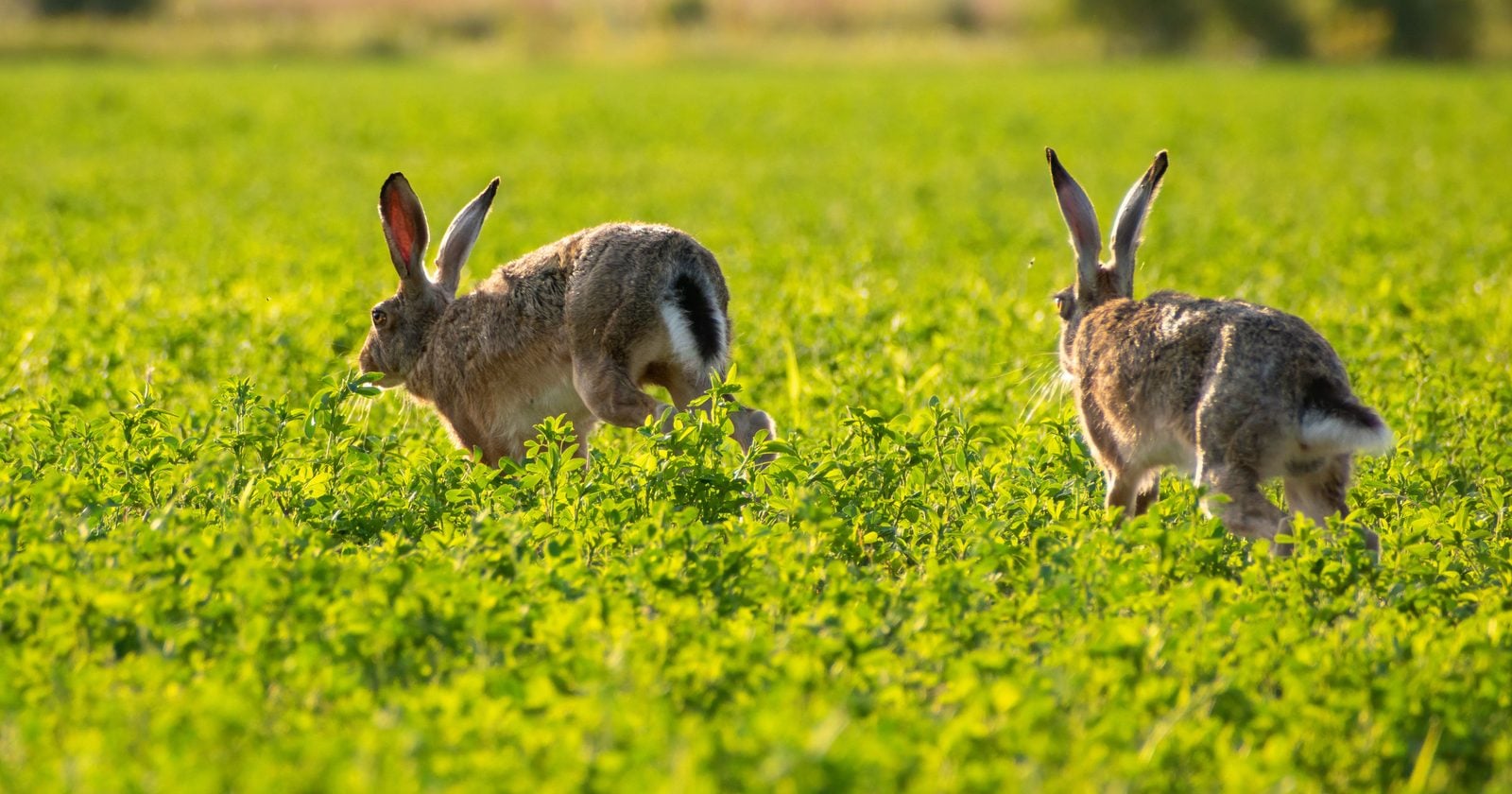
On Christmas Day 1859, a ship reached Melbourne carrying 24 rabbits. The shipment had begun with a mixture of wild and domestic rabbits collected around the Austin family’s home in Baltonsborough, Somerset, and was sent to Victoria. They were taken inland to Barwon Park, the estate of Thomas Austin, a wealthy English-born grazier. There, according to the National Museum of Australia, he set 13 of them loose so he and his friends would have something familiar to shoot.
It reads like a footnote. A homesick landowner wanted the country sport of the English gentry, so he arranged to recreate a slice of the Somerset countryside near Geelong. What happened next became one of the most consequential mistakes in the history of introduced species anywhere on the planet.
Why a gentleman’s shoot became a plague
Rabbits had reached Australia long before Austin. Five arrived with the First Fleet in 1788, and there were at least 90 further importations before 1859. None of them turned invasive. Austin’s rabbits met abundant food, good ground cover and relatively few predators, and they multiplied at a rate that alarmed even the people who had wanted them there.
The rise was fast. Local reports and Austin himself described the population running into the thousands within three years. In 1865 Austin reported killing 20,000 rabbits on his estate; in 1867 Prince Alfred, Duke of Edinburgh, was shooting rabbits at Barwon Park. The sport he had imported was working almost too well. Within a few decades it had stopped being sport at all.
The number that still lands
From that one estate, rabbits spread across almost the whole of Australia within 50 years, moving at roughly 100 kilometres a year, the fastest recorded colonisation rate for an introduced mammal. Covering two-thirds of Australia, an area about 25 times the size of Britain, took only half a century.
The population kept climbing. By 1949, before successful biological control, the number of feral rabbits in Australia was estimated at around 600 million. That many grazing mouths reshape a landscape: rabbits strip vegetation, accelerate soil erosion and compete with native animals for food and shelter.
Tracing Australia’s rabbits back to one shipment
For a long time it wasn’t certain that Austin’s rabbits really were the source of the invasion. With dozens of introductions scattered across the country, it could have had several starting points. In 2022, a team led by the University of Cambridge and Portugal’s CIBIO Institute tested the question with DNA, analysing 187 rabbits from Australia, Tasmania, New Zealand, Britain and France.
Their answer pointed back to Barwon Park. As lead author Joel Alves put it, “Our findings show that despite the numerous introductions across Australia, it was a single batch of English rabbits that triggered this devastating biological invasion.” The team traced the ancestry of the invasive population back to south-west England, where the Austin family had collected the animals.
The study also helps explain why Austin’s introduction succeeded where earlier ones did not. Historical records indicate the original consignment contained six wild-caught rabbits and seven grey rabbits kept in hutches; 24 rabbits ultimately arrived in Melbourne. Genetic evidence showed that Australia’s invasive rabbits retained strong wild ancestry. Senior author Francis Jiggins noted that domestic rabbits can carry traits that leave them poorly adapted to survival in the wild, while Austin’s rabbits may have had a genetic advantage.
Still paying for a hunting trip
The response has been enormous, and it has never stopped. Between 1901 and 1907, Western Australia built a rabbit-proof fence system that eventually stretched 3,256 kilometres. It failed to stop the spread because rabbits had already crossed parts of the intended barrier before construction was complete.
Biology succeeded where fencing failed. Myxomatosis, released in 1950, became the world’s first successful biological control program against a mammalian pest. Rabbit haemorrhagic disease virus followed in 1996. Together, CSIRO estimates, rabbit biocontrol viruses have saved Australian agriculture more than $70 billion. The rabbits kept evolving too, developing resistance that reduced the long-term effectiveness of control.
Australia still has a vast feral rabbit population, costing agriculture around $200 million a year and harming 322 nationally threatened species, more than feral cats and foxes combined. The naturalist Brian Coman put the persistence of it plainly. In Australia, he wrote, “the rabbit has survived drought, fire, flood, diseases, predators, poisons and other stratagems devised by man and remains this country’s most serious vertebrate pest.”
What we keep coming back to is the mismatch between the size of the decision and the size of what followed. A man wanted the comfort of a familiar pastime and let 13 rabbits loose in 1859. More than 160 years, thousands of kilometres of fencing, two viral biocontrol programs, and tens of billions of dollars later, the country is still reckoning with their descendants.