

The Nasdaq was the future, and it said so often. Founded in 1971 as the world’s first electronic stock market, it had no trading floor, no shouting men in colored jackets, no paper fluttering down from balconies. It was computers, and by the 1990s it hosted the shares of the companies building the information age, Microsoft, Intel, Apple, all traded as flickers of data.
The flickers, however, had to physically live somewhere, and where they lived was a computer center in Trumbull, Connecticut, a leafy suburb outside Bridgeport. Quotes and trades from terminals across America funneled into that one building, which drew its electricity, like every other building in the neighborhood, from the local utility’s lines. Lines that ran past trees. Trees that contained squirrels.
The morning capitalism paused
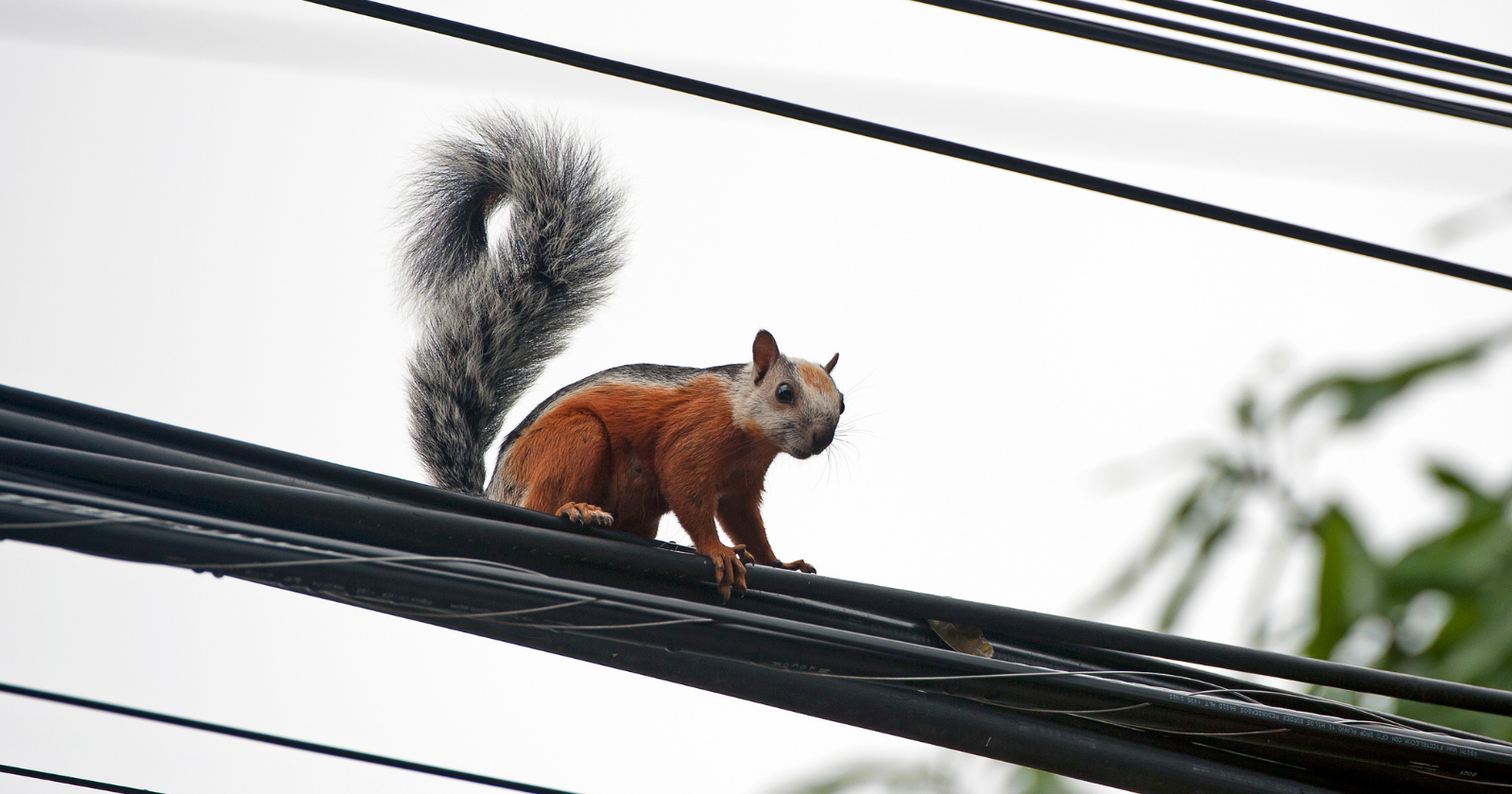
On the morning of August 2, 1994, one of those squirrels chewed into a power line near the Trumbull center, ending its own life and cutting the feed to the heart of the electronic market. This was supposed to be a non-event. The facility had temporary backup power designed to carry it until Nasdaq’s full backup computer center in Rockville, Maryland could take over.
The automatic switchover failed to perform, as the computing-risks bulletin RISKS Digest dryly recorded that same day. And so, for 34 minutes in the middle of a trading day, America’s second-largest stock market simply stopped. Thousands of brokers stared at dead screens; pending orders on more than 4,000 issues hung in limbo; and somewhere in Connecticut a utility crew removed the cause of a nationwide financial halt from a power line.
The part that made it unforgivable
What converted an embarrassing morning into an institutional scandal was the precedent. Seven years earlier, on December 9, 1987, barely six weeks after the Black Monday crash, with the market’s nerves still raw, another squirrel had done the same thing on the same suburban grid. That outage was worse. The New York Times account preserved in the same risks archive reads like a systems-failure textbook: the initial power cut halted quotes for 82 minutes and blocked an estimated 20 million shares from trading, and then the power surge that came with restoration disabled the mainframes and damaged the building’s electrical system so badly that the on-site backup generators were unusable, forcing the fallback to Rockville that afternoon.
After 1987, Nasdaq had promised redundancy. The Rockville site existed precisely so that Trumbull could die without the market noticing. What August 1994 demonstrated, with a second dead squirrel as the proof, was that a backup which fails to switch on is indistinguishable from no backup at all. Engineers have a term for what the exchange had actually built: a single point of failure with expensive decoration.
The 1994 outage was, remarkably, not even Trumbull’s only failure that summer; a construction mishap had knocked the market out for two and a half hours just weeks earlier. Congress and the SEC took a pointed interest, and the episodes pushed Nasdaq toward the genuinely redundant, geographically split architecture that modern exchanges treat as non-negotiable.
The squirrel problem is not a joke
The comedy of the story tends to obscure the engineering lesson, which is that the squirrel was not an act of God; it was a statistical certainty. Squirrels are among the leading causes of power outages in the United States, responsible for thousands of interruptions every year, because they treat pole-top equipment as highways and gnaw constantly to wear down their ever-growing teeth. A bare conductor and a grounded transformer case sit exactly one squirrel-length apart. Utilities install guards and bushing covers by the million, and still an entire genre of grid-reliability data exists under the informal heading of “squirrel-caused.”
In other words, connecting the sole nerve center of a national market to an ordinary suburban distribution feeder meant accepting a known, quantifiable rodent risk, twice. The animal that took down the world’s most advanced market was not exotic. It was the most ordinary hazard American infrastructure has.
The moral, with a bushy tail
The Nasdaq of today would shrug off a hundred squirrels: its systems run in multiple data centers with diverse power, and when the exchange froze for hours in 2013, NPR felt obliged to open its report by clarifying that no squirrel was involved. The 1994 incident survives as a parable told in engineering courses and grid histories, and its lesson is bigger than finance. Electronic, virtual, digital, the market may be all of those things, but electrons are physical, they arrive on copper, and the copper hangs from wooden poles through the territory of an animal that chews for a living. A market that lives in one building lives on that building’s wire. In 1994 the entire dematerialized future of finance was, for 34 minutes, exactly as strong as the insulation between one squirrel and one line in Connecticut.
