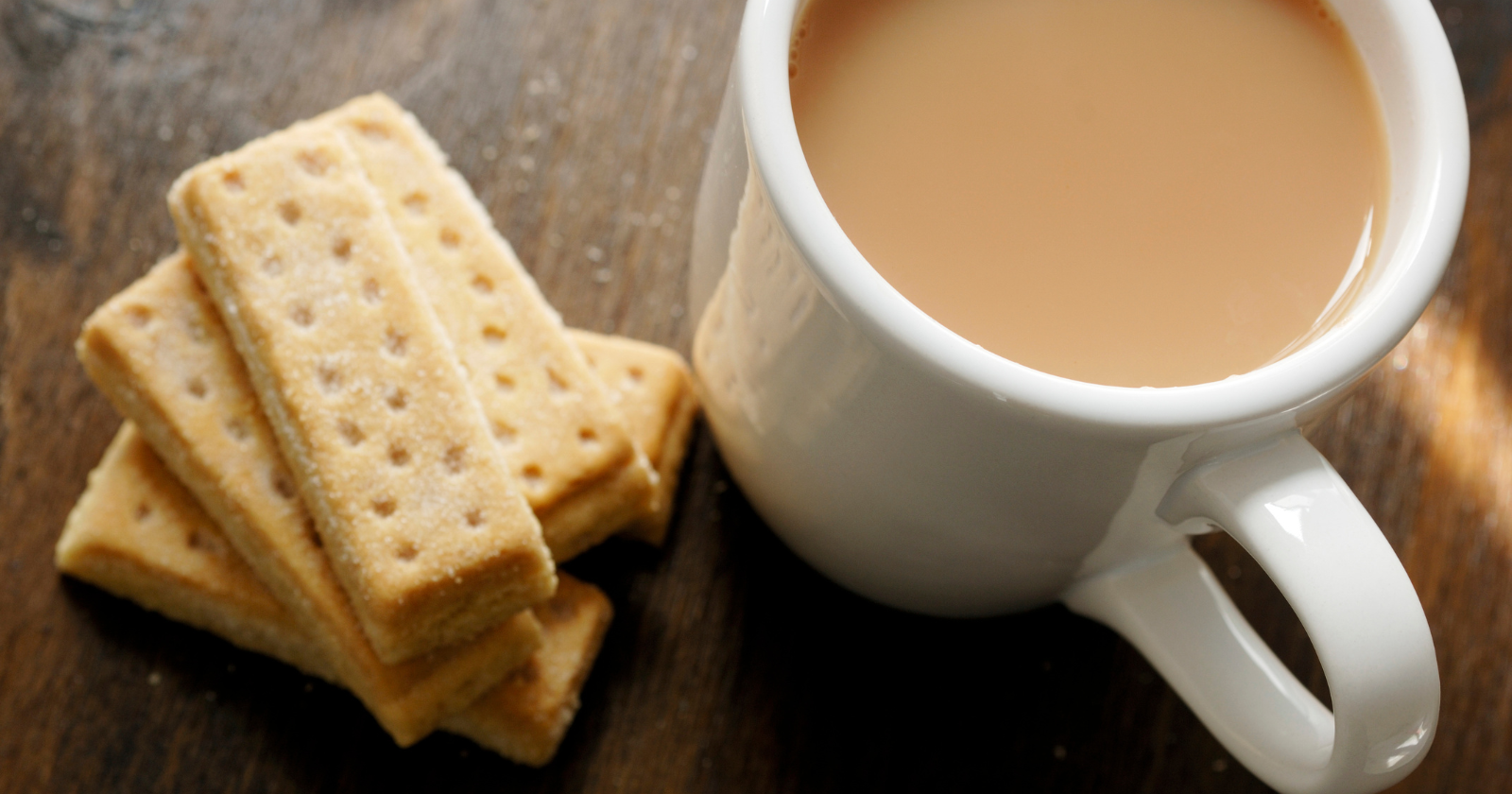
Somewhere on the road to Dover this morning there is a lorry full of British biscuits, and somewhere on the road out of Calais there is a lorry full of European ones. Same product category. Same customs code. Opposite directions.
Anyone who did trade theory at school will spot the problem. Countries are supposed to specialise. Britain makes what Britain does best, Portugal makes what Portugal does best, they swap, and both end up better off. Two lorries of biscuits passing each other on a ferry ramp look less like economics and more like an admin failure nobody caught.
It happens to be one of the most heavily documented patterns in global trade.
How big the two-way flow actually is
Britain is one of the largest buyers of foreign biscuits on the planet. World Bank trade data put UK imports of sweet biscuits, waffles and wafers above US$1.2 billion in 2023, second only to the United States. The world’s leading exporters in that category are Germany, Poland, Italy and the Netherlands, all close enough to reach Britain by ferry.
Traffic runs the other way at the same time. Biscuits are named alongside chocolate and breakfast cereals in the Food and Drink Federation‘s trade snapshot, sitting inside a wider UK food and drink sector that posted a record export value of £25.6 billion in 2025 against imports of £66.9 billion.
Economists gave it a name in the 1970s
Two-way trade inside a single category is called intra-industry trade, and there is a standard way to measure how much of it is going on. The Grubel-Lloyd index, set out by Herbert Grubel and Peter Lloyd in 1975, checks how far a country’s exports and imports in one category cancel each other out. Send out £100 million of biscuits while bringing in £100 million of biscuits and the index reads one, which is economist shorthand for a flow that is almost entirely circular.
Explaining why anyone would bother took a bit longer. Paul Krugman published the influential answer in 1979, and it helped win him the economics Nobel in 2008, with the Royal Swedish Academy of Sciences crediting the insight that goods get cheaper when made in long runs while consumers keep demanding variety. This is not a single paper from a single academic. Krugman’s framework became the spine of what gets taught as new trade theory, tested and extended by dozens of researchers since.
Ovens are expensive and shoppers are fussy
Consider what a biscuit line costs. Industrial baking runs on enormous fixed outlays and painfully thin margins per packet, which means one plant working hard for a whole continent beats twenty plants ticking over for twenty countries.
Then there is the shopper, who has never in recorded history walked into a supermarket wanting “a biscuit”. They want a Hobnob, or a Bourbon, or the caramelised Belgian one everyone puts on doughnuts. Those are different products wearing the same word. Trade statistics lump them together because a customs code has to stop somewhere, and the resulting spreadsheet makes it look like Britain is swapping identical items with its neighbours.
A Belgian biscuit in the British cupboard
Lotus Biscoff started life as a speculoos served with coffee. Its owner, Lotus Bakeries, reported sales of €670 million for the brand in 2025, 57 per cent of group branded revenue, declaring Biscoff the fastest-growing biscuit brand in the world and one of the global top five by sales.
Nobody in Britain lacked access to biscuits before it arrived. What Britain lacked was that particular texture and that particular burnt-sugar flavour. No British baker was making it. Lotus has since committed at least €500 million to new capacity across Belgium, the United States and Thailand by 2030, as reported by Food Manufacture. The constraint, the company says, is baking capacity, not demand.
A Scottish tin in a Japanese department store
In the mid-1970s two members of the family behind Walkers Shortbread packed a car with boxes of biscuits and set off from Speyside for a trade fair in Cologne. They got about five miles before the snow stopped them, as Family Business UK recounts in a case study on the firm. They eventually reached Germany, met a visitor who offered to represent them despite not yet owning a business, and Germany became one of their first export markets.
Japan is now the company’s largest market. Walkers turned over £197 million in 2025 and sent roughly half of everything it baked to close to 100 countries, per Larder Magazine. Flour, butter, sugar and salt are not scarce commodities in Japan. A shortbread baked to an 1898 recipe in a Moray village, in a tartan tin, is the only version of itself available anywhere.
What happens when the border thickens
Circular trade of this kind is fragile because it rests on margins thin enough that a few extra forms can erase the reason for making the trip at all.
Britain is finding that out in public. The Food and Drink Federation has flagged that biscuits sit outside the sanitary and phytosanitary agreement due in mid-2027, so one of the categories hit hardest since Brexit gets almost nothing from the repair job. Separately, the federation has warned that proposed tariff suspensions would let American firms send biscuits into Britain more cheaply while British firms pay more going the opposite way.
Add friction and the two-way trade does not simply stop. The niche products go first, and the shelf quietly gets shorter.