

For two centuries, one detail about the sperm whale has sat there unresolved. Its head, taking up roughly a third of its body length, is built around two oil-filled chambers separated by walls of tough connective tissue, sitting in front of a fused, reinforced block of neck vertebrae and cushioned by unusually thick skin. Marine biologists have long noted that this arrangement resembles a piece of equipment rather than a sensory organ: something built to absorb and deliver an impact. What nobody had actually filmed was a sperm whale using it that way against another sperm whale.
That has now changed. A team led by Alec Burslem, who carried out the work at the University of St Andrews and is now based at the University of Hawaii, has published drone footage documenting sperm whales colliding head-on, striking one another with the front of the skull. The study, “Headbutting Behavior Between Sperm Whales Documented Using Unoccupied Aerial Vehicles,” appeared in Marine Mammal Science in March 2026, with the University of the Azores and the Balearic Islands-based NGO Asociación Tursiops as collaborators.
What the drones caught
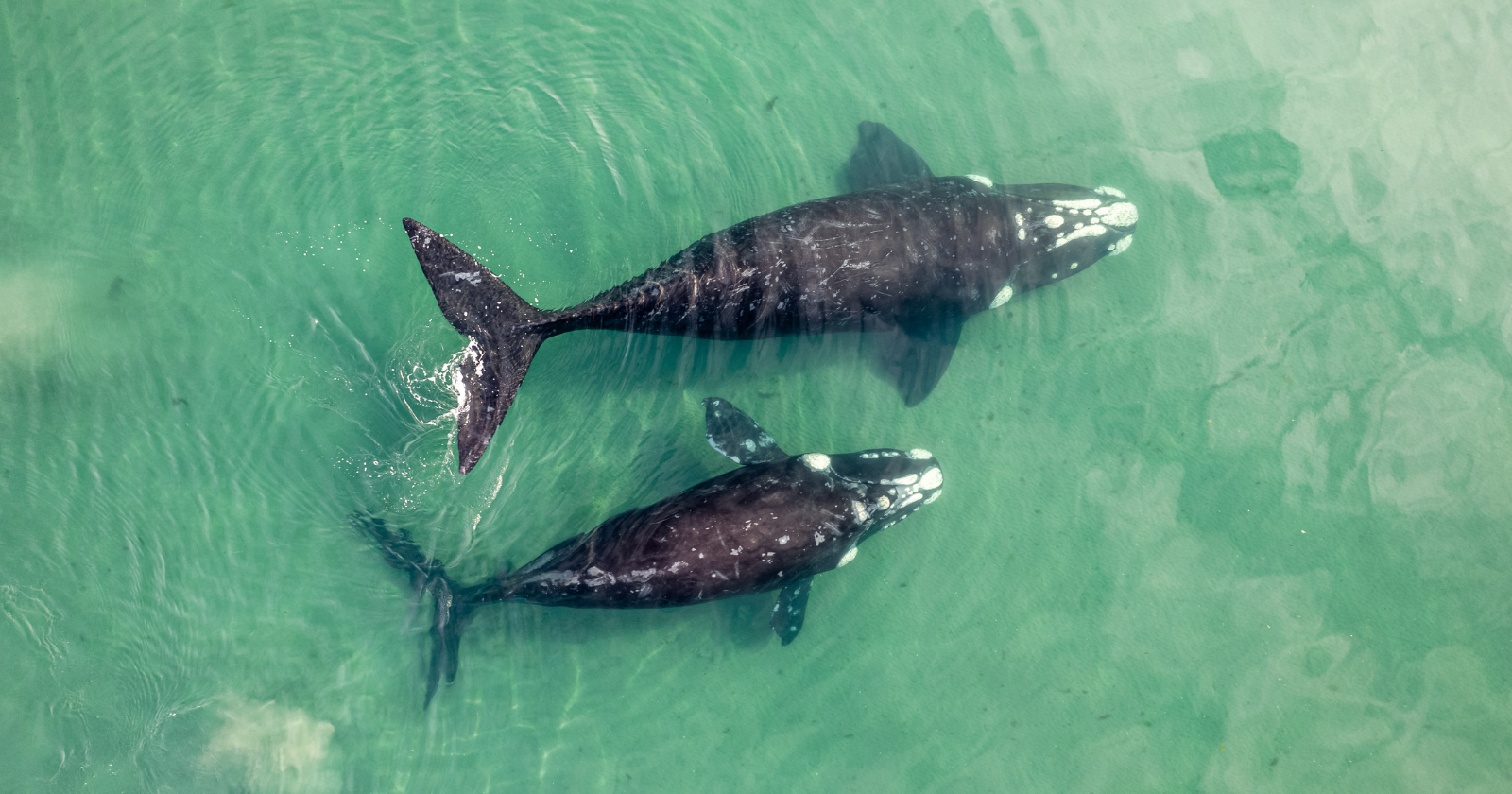
The footage was gathered during fieldwork off the Azores and the Balearic Islands between 2020 and 2022, using drones to film sperm whales from directly overhead, an angle that ordinary boat- or shore-based observation can’t easily provide. According to reporting on the paper, the drones documented three clear cases in which one whale approached another head-on and struck it in the head with its own head, in one case pushing the other whale along for a short distance afterward.
Burslem called the observation “really exciting,” and said in a statement released by the University of St Andrews that the behaviour had long been hypothesised but never documented and described systematically. The overhead drone perspective, he added, is one of several ways the technology is changing what can be documented in wild whale behaviour that boat-based fieldwork has always struggled to capture cleanly.
A shape that looked built for this
The hypothesis Burslem refers to is not new. Whalers described sperm whales ramming vessels with enough force to sink them, most famously the whaleship Essex, struck twice and sunk near the Galápagos in 1820, an incident that helped inspire Herman Melville’s Moby-Dick. Similar accounts followed: the whaleship Ann Alexander, rammed and sunk in the South Pacific on 20 August 1851 by a whale its own crew had wounded earlier that day, and the bark Kathleen, sunk roughly 1,000 miles off Brazil in 1902 in an attack its captain, Thomas H. Jenkins, later described in his own written account.
Those accounts eventually got a formal anatomical hearing. In a 2002 paper in the Journal of Experimental Biology titled “The face that sank the Essex,” David Carrier, Stephen Deban and Jason Otterstrom argued that the whale’s spermaceti organ, the oil-filled structure that gives the animal its name, has all the hallmarks of a weapon rather than a purely sensory adaptation. They pointed to its lower chamber, known as the junk, reinforced with transverse partitions of connective tissue; to the fused cervical vertebrae just behind it, which would transmit force rather than absorb it in the neck; and to scarring concentrated on the underside of large males’ heads, consistent with repeated impacts. Their argument was that the structure evolved through sexual selection, in male-on-male contests, much like antlers or tusks in other species.
What that 2002 paper couldn’t offer was direct observation. Whalers’ accounts are exactly that: accounts, filtered through people trying to survive an animal attack, not scientists with cameras rolling. The anatomical case built a plausible weapon. It took drone footage nearly two and a half decades later to show it, however rarely, actually being used on another whale.
The detail that complicates the story
Here the new footage complicates the older theory more than it confirms it. The 2002 hypothesis was specifically about large adult males competing for mates, the animals with the biggest, most heavily scarred heads. The whales caught headbutting in the Azores and Balearic Islands footage were sub-adults — younger than the mature bulls the sexual-selection theory was built around.
That leaves the researchers with a documented behaviour and an incomplete explanation for it. Dominance testing among younger, not-yet-breeding males is one possibility. Something closer to rough play, of the kind seen in juveniles of other social species, is another. There’s also a genuine puzzle in why any sperm whale would risk this at all: researchers studying the species have noted that using the head as a weapon habitually is a strange thing for evolution to favour, given how close the spermaceti organ sits to structures the whale depends on for echolocation and social communication. Damage there isn’t a small cost.
There’s a reason that puzzle matters. The front of a sperm whale’s head houses sound-producing structures in its nasal passages that the animal relies on for echolocation and, in some contexts, communication with other whales. Deliberately slamming that region into another animal is a strange trait for evolution to preserve if the cost is a meaningful chance of damaging the very apparatus the whale needs to navigate and hunt in deep, dark water. That tension, a body part central to survival being used as a weapon against the same species, is part of why researchers have been cautious about assuming the anatomical case settles the behavioural one.
The current paper doesn’t resolve any of this, and the researchers don’t pretend otherwise. Three documented collisions, gathered opportunistically across three years of fieldwork at two sites, is a start; it’s too small a sample to support a firm conclusion about why the behaviour exists or how common it is. The researchers have said as much themselves, framing the result as evidence that more overhead drone monitoring, sustained across breeding grounds and over longer stretches, is needed before the function of the behaviour can be pinned down with any confidence.
What has changed is narrower and more concrete. A piece of anatomy that spent two hundred years looking like a weapon with no witnessed use finally has one. Whether that weapon is mainly used by mature bulls fighting over mates, as the 2002 hypothesis proposed, or by younger whales testing something else entirely, is now a question with a handful of real footage attached to it, where before there was none.