

A big cat living inside one of the world’s densest cities sounds like a story about a mauling. That is how leopards near Mumbai usually get written up, and the fear has a real basis. But a group of researchers looked at the same animals and reached a conclusion that sits oddly against that reputation: the leopards may be doing the city a public-health favor, mostly by eating its stray dogs.
We are not clinicians, epidemiologists, or wildlife managers, and nothing here is health advice. This is our reading of one modelling study, which shows a link, not a proven cause. Estimates about a whole city are not statements about any one person’s risk. On rabies specifically, follow your local health authorities.
The study was published in March 2018 in Frontiers in Ecology and the Environment by a University of Queensland team. Writing up their work in The Conversation, O’Bryan and Braczkowski put it plainly: “Leopards are often thought of as a threat to humans, but rather than being a problem in Mumbai, they may actually be helping their human neighbours.”
Note the “may”. The whole case rests on it, and the authors never drop it.
The reputation problem
Sanjay Gandhi National Park is a 104-square-kilometre protected area, with the city pressed against most of its edges. Leopards inside it do sometimes hurt people. The authors say so first, and they point to the worst stretch on record: attacks on people at the park peaked at 25 cases in 2002. That kind of event is vivid, local, and frightening, and it shapes how people see the animal.
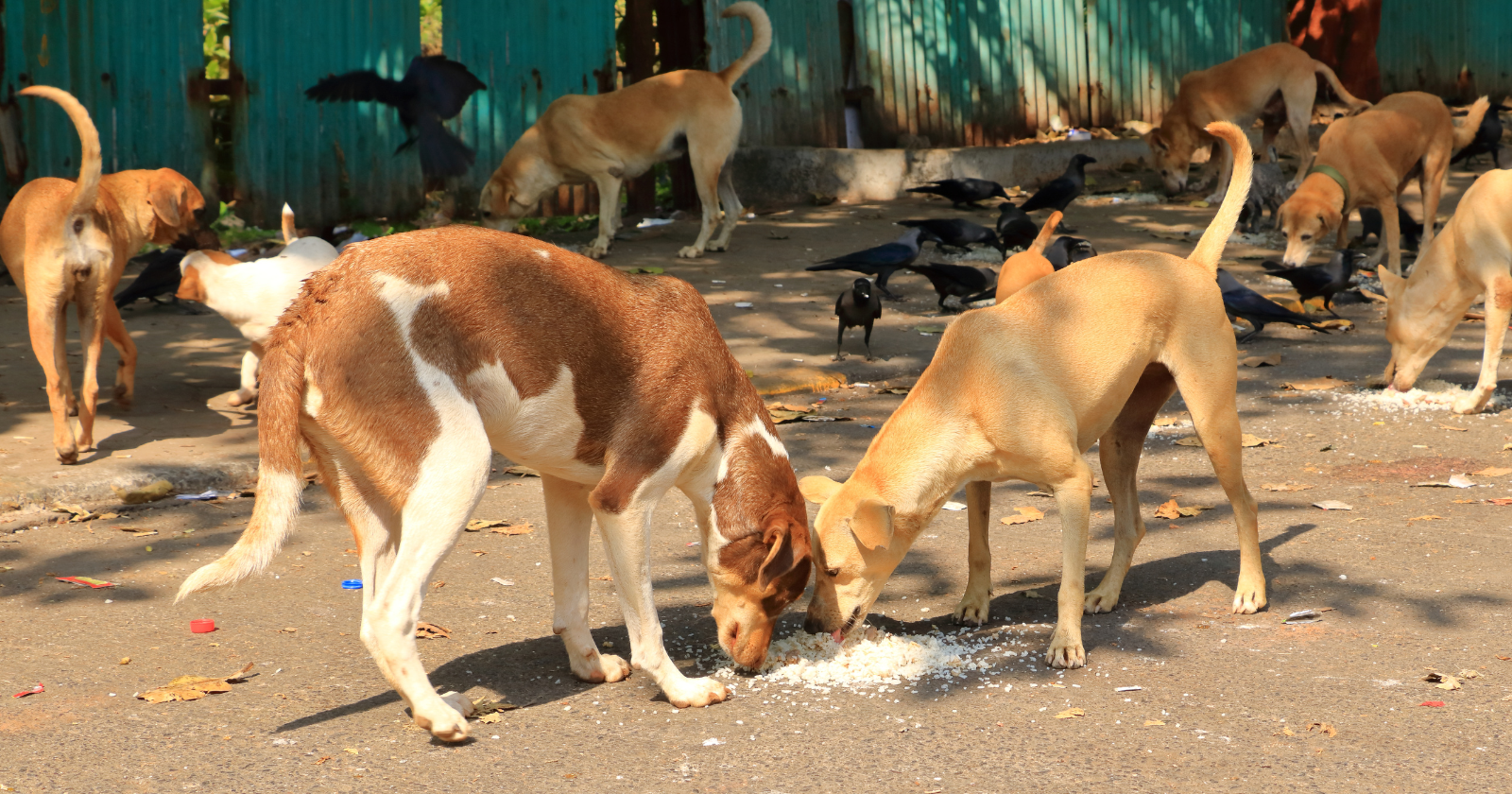
What tends to stay invisible is the other side of the ledger: the harm the city already lives with from a much more ordinary source. Nearly 75,000 dog bites are recorded in Mumbai each year, a number the authors think is probably an undercount. Over two decades, more than 420 people in Mumbai died of rabies from stray-dog bites. Across India, rabies kills roughly 20,000 people a year. The dog problem is the quiet one. The leopard is the one people picture.
What the researchers actually counted
The argument starts with diet. Dogs make up about 40% of the diet of the park’s leopards, a group the team put at as many as 41 animals. Scale that up and the numbers move fast. The researchers estimated the cats take roughly 1,500 dogs a year.
That dogs are a staple rather than an occasional meal does not rest on this paper alone. A later survey of the park by Surve and colleagues found domestic dogs to be the single largest part of local leopard diet, which fits the 2018 picture. The figure of 1,500 dogs a year is the one everything after it flows from.
The public-health math
Surveys estimate about 95,000 dogs roam Mumbai. A 2024 city survey put the figure near 90,757, so the scale has held. Remove 1,500 of those each year through hunting, and the model estimates the leopards could prevent around 1,000 dog bites, 90 of which could lead to a rabies infection.
There is a geography to it, too. Dog numbers near the park run about ten times lower than city-wide, and the authors’ model suggested that people living close by “citizens might experience only 11% of the bites compared with people who live further from the park”. That “might” is theirs, and it matters, because the 11% comes from a model, not a bite count anyone tallied on the ground. The team even put a rough price on it: the leopards save the city about US$18,000 a year in dog-management and sterilization costs it would otherwise carry.
The caveats that matter
This is one paper, and it is a modelled estimate rather than a measured result. Nobody ran the leopards as an experiment against a leopard-free Mumbai. The big drop in bites near the park fits the hunting story, but living beside a large protected forest differs from the rest of the city in more ways than one, and the study cannot fully tell those apart.
The costs are real and sit in the same frame. The same animal that thins the dog population is the one that occasionally kills or injures people, which is why the 2002 spike belongs in any honest accounting. The authors do not pretend otherwise. As they put it, “The real issue is navigating the costs with the benefits, and identifying those cases of net-benefit.” That is a long way from “keep leopards near cities because they are good for you.”
Holding both truths
What we take from the study is a shift in how the animal is filed, not a policy prescription. Co-author Alex Braczkowski told National Geographic that “This is an ecosystem service we don’t think about”, a fair description of a benefit nobody designed and few people notice. His colleague Christopher O’Bryan called it “a dramatic case study where a large carnivore lives alongside and is beneficial to people”, and the words case study are worth keeping. It is one site, not a rule about carnivores and cities everywhere.
Two things remain true about a single animal: a genuine hazard, and it seems a genuine, unplanned public-health asset. The value in the work is that it refuses to collapse those into one story. A predator can be dangerous and useful in the same city, and the interesting question is not which label wins but how a city weighs them against each other.
If you have been bitten by an animal or are worried about exposure, contact your local health authorities straight away.