

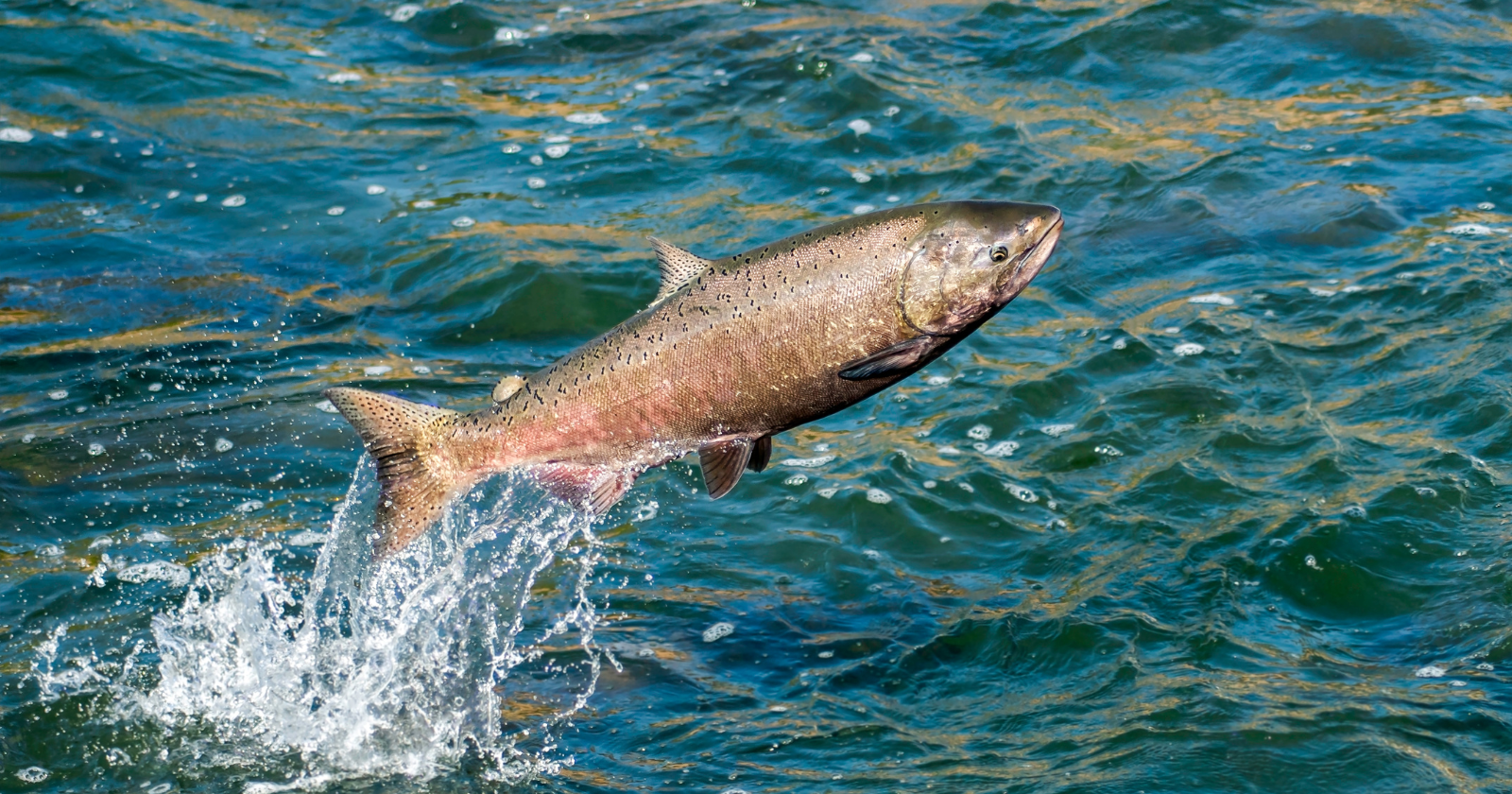
Every spring, millions of young salmon ride the Columbia and Snake rivers toward the Pacific, and on the way down many of them pass through the spinning turbines of hydroelectric dams. For decades, the assumption about the ones that didn’t survive was intuitive: giant steel blades, small soft fish, do the math.
But the carcasses told a stranger story. Most dead turbine-passed smolts came out without a scratch on them. Whatever was killing them wasn’t, for the most part, touching them. To find out what was, engineers at the Pacific Northwest National Laboratory built a fish that could take notes on the way through.
The robot that rode the turbines
The device is called the Sensor Fish, a rugged cylinder about the size of a smolt, packed with instruments that record pressure, acceleration, rotation and temperature 2,000 times a second. Researchers released them into dam intakes on the Columbia, including runs at Ice Harbor, John Day and Bonneville, and collected them downstream, each one carrying a millisecond-by-millisecond diary of what a fish actually experiences inside a working turbine.
The diaries were eye-opening. The trip takes only seconds, but near the runner blades the Sensor Fish recorded pressure plunging catastrophically fast, in the worst passages dropping from the squeeze of deep water to well below normal atmospheric pressure almost instantly. Fisheries scientists describe the worst-case exposure with a homely comparison: it is like traveling from the bottom of the deep end of a swimming pool to the top of Mount Everest in a blink.
For a fish, that number is not abstract. It is aimed directly at the gas-filled organ in the middle of its body.
5,767 salmon in a pressure chamber
Armed with the real pressure profiles, the PNNL team, led by fish physiologist Richard Brown, rebuilt the turbine ride in the lab. Using hyperbaric chambers, they acclimated juvenile Chinook salmon to the pressures of river depths, then hit them with the exact rapid decompression the Sensor Fish had measured, no blades involved, just the pressure history of a turbine passage.
Across the research program 5,767 juvenile Chinook salmon were run through simulated turbine pressure regimes, with nadirs as low as 4.8 kilopascals, about a twentieth of atmospheric pressure, and the results settled the question. Pressure alone reproduced the injuries found in turbine-passed fish. The study published in Transactions of the American Fisheries Society found the single factor that best predicted death was the ratio between the pressure a fish was acclimated to and the lowest pressure it hit. The deeper the fish had been living, and the lower the trough behind the blade, the worse its odds.
What the pressure does
The mechanism comes down to a bubble and a law of physics. A salmon’s swim bladder is a gas-filled sac it uses to control buoyancy, and Boyle’s Law says gas volume balloons as pressure falls. When the surrounding pressure collapses in a fraction of a second, the bladder expands violently and ruptures, and the expanding gas crushes and tears the organs packed around it. At the same time, gases dissolved in the blood come out of solution the way a diver’s do in the bends, forming emboli, bubbles that lodge in the gills, the fins, even the eyes, which in severe cases bulge outward in a condition called exophthalmia.
The necropsies read like a diving-accident report: ruptured swim bladders, internal hemorrhaging, everted stomachs, gas-filled vessels. Brown’s team concluded that most decompression injuries in juvenile salmon trace back to the expansion of the bubbles already inside the fish, above all the swim bladder. Blade strikes do kill fish, particularly larger ones, but for a smolt the size of a finger, the deadliest thing in the turbine is a place where the water briefly pretends to be sky.
Turbines redesigned around a bubble
The practical payoff is that pressure, unlike a spinning blade, can be engineered. Once mortality could be predicted from a pressure curve, PNNL built assessment tools that score turbine designs by the decompression they inflict, and manufacturers began shaping runners and operating rules to keep the pressure trough shallower. New “fish-friendly” turbines installed at Columbia and Snake river dams, including advanced runners at Ice Harbor, were designed with exactly these pressure criteria in mind, alongside better spill routes and bypass systems that let many smolts skip the turbines entirely.
There is also a quieter methodological legacy. The research revealed that the radio tags scientists implant in smolts to measure dam survival made barotrauma worse, the tag forcing the fish to inflate its bladder further, which had been quietly biasing decades of survival studies. The fix, neutrally buoyant external tags, came out of the same pressure chambers.
The Columbia’s salmon still face a hard road, with dams, predators and warming water between the mountains and the sea. But one of their invisible killers now has a measured shape, a predictable dose, and engineering aimed at it, all because a robot went through the turbine first and wrote down what the fish couldn’t.
