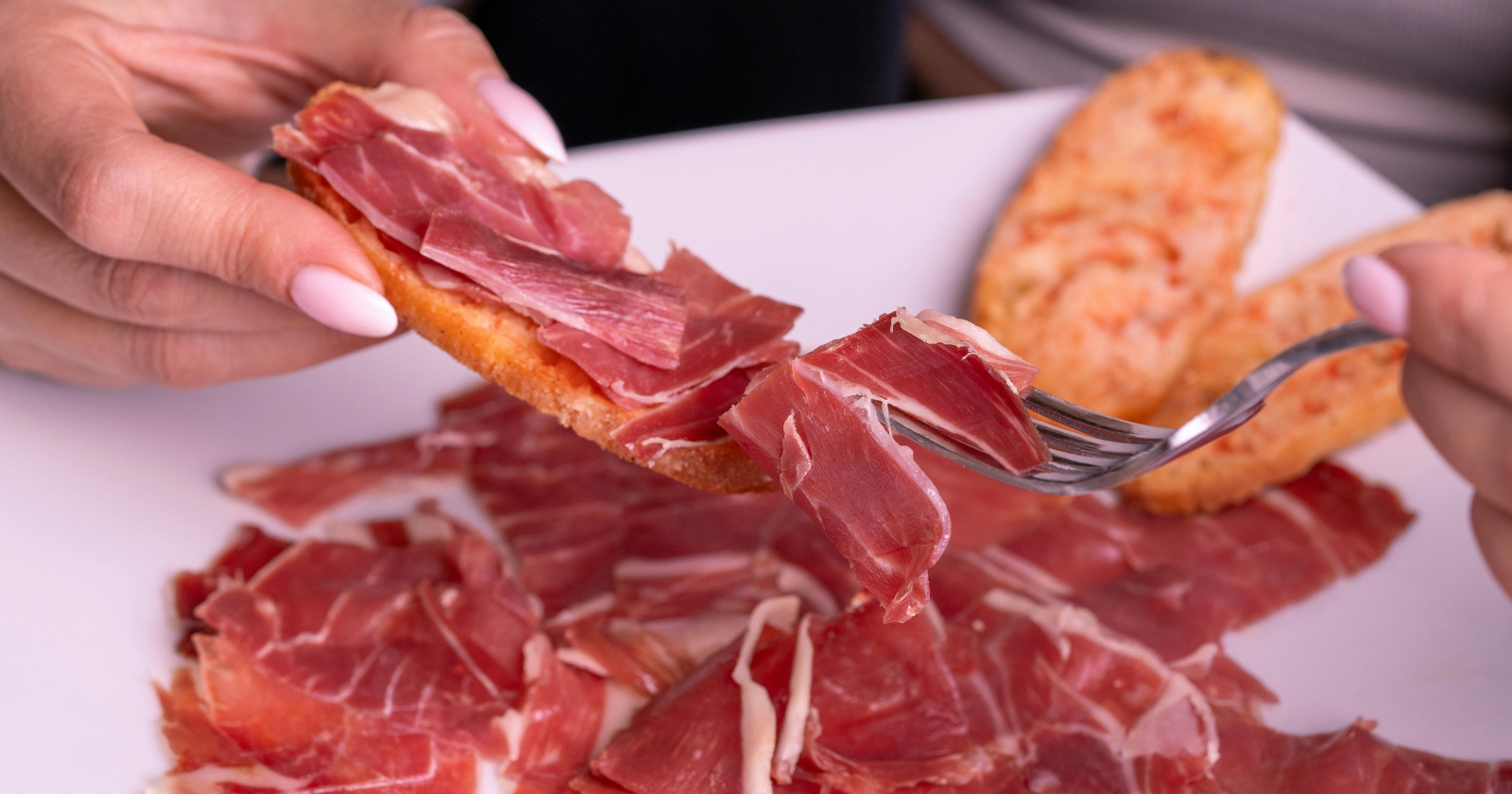
Turn up to a Madrid restaurant at seven in the evening and the chairs will still be stacked on the tables. Come back at half past ten and the room is packed, kids under the tables, grandparents holding court, nobody behaving as though anything unusual is happening. Visitors read this as proof that Spain has a glorious disregard for the clock. The real explanation is duller and considerably stranger: the clock itself was quietly wound forward one hour in 1940 and nobody ever wound it back.
What happened in March 1940
Late on Saturday 16 March 1940, Spanish clocks reached 11pm and jumped straight to midnight. Spain had used Greenwich Mean Time since standardising in the early 1900s, sharing a zone with Portugal and Britain. Overnight it joined Central European Time, and it has stayed there ever since.
The order described the change as provisional. That was 86 years ago.
The popular version has Franco doing it as a favour to Hitler, which is a tidy story with a shaky evidence base. Pere Planesas, formerly an astronomer at Spain’s National Astronomical Observatory, told Euronews that the decree spoke of falling into line with European neighbours who had already advanced their clocks, and that Germany did not make its own spring adjustment until April, remaining an hour ahead of Spain regardless. Planesas spent years assembling a detailed history of official time in Spain before retiring, and calls the Nazi-gesture reading a hoax.
Motive is arguable. Arithmetic is not.
How far ahead of the sun Spain actually lives
Central European Time is pegged to the meridian running through roughly 15 degrees east, which is Prague country. Madrid sits near 3.7 degrees west. Galicia stretches out past 9 degrees west, further from that reference line than Berlin, Rome or Warsaw will ever be.
Longitude is the whole trick here. Every 15 degrees of it equals an hour of solar time, so a country using a zone anchored well to its east will see the sun peak later on the clock face than the clock face suggests. In Madrid, solar noon lands closer to half past one in winter. Add daylight saving and it drifts towards half past two in summer. In the far northwest, where winter sunrise can arrive around nine in the morning, the gap is wider still.
So the famous ten o’clock dinner is not being eaten at ten in any sense the sun would recognise.
Measuring the meals by daylight instead
José María Martín-Olalla, a physicist at the Universidad de Sevilla, ran that idea through the data. Comparing national time-use surveys from Spain, Italy and the United Kingdom, he found that Spanish daily schedules fall into step with British and Italian ones to within about half a time zone once solar position is taken into account. Start-of-work times, he showed, track the latest winter sunrise, which shifts with latitude. People get up when it gets light, then arrange the rest of the day behind that.
Physics World put the upshot bluntly: factor in where Spain sits on the map and Spaniards are doing much the same things at much the same solar hour as everyone else. A two o’clock lunch is a one o’clock lunch wearing a different label.
That is one physicist’s reading of survey data, not a settled position across the field. Chronobiologists have pushed back hard, and the argument is still live.
What the body makes of the arrangement
There is an unusually clean way to test it. Western Spain and Portugal share almost identical longitudes but run on different official times, which gives researchers a natural experiment sitting there for free.
A team led by María-Ángeles Bonmatí-Carrión at the University of Murcia took it, publishing the results in the journal Biology in 2022. They tracked retired people over 65 on both sides of the border, chosen because nobody was tied to a work roster. Sleep duration was similar in both groups, seven to eight hours, which is adequate for that age group. Circadian rhythms told a different story. The Portuguese participants showed steadier day-to-day patterns, particularly on weekdays, while the Spanish group tended towards greater desynchronisation between body temperature, movement and light exposure.
One finding in that paper deserves attention from anyone attached to the neat version of this story. Once the researchers corrected for the one-hour offset, Spanish meals were still happening later than Portuguese ones. The clock accounts for a good slice of the lateness. It does not account for all of it, and the leftover is presumably culture doing what culture does.
Why nobody puts it back
They have certainly tried. A parliamentary commission in 2013 recommended a return to GMT, as reported by NPR at the time, citing lost sleep, workplace accidents and a general national grogginess. The employment minister raised it again in 2016 with talk of finishing the working day at six. Both proposals evaporated.
Part of the resistance is commercial, since sharing a clock with Frankfurt and Paris makes trading days easier. Part is inertia. Planesas makes a sharper point: shift the zone and social pressure would simply pull activity back towards the same daylight hours it occupies now, after everyone had suffered years of disruption getting there.
Which leaves Spain in an odd position. A wartime decree issued as a stopgap has outlived the war, the dictator and the argument, and in the meantime the country built an entire evening culture on top of it. Restaurant hours, prime-time television, the eleven o’clock stroll with the pram. Undo the decree tomorrow and the habits would stay put for a generation, because habits do not read gazettes.
Spain kept the hour and grew a culture around it, which is a far weirder outcome than a dictator’s favour to a friend.