

There is a quiet assumption most of us carry about intelligence: that planning for a future that hasn’t arrived yet is a primate thing, maybe even a human thing.
We save for retirement, pack an umbrella, defrost the chicken in the morning for a dinner we haven’t started. Apes, our close relatives, get partial membership in the club. Birds, with their small heads do not but perhaps they should.
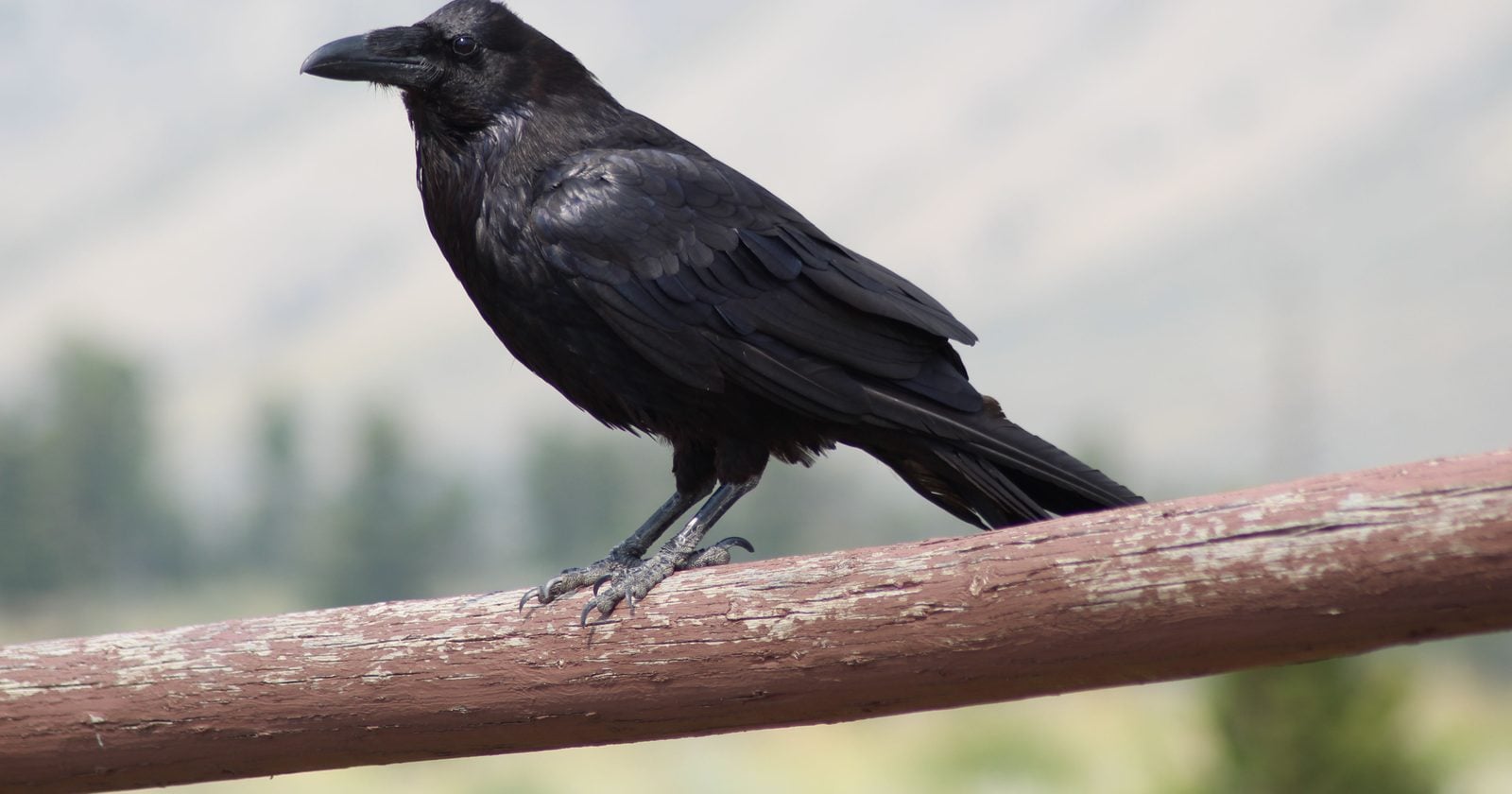
In July 2017, two researchers at Lund University ran a set of experiments that put the assumption under real pressure. On a task about trading for a future reward, ravens did better than chimpanzees, orangutans and bonobos. The result is worth being careful about, because one clever study is not a solved question. But it is also genuinely hard to dismiss.
What the researchers actually did
Can Kabadayi and Mathias Osvath took experiments that had originally been designed for great apes and ran them, more or less unchanged, on five ravens. The cleverness is in the borrowing. Use the same puzzles the apes faced, and you can compare species without moving the goalposts.
They taught the birds two things ravens never do in the wild. First, to use a tool to open a box that gave out food. Second, to hand over a small token in exchange for a reward, a kind of bartering.
Then came the twist that makes it a planning study rather than a puzzle-solving one. The birds were shown the tool or the token, then had it taken away, and were only offered the chance to use it much later, sometimes far into the future. To succeed, a raven had to pick the right object and hold onto it for a moment that hadn’t arrived yet.
We are not animal-cognition researchers or comparative psychologists, and what follows is our reading of one study and the debate around it, not a settled verdict on how bird minds work. The findings come from a small sample and are open to more than one interpretation, as the scientists involved are the first to say.
Where the ravens beat the apes, and where they matched them
The numbers are the interesting part. In the tool task, the ravens picked the correct stone about 86 percent of the time after a 15-minute wait, and roughly 89 percent of the time when the wait stretched to 17 hours. That matched what apes had managed on the same kind of test.
The bartering task is where the ravens pulled ahead. They picked the correct token to trade nearly 74 percent of the time, and on the exchange tests overall they scored over 90 percent, better than the orangutans, bonobos and chimpanzees who had faced comparable problems. There was also a self-control element.
Offered an immediate treat or the chance to hold out for the tool or token that would pay off later, the ravens waited about 70 percent of the time, edging out both apes and four-year-old children on the same choice.
Osvath’s own framing was measured. In his exact words to ScienceAlert, “Our results show that ravens combine a set of skills to solve a range of tasks in a similar way to apes.” What caught his attention was less any single trick and more the bundle. “What I find most interesting is that it’s not just one skill that has evolved here, but a combination of skills,” he told the same outlet.
Why a bird doing this at all is the story
The most striking thing here isn’t that ravens outscored apes on one task. It’s that a bird did any of this at all.
Birds and mammals last shared a common ancestor over 300 million years ago, and raven brains are built differently from ours. They have no neocortex, the layered outer sheet of brain tissue that in primates gets a lot of the credit for flexible thought.
So if ravens can plan in a way that looks like ape planning, they almost certainly didn’t inherit the ability from a shared planning ancestor. It seems to have evolved separately, on a different branch of the tree, in a differently wired brain.
Biologists call that convergent evolution: the same solution shows up more than once because it works, not because it was passed down. Osvath found that side of it the most compelling. “It’s fascinating that evolution can repeat the same skills and how they are put together,” he said.
What the result does and doesn’t let us say
Not everyone reads the data the same way. Alex Taylor, an animal-cognition researcher at the University of Auckland who wasn’t part of the study, called it surprising, telling National Geographic, “It is really surprising to see ravens were better at solving two planning tasks than great apes and children presented with similar problems.” But on the same page he flagged the obvious alternative: the ravens might simply have been picking the object they had learned to link most strongly with food, no future-thinking required.
Even his more optimistic reading stayed hedged, and rightly so. The findings, he noted, suggest “that, like humans and great apes, ravens may have a general planning ability that can be used with novel behaviors.” May have. Not do.
What we take from all this is less a fact about ravens than a fact about us. The surprise we feel at the result is mostly a measure of how primate-shaped our expectations were to begin with. We assumed foresight rode in on the neocortex, so a bird doing it looked like a mistake in the sorting. If planning really did evolve more than once, on branches that split before the dinosaurs, then it looks less like a family heirloom passed down the primate line and more like a good idea that nature keeps rediscovering.
Whether the ravens are truly planning or just doing something that resembles it from the outside is still unsettled. Either way, the birds have made the question harder to answer smugly.